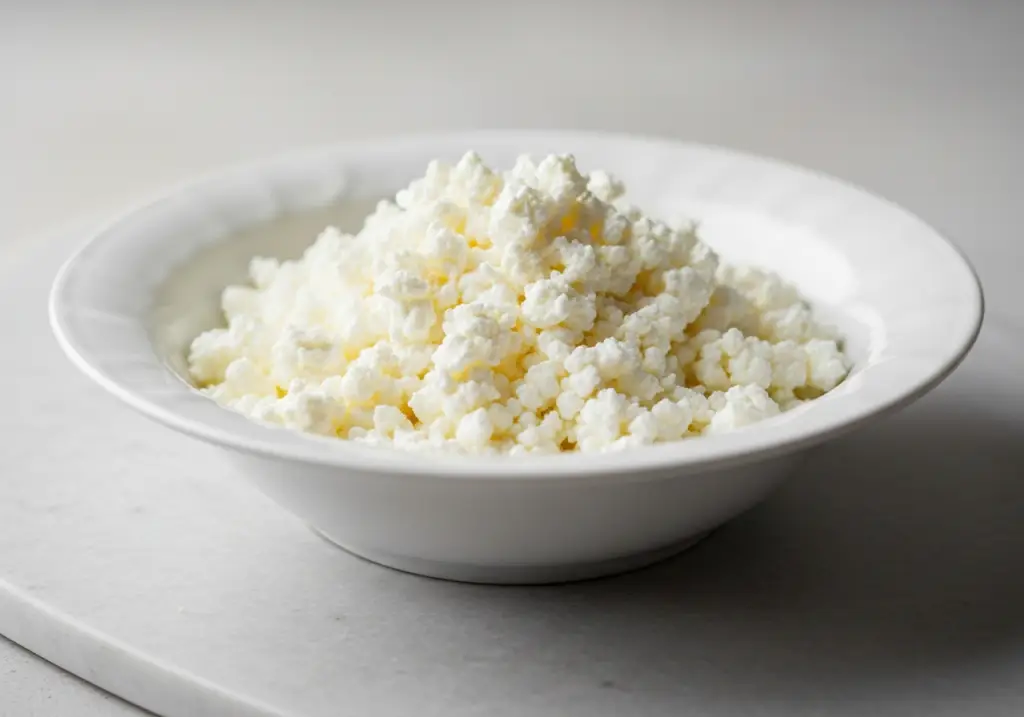
Cottage cheese has cycled back into fashion, and the nutrition case is straightforward: 100 g delivers roughly 11 g of slow-digesting casein protein with useful calcium, vitamin B12 and selenium. That combination is why cottage cheese appears in conversations about weight management, bone health and energy and performance.
Compounds & anti-nutrients in Cottage Cheese
Per 100 g, Cottage Cheese is a notable dietary source of these active compounds. Tap any to see its full sources map and how to work with it.
Why cottage cheese is good for you
Cottage cheese is predominantly casein protein, which digests more slowly than whey. That slow release makes it useful between meals or before bed, because it supplies amino acids to muscle for longer without spiking insulin. It is also one of the better dairy sources of calcium for people who do not eat much harder cheese, and it is naturally low in lactose compared with milk.
Cottage cheese nutrition at a glance
The label shows the numbers, but the practical message is that cottage cheese is a high-protein, moderate-calorie dairy staple that works well in both savoury and sweet contexts. The main quality variable is sodium — some brands are very salty, so compare labels if you are watching salt intake.
How to buy and use cottage cheese
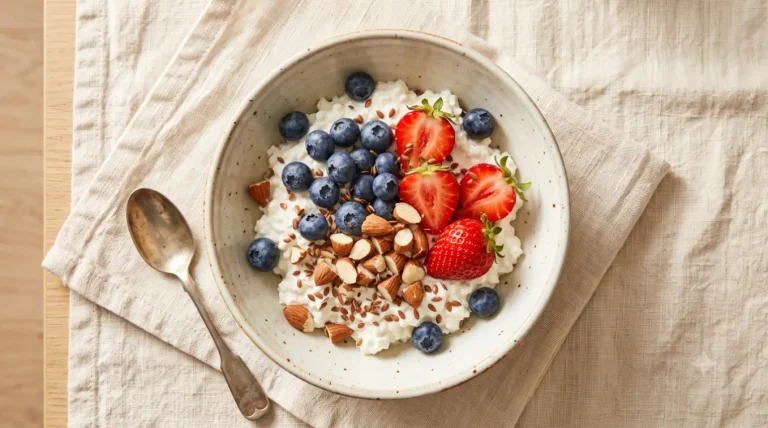
Choose plain cottage cheese with no added sugar if you want the protein advantage. Small-curd and large-curd versions are nutritionally similar; the difference is texture. Use it as a snack with blueberries and flaxseed, as a savoury dip with pepper and chives, or as a protein boost in scrambled eggs and on whole-grain toast. It keeps for a few days after opening and should be kept cold.
Common questions
Is cottage cheese good before bed? Yes — the slow-digesting casein supplies amino acids through the night, which is why it has long been a staple of bodybuilding and sports nutrition.
Is cottage cheese high in sodium? Some brands are. Check the label and choose lower-sodium versions if you are watching salt intake.
Explore by health goal
Cottage Cheese is one of many foods that support these goals: