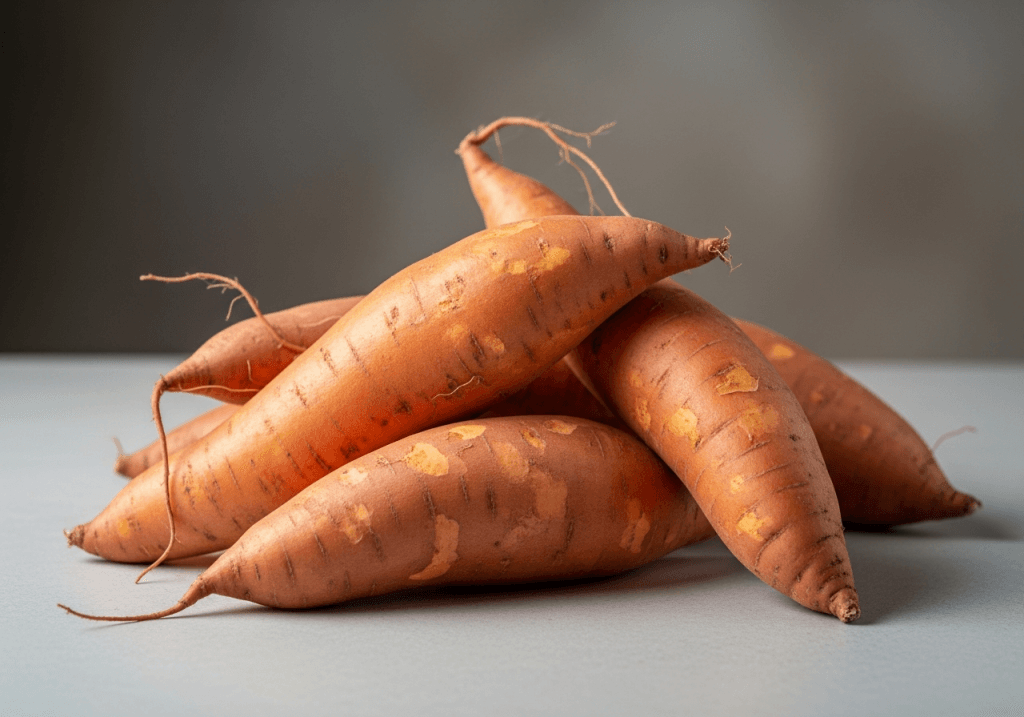
Sweet potato is one of the few everyday foods that can deliver more than 300% of your daily vitamin A as beta-carotene in a single serving. That concentration, combined with fibre and a moderate glycemic index, is why sweet potatoes appear in research on skin health, immune support and energy and performance.
Compounds & anti-nutrients in Sweet Potato
Per 100 g, Sweet Potato is a notable dietary source of these active compounds. Tap any to see its full sources map and how to work with it.
Why sweet potato is good for you
The orange flesh is rich in beta-carotene, which the body converts to retinol — the active form of vitamin A needed for vision, immune defence and skin turnover. Sweet potato also supplies vitamin C, manganese and enough fibre to slow its own carbohydrate absorption, which is why its glycemic index is moderate despite its sweetness.
Sweet potato nutrition at a glance
The label shows the numbers, but the headline is that sweet potatoes are a nutrient-dense complex carbohydrate with a built-in provitamin A bonus. The exact glycemic index varies by variety and cooking method, so pair them with protein or fat for the steadiest blood-sugar response.
How to buy, store and cook sweet potato
Choose firm, unblemished tubers with even colour. Store in a cool, dark place — not the fridge, which changes the texture and flavour. Baking, roasting and steaming all preserve nutrients well; boiling leaches some beta-carotene into the water. Sweet potato pairs beautifully with Greek yoghurt, lentils and olive oil.
Common questions
Are sweet potatoes better than white potato? For vitamin A and fibre, yes. For protein and resistant starch, white potato has a slight edge. The healthiest choice is whichever you eat in a balanced meal.
Should I eat the skin? Yes — the skin holds much of the fibre and a share of the beta-carotene. Scrub it well and eat it unless the recipe specifically requires peeling.
Explore by health goal
Sweet Potato is one of many foods that support these goals: