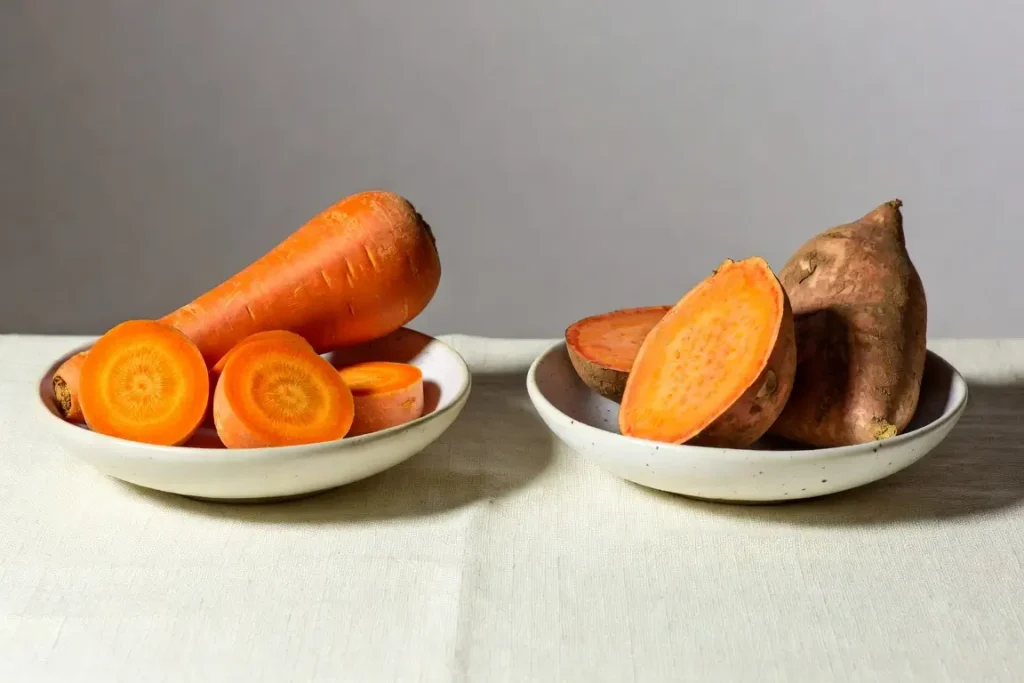
Carrots and sweet potatoes are both orange, both sweet, and both constantly compared for their beta-carotene content – reasonably so, since they’re two of the best sources of it in a typical diet.
| Nutrient | Carrot | Sweet Potato |
|---|---|---|
| Calories | 41 kcal | 79 kcal |
| Protein | 0.93 g | 1.58 g ✓ |
| Total Carbohydrate | 9.58 g | 17.33 g |
| Dietary Fiber | 2.8 g | 3 g ✓ |
| Total Sugars | 4.74 g | 4.18 g ✓ |
| Total Fat | 0.24 g | 0.38 g |
| Saturated Fat | 0.03 g | 0.018 g ✓ |
| Sodium | 69 mg | 0 mg ✓ |
Notable compounds in each
When to choose each
Reach for sweet potato when you want more calories and carbohydrate from a starchy side, or when sodium is a consideration – carrots carry noticeably more naturally. Reach for carrots as a lighter, lower-calorie way to get a similar beta-carotene boost, whether raw as a snack or roasted alongside a meal. Both convert their beta-carotene into vitamin A in the body and are among the most concentrated dietary sources of it.
Common questions
Which has more beta-carotene? Carrots typically test higher gram for gram, though both are outstanding sources – a single serving of either comfortably covers a day’s vitamin A needs.
Does cooking affect their beta-carotene content? Cooking actually tends to increase how much beta-carotene the body can absorb from both vegetables, since heat breaks down the plant cell walls that otherwise trap it – one case where cooked genuinely can beat raw.