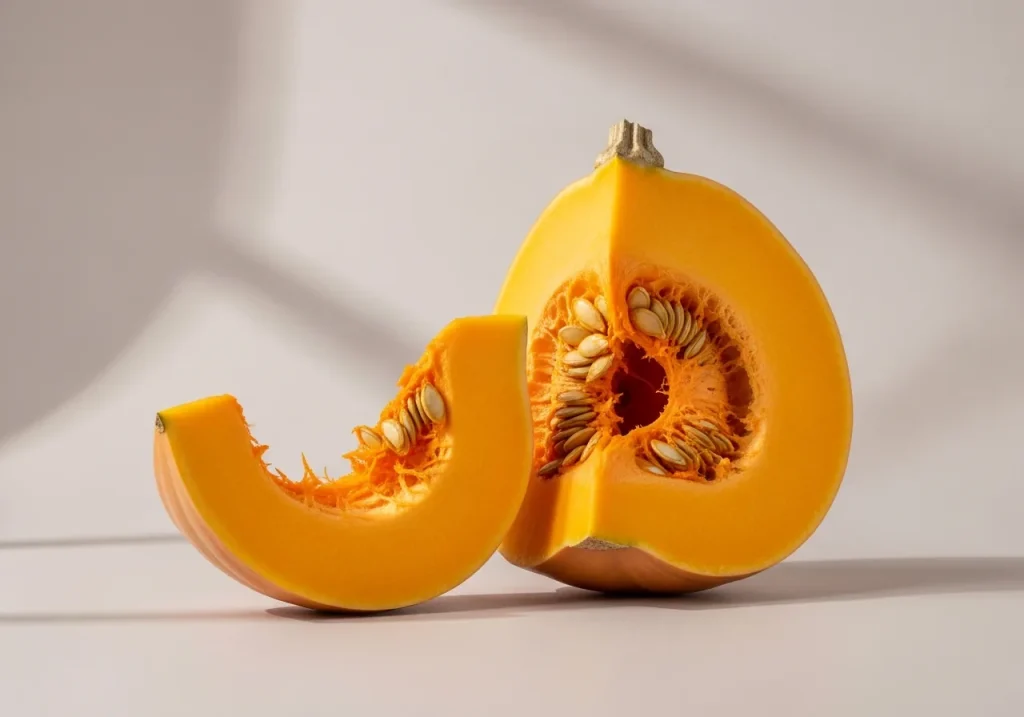
Pumpkin is the winter squash whose orange flesh is one of the richest sources of beta-carotene available, and whose seeds deliver useful zinc, magnesium and omega-6 fatty acids. A 100 g portion of cooked pumpkin delivers roughly 7 g of fibre, vitamin A precursors, vitamin C and potassium. That combination is why pumpkins appear in research on eye health and immune support.
Compounds & anti-nutrients in Pumpkin
Per 100 g, Pumpkin is a notable dietary source of these active compounds. Tap any to see its full sources map and how to work with it.
Why pumpkin is good for you
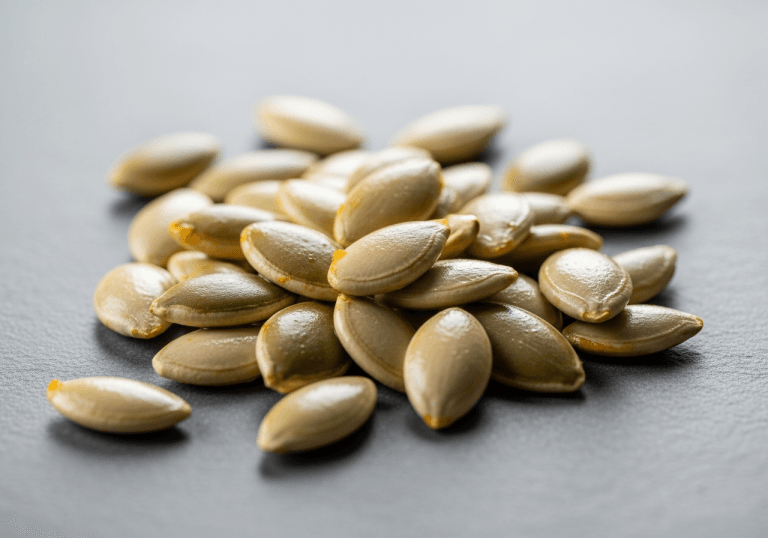
Pumpkins’ beta-carotene content is exceptional, and it supports vision, immune function and skin repair. The fibre content is high and partly soluble, which lowers LDL cholesterol and feeds colonic bacteria. The seeds are a separate nutritional asset: they contain zinc for immune function, magnesium for muscle relaxation and phytosterols for cholesterol management. The caveat is that pumpkin is often served with sugar — pumpkin pie, pumpkin spice lattes — which negates many of the benefits.
Pumpkin nutrition at a glance
The label shows the numbers, but the practical message is that pumpkin is a cheap, nutrient-dense winter vegetable with a genuine vitamin A edge. The seeds are a bonus source of zinc and magnesium.
How to buy and use pumpkin
Choose firm, heavy pumpkins with no soft spots or cracks. Small sugar pumpkins are best for eating; large carving pumpkins are watery and bland. Store in a cool, dry place for months. Roast pumpkin flesh with olive oil and sage, blend into soup with coconut and ginger, or use in curries with turmeric and garlic. Toast the seeds with salt and paprika for a snack. Pumpkin pairs well with cinnamon, nutmeg and maple syrup.
Common questions
Is pumpkin good for eyes? Yes — the beta-carotene content is exceptional, and it converts to vitamin A, which is essential for night vision and retinal health.
Are pumpkin seeds good for you? Yes — they are a good source of zinc, magnesium and phytosterols, which support immune function and cholesterol management.
Explore by health goal
Pumpkin is one of many foods that support these goals: