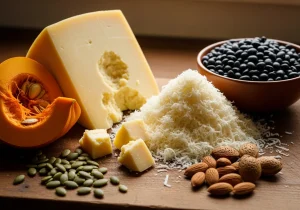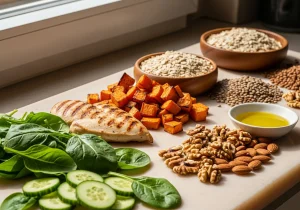
If you are trying to eat more Monounsaturated Fat, ranked lists are useful because the best options are often not the most obvious ones. The foods below are ordered by Monounsaturated Fat content in g per 100 g, drawn from the foods in our database.
Dried herbs, spices, garlic and chilli are excluded from this ranking. Per 100 g they top almost every nutrient table — ground turmeric alone would lead on iron, potassium and manganese — but they are eaten a teaspoon at a time, so listing them as a source would be misleading.
Remember: ranking by one nutrient is only one way to choose foods. Pairing matters too. Use the Monounsaturated Fat compound page to understand absorption, forms and interactions.
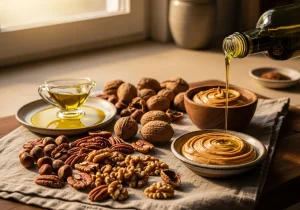
Extra Virgin Olive Oil — the top-ranked source
| Total Fat | 100 g |
|---|---|
| Saturated Fat | 15.4 g |
| Sodium | 2 mg |
| Potassium | 1 mg |
| Total Carbohydrate | 0 g |
| Dietary Fiber | 0 g |
| Total Sugars | 0 g |
| Protein | 0 g |
Top 15 Monounsaturated Fat foods
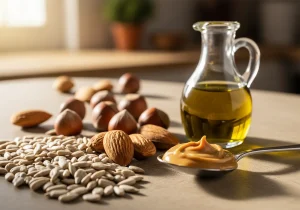
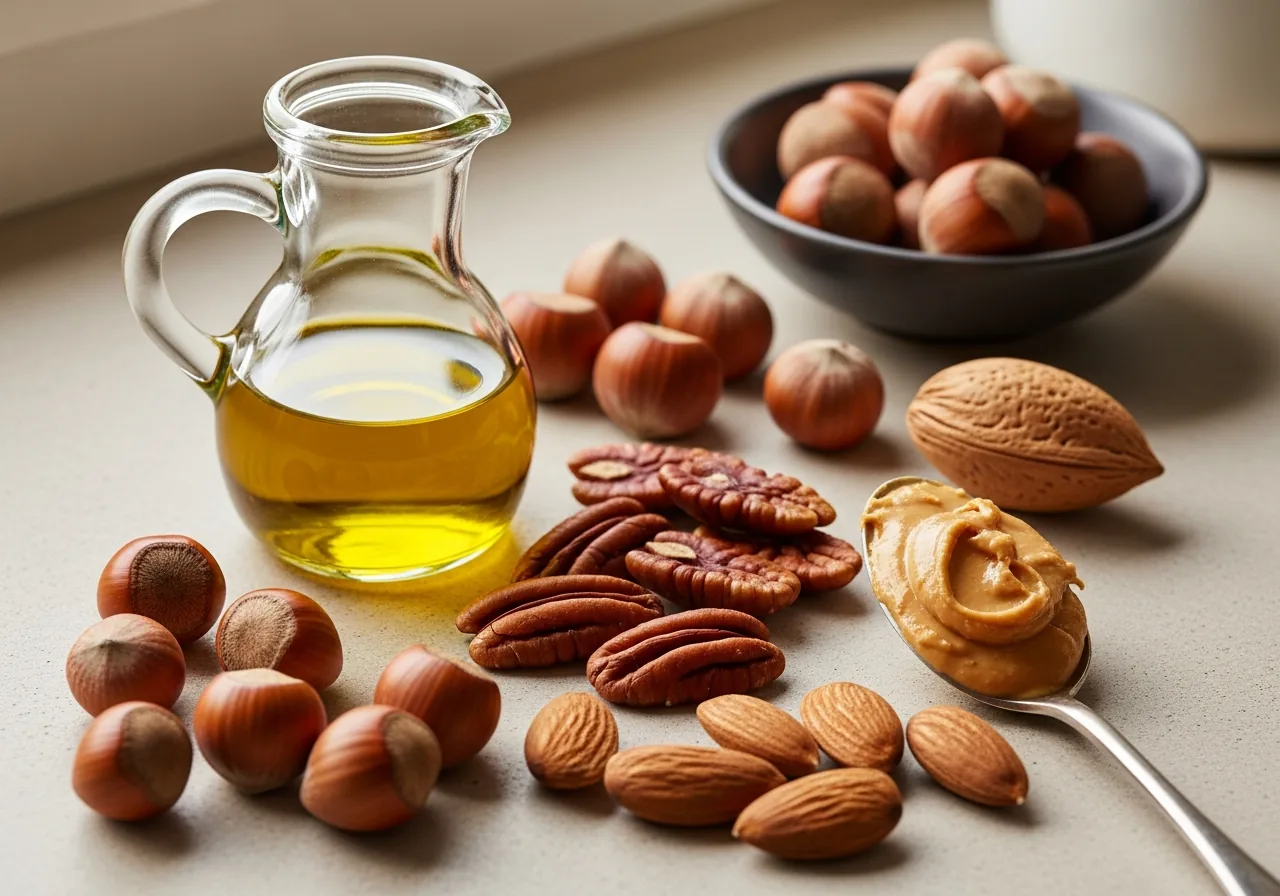
- Extra Virgin Olive Oil — 69.2 g per 100g. Vitamin E, vitamin K, oleocanthal polyphenols
- Hazelnuts — 45.6 g per 100g. Vitamin E, magnesium, manganese
- Pecans — 39.3 g per 100g. Manganese, copper, zinc
- Almonds — 31.3 g per 100g. Vitamin E, magnesium, manganese
- Peanut Butter — 30.7 g per 100g. Niacin, vitamin E, magnesium (natural
- Cashews — 23.8 g per 100g. Magnesium, copper, manganese
- Pistachios — 23.3 g per 100g. Vitamin B6, potassium, magnesium
- Sesame Seeds — 18.8 g per 100g. Calcium, lignans, magnesium
- Sunflower Seeds — 18.5 g per 100g. Vitamin E, magnesium, selenium
- Pumpkin Seeds — 16.2 g per 100g. Magnesium, zinc, iron
- Dark Chocolate (70–85%) — 12.8 g per 100g. Iron, magnesium, copper
- Avocado — 9.80 g per 100g. Folate, vitamin K, vitamin E
- Walnuts — 9.63 g per 100g. Copper, manganese, plant omega-3 (ALA)
- Cheddar Cheese — 8.43 g per 100g. Calcium, protein, vitamin B12
- Parmesan — 7.52 g per 100g. Calcium, protein, vitamin B12
How to actually eat more Monounsaturated Fat
A handful of additions usually move the needle more than a full diet reset. Monounsaturated Fat is best consumed from whole foods rather than supplements whenever possible. Try adding one new source each week, track how you feel, and build from there rather than forcing every meal to hit a target.
For broader context, see our Heart Health hub and the Monounsaturated Fat compound page.
Common questions
How much Monounsaturated Fat do I need a day? Needs differ by age, sex, life stage and health status. The figures here are not prescriptions; use them to compare foods, then apply your own context.
Are supplements better than food sources? Not automatically. Food provides co-factors such as fibre, fat and other micronutrients that help the body use Monounsaturated Fat effectively. Supplements are useful for filling confirmed gaps.