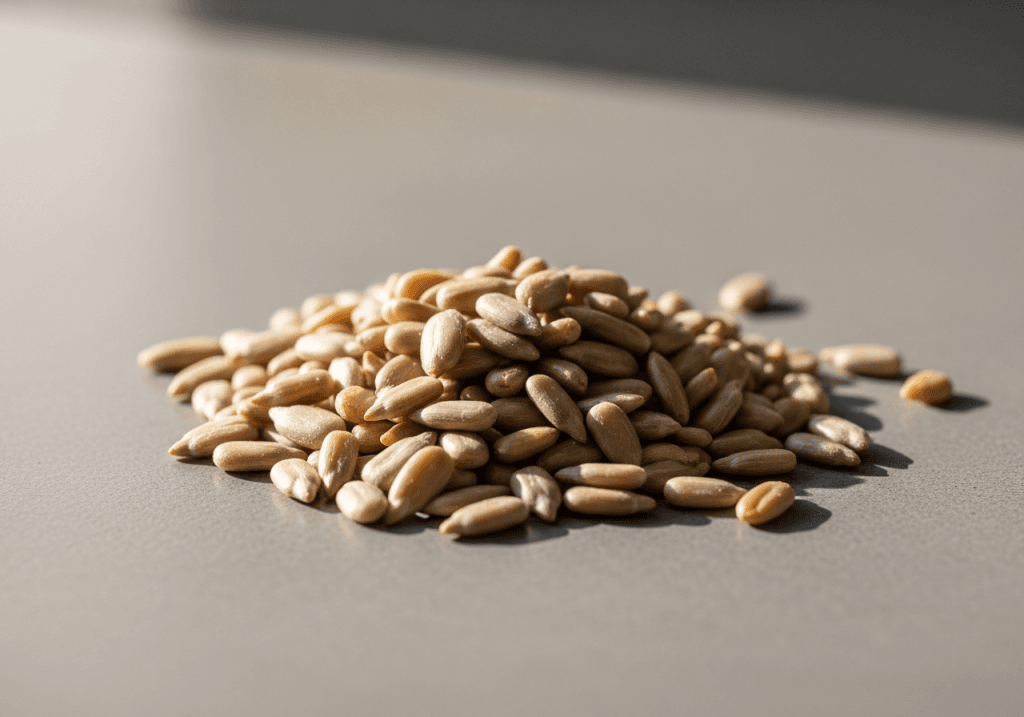
Sunflower seeds are a small kernel with a big nutritional return, and one of the easiest ways to scatter healthy fats and minerals across a meal. Pressed from the cheerful flower that follows the sun, they are a notable source of vitamin E and unsaturated fats, which is why they feature in research on skin health and heart health.
Compounds & anti-nutrients in Sunflower Seeds
Per 100 g, Sunflower Seeds is a notable dietary source of these active compounds. Tap any to see its full sources map and how to work with it.
- Vitamin E 35.17 mg 234.5% DV
- Copper 1.88 mg 208.3% DV
- Manganese 2.63 mg 114.3% DV
- Vitamin B6 1.35 mg 79.1% DV
- Magnesium 301.9 mg 71.9% DV
- Phosphorus 732 mg 58.6% DV
- Folate 227 ug 56.8% DV
- Zinc 5.58 mg 50.7% DV
- Dietary Fibre 7.22 g 25.8% DV
- Iron 4.37 mg 24.3% DV
- Potassium 656.8 mg 14% DV
- Choline 55.1 mg 10% DV
- Calcium 115.6 mg 8.9% DV
- Chlorogenic Acid 2,000 mg
- Monounsaturated Fat 18.53 g
Why sunflower seeds are good for you
Sunflower seeds are one of the very best food sources of vitamin E, a fat-soluble antioxidant that helps protect cell membranes and skin from oxidative damage. They are also a standout source of magnesium, a mineral many diets fall short on that is involved in muscle and nerve function, plus selenium and a useful amount of plant protein and fibre. The bulk of their fat is the unsaturated kind that nutrition guidance encourages in place of saturated fat.
Because vitamin E is fat-soluble, the seeds’ own healthy oils help the body absorb it, so they work as a self-contained little package.
Sunflower seeds nutrition at a glance
The full breakdown is in the label above. The key context is that sunflower seeds are energy-dense, as all seeds are, so they are best enjoyed by the sprinkle rather than the bowlful. A small daily scattering adds meaningful nutrition without overdoing the calories. Choosing unsalted seeds avoids the extra sodium that salted, roasted versions carry.
How to buy, store and use sunflower seeds
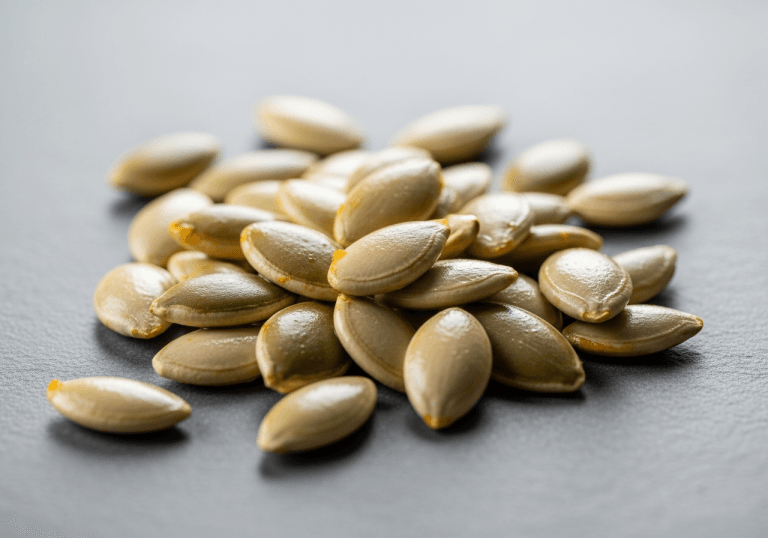
Buy plain, unsalted kernels and give them a sniff if you can, since their high oil content means they can turn rancid over time; a stale, bitter smell is the giveaway. Keep them in an airtight container somewhere cool and dark, or in the fridge or freezer for longer storage. Toasting them briefly deepens their flavour. Scatter them over a salad, stir them through porridge, or blend them with other seeds like pumpkin seeds for a crunchy topping.
Common questions
Are sunflower seeds good for your skin? They are an excellent source of vitamin E, an antioxidant linked to protecting skin cells from oxidative stress, so they are a sensible addition to a skin-friendly diet alongside a varied range of whole foods.
How many sunflower seeds should you eat a day? A small handful, around a tablespoon or two, is a sensible daily amount. They are nutrient-rich but calorie-dense, so a modest sprinkle gives the benefit without tipping the energy balance.
Explore by health goal
Sunflower Seeds is one of many foods that support these goals: