Pumpkin seeds are the protein choice; sunflower seeds are the fibre one. Per 100 g pumpkin seeds carry 29.9 g of protein to sunflower’s 18.9 g — over half as much again — for fewer calories (555 against 609) and less total fat (40 g against 48.4 g). Sunflower seeds come back with more fibre, 7.2 g against 5.1 g, and half the saturated fat (4.46 g against 8.7 g).
Potassium is close, 691 mg for pumpkin against 657 mg for sunflower. Neither is a food you eat 100 g of in one go — a normal handful is 20–30 g, so divide these figures by three or four for a realistic portion.
| Nutrient | Sunflower Seeds | Pumpkin Seeds |
|---|---|---|
| Calories | 609 kcal | 555 kcal |
| Protein | 18.9 g | 29.9 g ✓ |
| Total Carbohydrate | 24.5 g | 18.7 g |
| Dietary Fiber | 7.22 g ✓ | 5.08 g |
| Total Sugars | 2.62 g | 1.4 g ✓ |
| Total Fat | 48.4 g | 40 g |
| Saturated Fat | 4.46 g ✓ | 8.7 g |
| Sodium | 0 mg | 0 mg |
Notable compounds in each
When to choose each
Reach for pumpkin seeds when protein is the goal, and for their standing as one of the better plant sources of zinc and magnesium. Reach for sunflower seeds for more fibre, less saturated fat, and a milder flavour that disappears into a salad or a loaf where pumpkin seeds announce themselves.
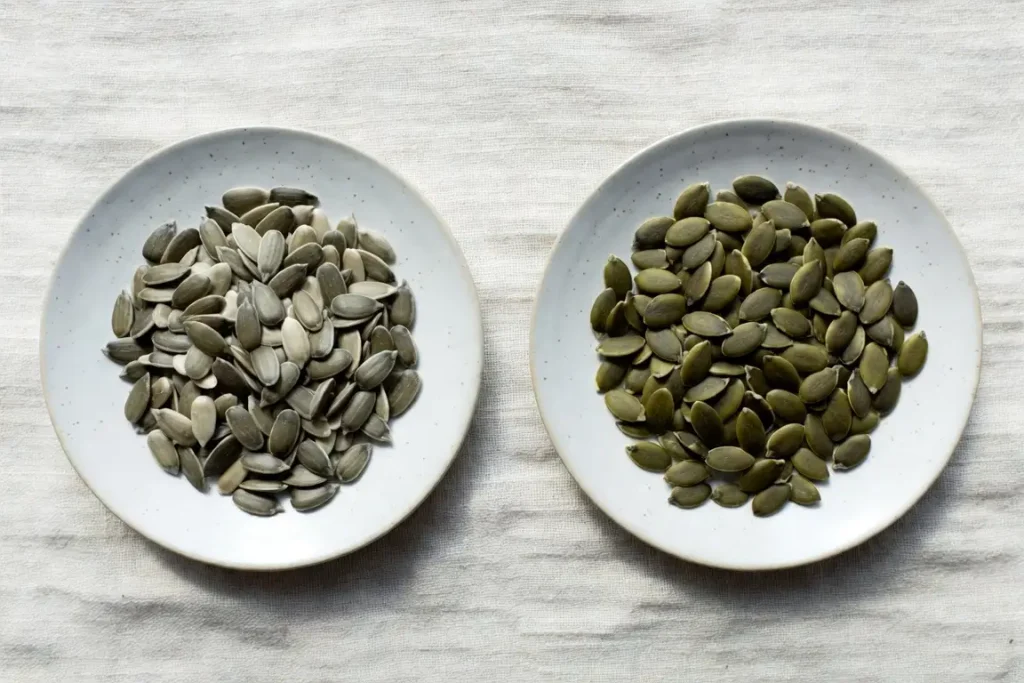
Sunflower seeds vs pumpkin seeds nutrition per 100g
Both are raw and unsalted here. Roasted and salted versions of either can carry several hundred milligrams of sodium per 100 g where these carry essentially none, which is the single biggest thing the label changes.
The saturated fat gap is worth reading in context: 8.7 g per 100 g of pumpkin seeds is about 2 g in a 25 g handful, and both seeds are overwhelmingly unsaturated fat either way.
Common questions
Which is better, sunflower or pumpkin seeds? Pumpkin seeds for protein, zinc and magnesium; sunflower seeds for fibre, vitamin E and lower saturated fat. Neither is meaningfully better overall, and they are cheap enough to keep both.
Do pumpkin seeds have more protein than sunflower seeds? Yes, clearly — 29.9 g per 100 g against 18.9 g. Pumpkin seeds are among the highest protein plant foods by weight in the database.
How many calories are in a handful of seeds? A 25 g handful is roughly 150 calories of sunflower seeds or 140 of pumpkin seeds. The per-100 g figures above are about four handfuls.
Are seeds better raw or roasted? Nutritionally they are close. Roasting can reduce some heat-sensitive vitamins slightly, but the bigger practical difference is that roasted seeds are usually salted, which raw ones are not.