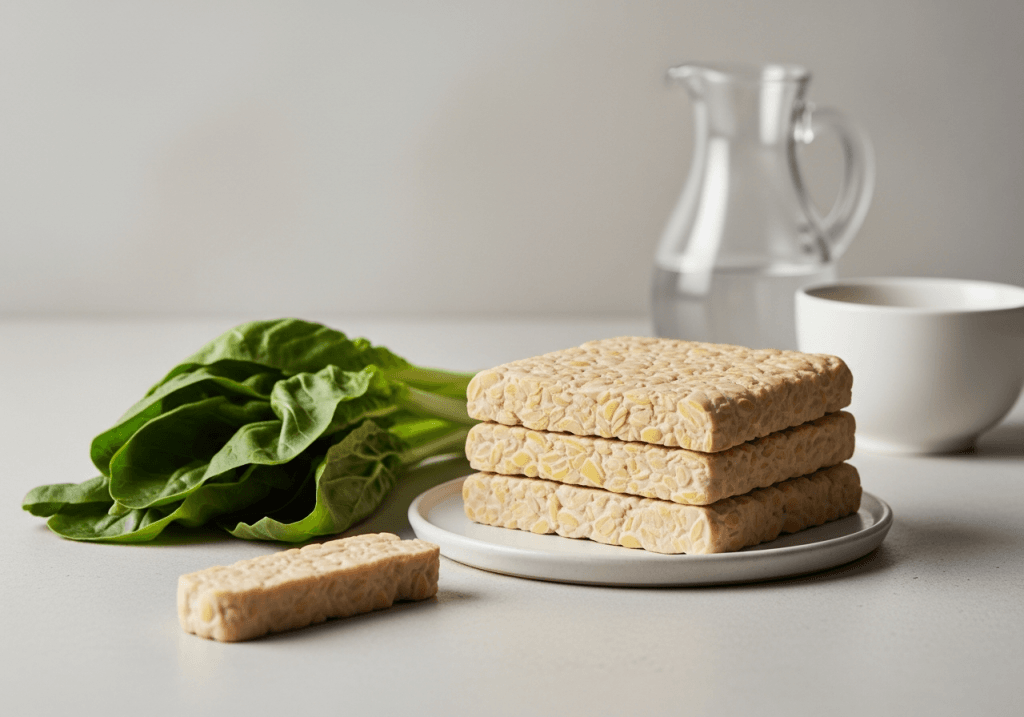
Tempeh is what happens when whole soya beans are bound together by a friendly fungus into a firm, savoury cake, and that fermentation is its quiet superpower: it makes one of the most complete plant proteins easier to digest. As a wholefood soya product, tempeh features in research on heart health, bone health and gut health.
Compounds & anti-nutrients in Tempeh
Per 100 g, Tempeh is a notable dietary source of these active compounds. Tap any to see its full sources map and how to work with it.
Why tempeh is good for you
Tempeh is an excellent source of complete plant protein, supplying all the essential amino acids, which makes it a valuable staple for vegetarians and vegans alike. It carries soya isoflavones, plant compounds studied for their links to heart and bone health, along with magnesium and manganese for energy and metabolic function. Because it is made from whole beans rather than soya protein isolate, tempeh retains fibre, and its fermentation can make minerals more available by reducing the phytates that otherwise bind them.
The fermentation also produces compounds and live cultures that some research links to gut health, although these are reduced once tempeh is cooked.
Tempeh nutrition at a glance
The full breakdown is in the label above. In short, tempeh is a protein-dense, fibre-containing wholefood with naturally low sodium and no added salt of its own, which sets it apart from many processed meat alternatives. Its calories come mostly from protein and the heart-friendly unsaturated fats native to soya beans.
How to choose, store and cook tempeh
Good tempeh is firm and dense with a thin white bloom of mould binding the beans; grey or black patches are normal, but slimy texture or an ammonia smell is not. Keep it chilled and use it within its date, or freeze it. Its flavour is nutty and a touch bitter raw, so steaming or simmering it briefly before marinating mellows it and helps it soak up flavour; then pan-fry, grill or bake until golden. It works beautifully in stir-fries alongside brown rice, or crumbled into a sauce in place of tofu.
Common questions
Is tempeh healthier than tofu? Both are nourishing soya foods. Tempeh is made from whole, fermented beans, so it tends to bring more fibre and protein per serving, while tofu is softer and milder; the best choice depends on the dish.
Can you eat tempeh raw? It is safest to cook tempeh first. A brief steam or simmer ensures it is heated through, improves its flavour and texture, and is the standard way to prepare it before frying or baking.
Explore by health goal
Tempeh is one of many foods that support these goals: