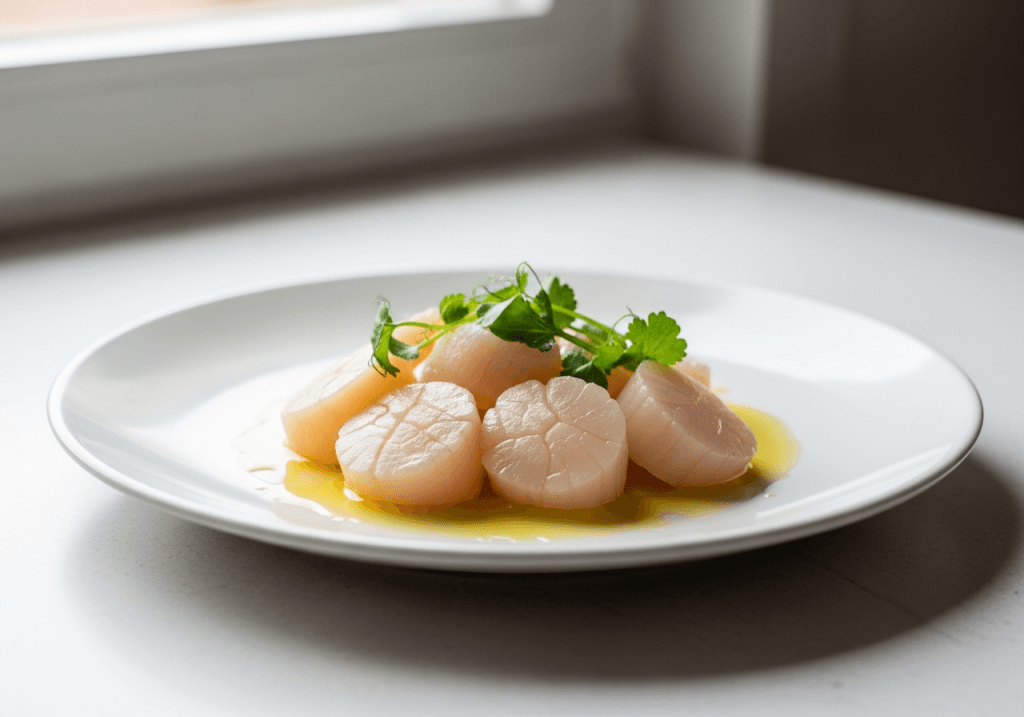
Scallops are the sweet, delicate prize of the shellfish world, prized as much for that caramelised golden crust as for their tender bite. Behind the restaurant glamour is an unusually lean food: scallops are almost pure protein with very little fat, which makes them a smart choice for weight management, brain health and heart health.
Compounds & anti-nutrients in Scallops
Per 100 g, Scallops is a notable dietary source of these active compounds. Tap any to see its full sources map and how to work with it.
Why scallops are good for you
Scallops deliver a clean dose of complete protein for remarkably few calories, supplying all the essential amino acids with barely any fat. They are a notable source of vitamin B12, which supports nerve health and red blood cell formation, along with selenium and phosphorus for antioxidant defence and bone structure. They also provide some zinc, the mineral that underpins immune function and tissue repair.
Like other shellfish, scallops contain purines, which the body converts to uric acid, so anyone managing gout may prefer to keep portions modest.
Scallops nutrition at a glance
The full breakdown is in the nutrition label above. The headline is lean, high-quality protein with minimal fat, making scallops one of the lightest ways to enjoy seafood. Two caveats are worth knowing: they are naturally on the salty side, and some are treated with phosphate solutions that make them soak up water, so seeking out dry-packed or diver scallops gives you better flavour and a far better sear.
How to buy, store and cook scallops
Choose plump, ivory or pale-pink scallops that smell sweet and of the sea rather than fishy, and ask for dry-packed where you can. Keep them very cold and cook them the same day. The secret to a good sear is dryness: pat them thoroughly with kitchen paper, then cook in a hot pan with a little oil for only a minute or two each side, until just opaque and golden, as overcooking turns them rubbery. They are lovely with a squeeze of lemon and pair well with asparagus or a side of couscous.
Common questions
Are scallops good for weight loss? They are exceptionally lean, offering plenty of filling protein for very few calories and almost no fat, which makes them a useful food when managing weight, provided they are not cooked in lots of butter.
Can you eat scallops slightly underdone? Cooked scallops should be just opaque in the centre; raw or rare scallops are eaten by some but carry the usual risks of raw shellfish, so cooking them through is the safest choice, especially for vulnerable groups.
Explore by health goal
Scallops is one of many foods that support these goals: