Two shellfish that show up together on most seafood platters – both very lean, both quick to cook, and both naturally higher in sodium than fin fish or poultry.
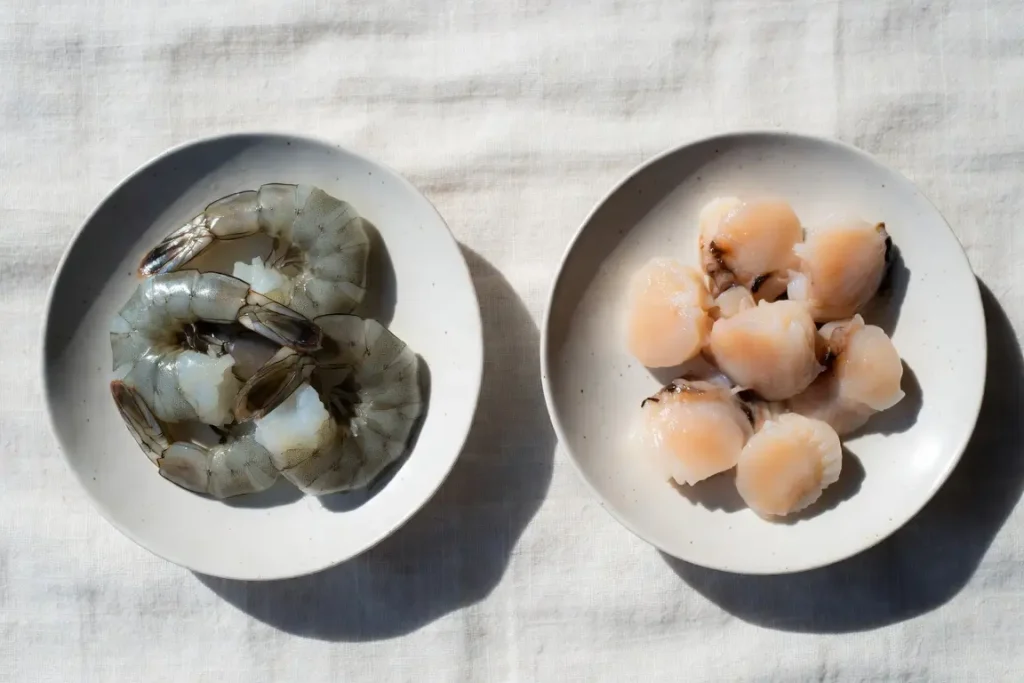
| Nutrient | Shrimp | Scallops |
|---|---|---|
| Calories | 71.4 kcal | 69 kcal |
| Protein | 15.6 g ✓ | 12.1 g |
| Total Carbohydrate | 0.49 g | 3.18 g |
| Dietary Fiber | 0 g | 0 g |
| Total Sugars | — | 0 g |
| Total Fat | 0.8 g | 0.49 g |
| Saturated Fat | 0.1 g ✓ | 0.13 g |
| Sodium | 475 mg | 392 mg ✓ |
Notable compounds in each
When to choose each
Shrimp has the protein edge – nearly a third more per 100g than scallops – while scallops carry a little less sodium and bring a touch of natural carbohydrate and sweetness that shrimp doesn’t have. Both are very low in fat and calories for the protein they deliver, making either a lean choice; shellfish in general runs higher in sodium than fish or poultry, which is worth factoring in on a sodium-watched diet.
Common questions
Why is shrimp higher in sodium than most seafood? Shellfish naturally carry more sodium than fin fish or poultry because of how they regulate salt from seawater – it’s an inherent trait of the food, not necessarily added salt, though processing such as brining can push it higher still.
Which has fewer calories, shrimp or scallops? They’re very close – scallops are marginally lower at around 69 kcal per 100g raw versus roughly 71 kcal for shrimp, a difference too small to matter in practice.