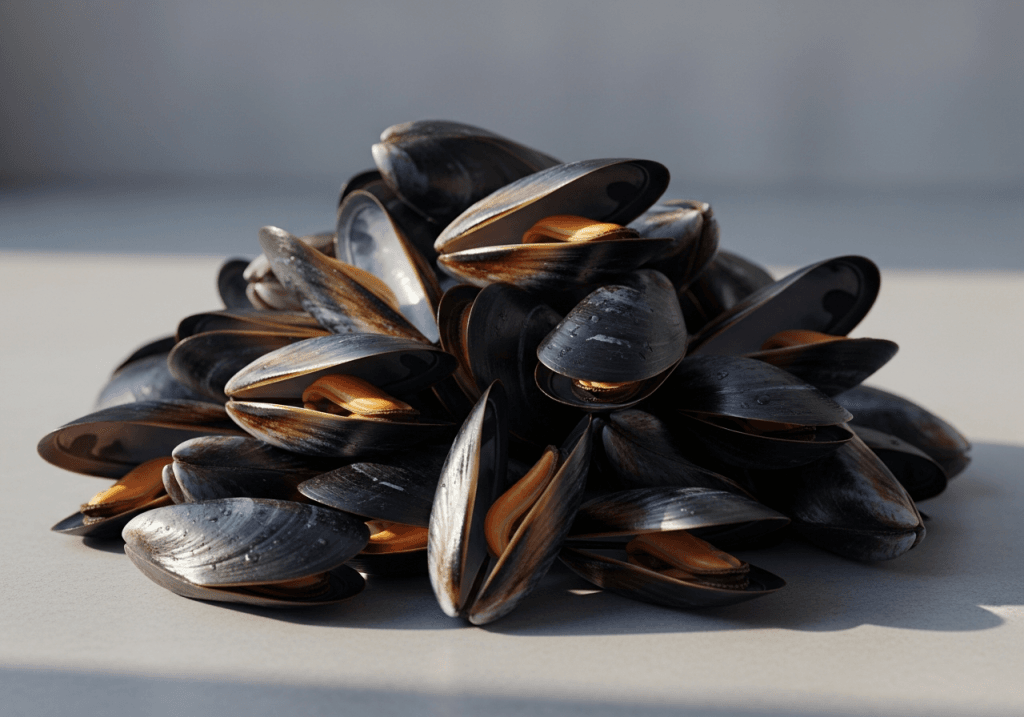
Mussels are the most sustainable, nutrient-dense bivalve in the supermarket: 100 g delivers roughly 18 g of complete protein, vitamin B12, iron, selenium and omega-3 EPA and DHA, all for under 100 kcal. That combination is why mussels appear in research on heart health and energy and performance.
Compounds & anti-nutrients in Mussels
Per 100 g, Mussels is a notable dietary source of these active compounds. Tap any to see its full sources map and how to work with it.
Why mussels are good for you
Mussels filter feed on plankton, which gives them an exceptional nutrient profile without the mercury accumulation of larger predatory fish. They are one of the best sources of vitamin B12 among all foods, and they supply heme iron, selenium and omega-3s at levels comparable to salmon. They are also one of the most sustainable farmed proteins available, with almost no feed input required.
Mussels nutrition at a glance
The label shows the numbers, but the practical message is that mussels are a cheap, low-impact complete protein that cooks in minutes. The main quality variable is freshness: live mussels should close tightly when tapped; discard any that remain open or smell off.
How to buy and cook mussels
Choose live mussels with tightly closed shells and a fresh, sea-like smell. Store in the fridge and cook within a day or two. Scrub the shells under cold water and pull away the beards — the fibrous tuft — before cooking. Steam in a pot with white wine, garlic, olive oil and herbs for 5–7 minutes until the shells open. Discard any unopened shells. Serve with crusty bread to soak up the broth. Mussels also work in paella, chowder and pasta.
Common questions
Are mussels sustainable? Yes — mussel farming is one of the most sustainable protein production systems on earth, with no feed inputs and water filtration benefits.
Are mussels high in cholesterol? Mussels contain dietary cholesterol, but like all shellfish they are low in saturated fat, which is the main dietary driver of blood cholesterol for most people.
Explore by health goal
Mussels is one of many foods that support these goals: