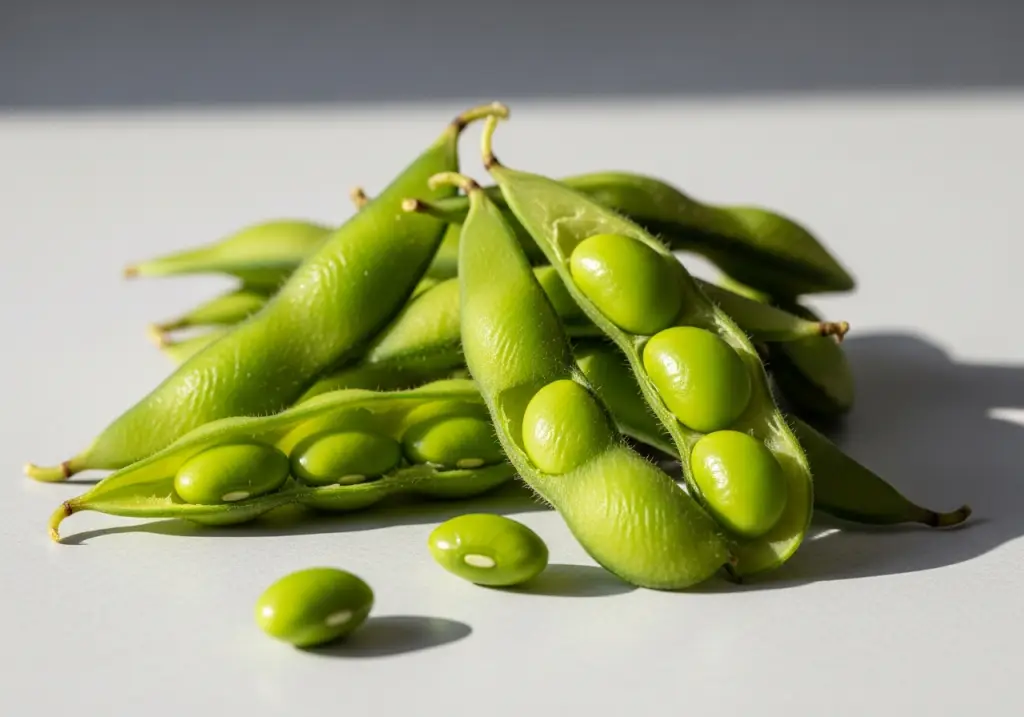
Edamame is simply immature soybeans, steamed or boiled in the pod, and it is one of the few plant foods that delivers complete protein with all nine essential amino acids. A 100 g portion supplies roughly 11 g of protein, 9 g of fibre and useful folate, vitamin K and iron. That package is why edamame appears in research on weight management, heart health and bone health.
Compounds & anti-nutrients in Edamame
Per 100 g, Edamame is a notable dietary source of these active compounds. Tap any to see its full sources map and how to work with it.
Why edamame is good for you
Soy protein is the benchmark plant protein for a reason: its amino acid profile is close to whey, making it genuinely useful for muscle maintenance and satiety. Edamame also supplies fibre, folate for cell division, and isoflavones — plant compounds that mimic oestrogen weakly and may support bone and cardiovascular health in peri- and post-menopausal people. The evidence for isoflavones is mixed, but the protein and fibre benefits are not.
Edamame nutrition at a glance
The label shows the numbers, but the practical message is that edamame is a high-protein, high-fibre snack that is ready in minutes. Frozen edamame is almost as good as fresh if you steam it well.
How to buy and eat edamame
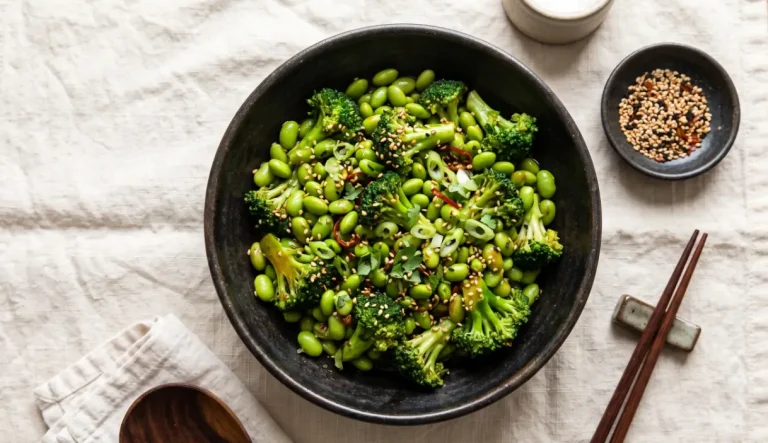
Frozen edamame in the pod is the most common form. Steam or boil for 3–5 minutes, sprinkle with flaky sea salt, and squeeze the beans out of the pods with your teeth. Shelled edamame works in salads, stir-fries with broccoli and garlic, or blended into dips with olive oil and lemon. Store in the freezer until use.
Common questions
Is edamame good for weight loss? Yes — the protein and fibre together promote satiety, and a 100 g portion is only about 120 kcal.
Should I worry about soy and oestrogen? For most people, dietary soy isoflavones are weak and do not meaningfully raise oestrogen levels. Concerns are mostly theoretical and not supported by large cohort data.
Explore by health goal
Edamame is one of many foods that support these goals: