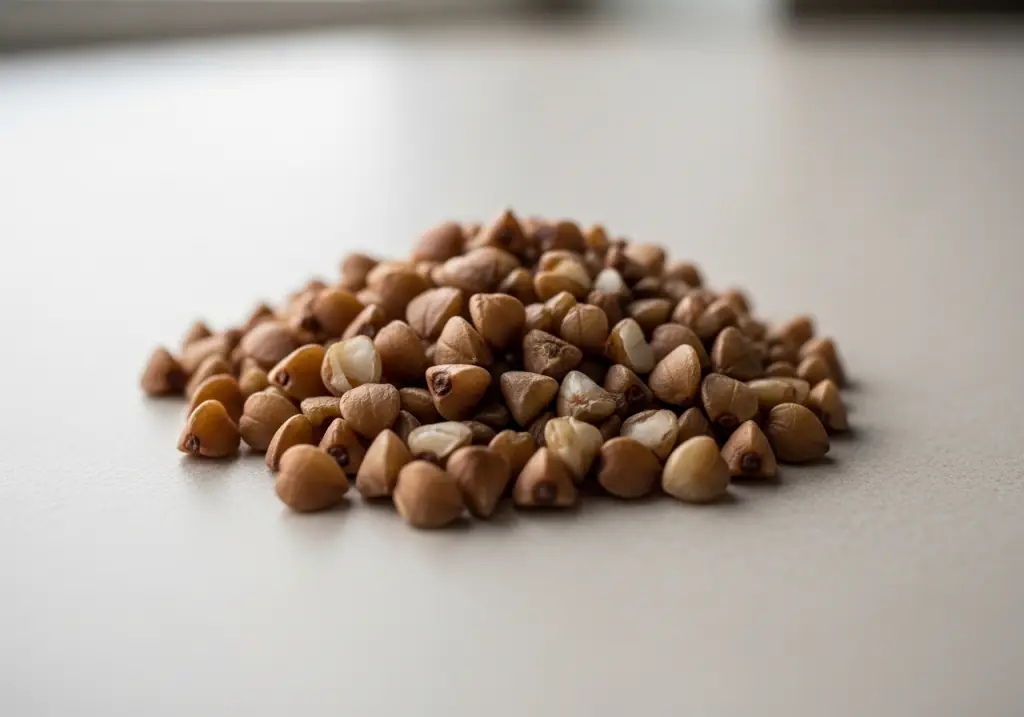
Buckwheat is a pseudocereal — botanically unrelated to wheat — that stands out for its complete plant protein, high magnesium and a unique flavonoid called rutin. A 100 g portion of dry buckwheat delivers roughly 13 g of protein, 10 g of fibre and over 200 mg of magnesium. That combination is why buckwheat appears in research on heart health and blood sugar control.
Compounds & anti-nutrients in Buckwheat
Per 100 g, Buckwheat is a notable dietary source of these active compounds. Tap any to see its full sources map and how to work with it.
Why buckwheat is good for you
Buckwheat’s protein is complete, which is unusual for a plant food, and its magnesium content is exceptional for a grain-like staple. Rutin, the dominant flavonoid in buckwheat, has antioxidant and vasoprotective properties in vitro, and buckwheat also supplies D-chiro-inositol, a compound linked to improved insulin signalling in some studies. The grain is naturally gluten-free, which is why buckwheat flour and groats are staples in gluten-free baking and porridge.
Buckwheat nutrition at a glance
The label shows the numbers, but the practical message is that buckwheat is a gluten-free wholegrain with a nutty flavour and a lower glycaemic impact than white rice or white wheat. It cooks faster than brown rice and works well in both sweet and savoury preparations.
How to buy and cook buckwheat
Choose whole buckwheat groats for grain bowls and porridge; buckwheat flour is useful for pancakes and baking. Rinse briefly before cooking. Use a 2:1 water-to-groat ratio, bring to the boil, then simmer covered for 15–20 minutes. Buckwheat pairs well with mushrooms, salmon and olive oil. Toasted buckwheat, or kasha, has a deeper, nuttier flavour.
Common questions
Is buckwheat gluten-free? Yes, buckwheat is naturally gluten-free, but cross-contamination can occur in processing. Look for a gluten-free label if you have coeliac disease.
Is buckwheat a grain? Botanically, no — it is a pseudocereal related to sorrel and rhubarb. Culinary-wise, it is used like a grain and often grouped with cereals.
Explore by health goal
Buckwheat is one of many foods that support these goals: