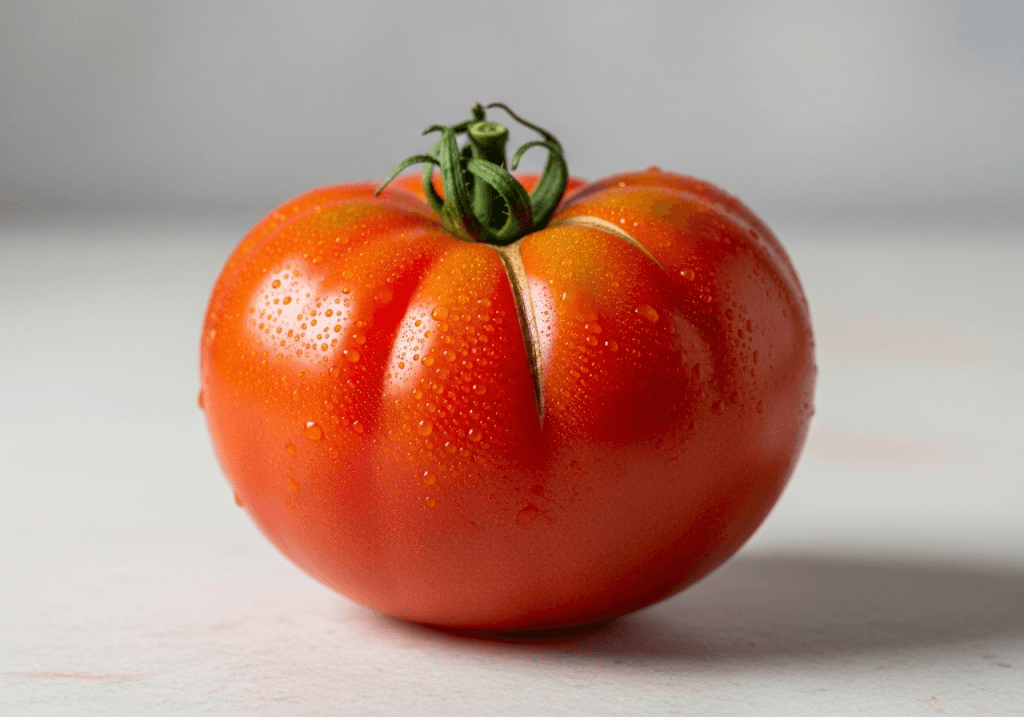
Tomatoes are the world’s most consumed “vegetable” though botanically a fruit, and their red colour comes from lycopene — one of the most studied carotenoids for cardiovascular and prostate health. A 100 g portion delivers roughly 14 mg of vitamin C, useful fibre, potassium and vitamin K. That combination is why tomatoes appear in research on heart health and prostate health.
Compounds & anti-nutrients in Tomato
Per 100 g, Tomato is a notable dietary source of these active compounds. Tap any to see its full sources map and how to work with it.
Why tomatoes are good for you
Tomatoes’ lycopene content is exceptional, and it is better absorbed when the cell walls are broken down by cooking and when consumed with fat — which is why tomato sauce with olive oil is more bioavailable than raw tomatoes. The vitamin C and fibre content are also useful, and tomatoes supply potassium for blood pressure regulation. The main caveat is pesticide residue: tomatoes often appear on the Dirty Dozen list, so wash well or buy organic.
Tomato nutrition at a glance
The label shows the numbers, but the practical message is that tomatoes are a low-calorie, versatile base with a genuine lycopene edge. Cooked tomatoes with fat are the most bioavailable form.
How to buy and use tomatoes
Choose firm, heavy tomatoes with smooth, unblemished skin. Vine-ripened tomatoes have better flavour than those picked green. Store at room temperature for best flavour; refrigeration dulls the taste. Use tomatoes raw in salads with olive oil and basil, cooked into sauces with garlic and onion, roasted with olive oil for a side dish, or blended into gazpacho. Tomato paste is concentrated in lycopene and useful as a base.
Common questions
Are cooked tomatoes better than raw? Yes for lycopene — cooking breaks down cell walls and makes lycopene more bioavailable, especially when combined with fat.
Do tomatoes cause acid reflux? They can in sensitive people because of their acidity. If you have GERD, limit raw tomatoes and avoid tomato juice.
Explore by health goal
Tomato is one of many foods that support these goals: