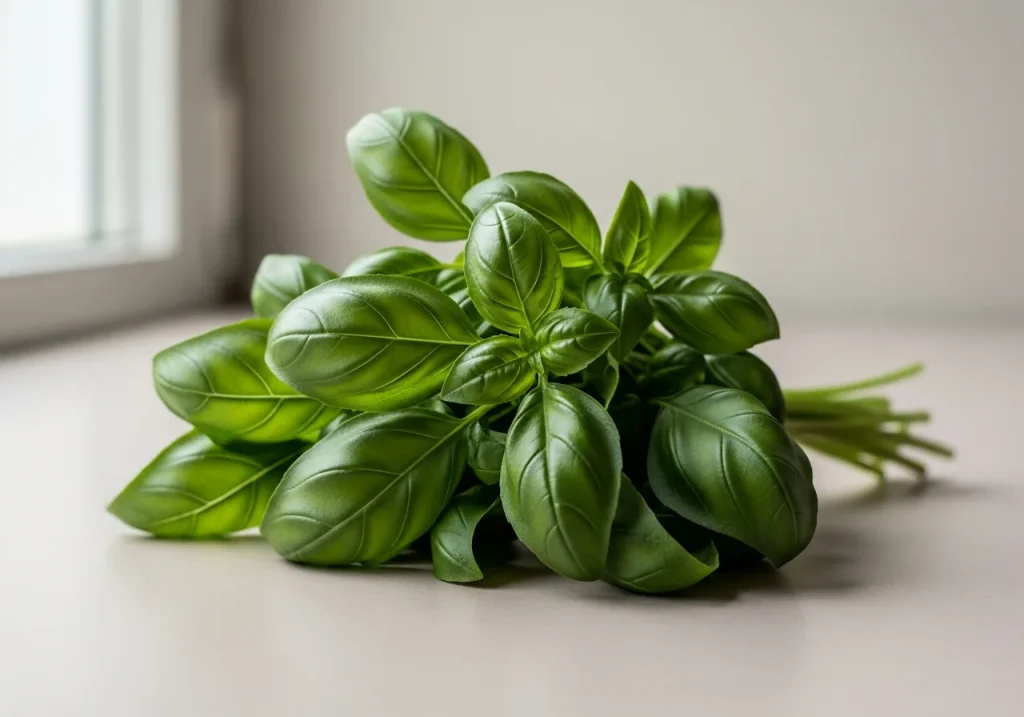
Basil is the king of sweet herbs, and its bright, peppery flavour is the defining note of Mediterranean cooking. Beyond flavour, basil supplies vitamin K, vitamin C and a set of essential oils — most notably eugenol, linalool and rosmarinic acid — that have anti-inflammatory and antimicrobial properties in vitro. That combination is why basil appears in research on immune support and anti-inflammatory eating.
Compounds & anti-nutrients in Basil
Per 100 g, Basil is a notable dietary source of these active compounds. Tap any to see its full sources map and how to work with it.
Why basil is good for you
Basil’s nutritional content per 100 g is modest but real: vitamin K for bone health, vitamin C for immune function, and vitamin A precursors. The essential oils are the pharmacological interest: rosmarinic acid inhibits inflammatory enzymes in vitro, and eugenol has analgesic and antimicrobial effects. The caveat is that basil’s health compounds are volatile and degrade quickly with heat, so adding fresh basil at the end of cooking preserves more of them.
Basil nutrition at a glance
The label shows the numbers, but the practical message is that basil is a low-calorie flavour multiplier with a useful antioxidant edge. A handful of fresh leaves added to a salad or pasta contributes meaningful polyphenols without changing the dish’s calorie count.
How to buy and use basil
Choose fresh basil with bright, unbruised leaves and no yellowing or flowering. Store in the fridge in a glass of water, or freeze in olive oil for longer storage. Use fresh basil at the end of cooking or raw; dried basil is convenient but loses much of the volatile oil content. Basil pairs naturally with tomato, mozzarella, garlic and olive oil.
Common questions
Does basil have medicinal properties? The essential oils have documented antimicrobial and anti-inflammatory effects in vitro, but the clinical evidence for specific disease outcomes is limited. It is best used as part of an overall herb-rich diet.
Should I grow my own basil? Yes — basil loses flavour quickly after picking, and home-grown basil picked straight from the pot is noticeably more aromatic than shop-bought.
Explore by health goal
Basil is one of many foods that support these goals: