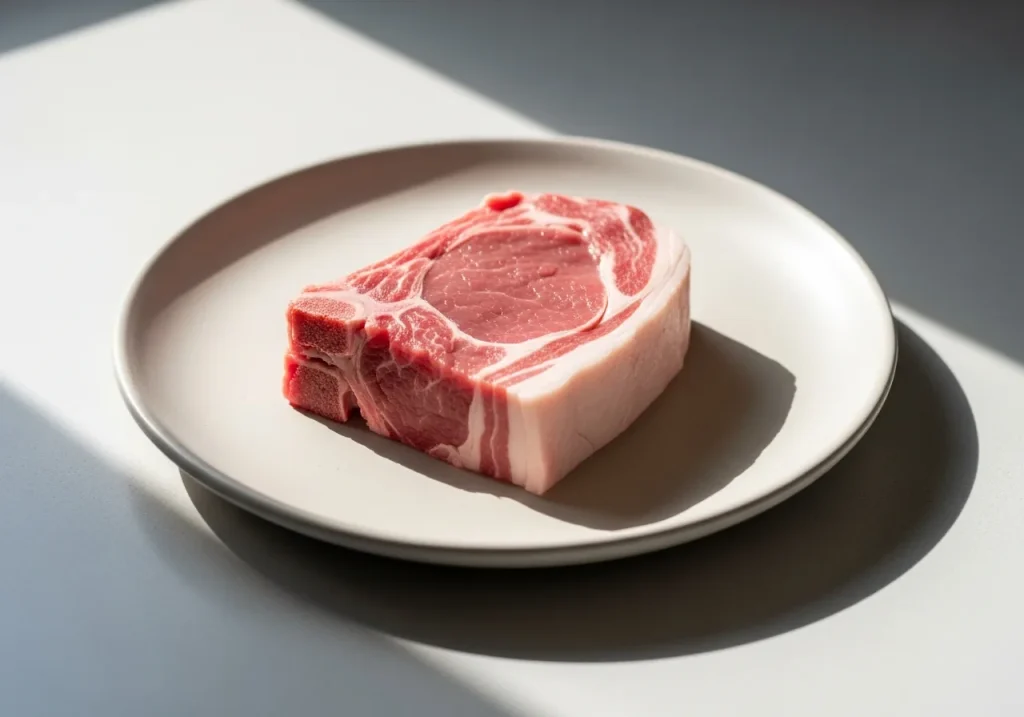
Lamb is one of the oldest domesticated meats, and it remains a nutritional standout: 100 g of lean lamb delivers roughly 25 g of complete protein, heme iron, vitamin B12, zinc and selenium, with a flavour that needs little enhancement. That nutrient package is why lamb appears in research on energy and performance and muscle health.
Compounds & anti-nutrients in Lamb
Per 100 g, Lamb is a notable dietary source of these active compounds. Tap any to see its full sources map and how to work with it.
Why lamb is good for you
Lamb’s protein is complete and highly bioavailable, making it useful for muscle maintenance, satiety and weight management. The iron is heme iron, the form most easily absorbed by the body, and lamb supplies more iron per 100 g than most other red meats. The zinc content is also high, which matters for testosterone production and immune function. Lamb also contains creatine and taurine, concentrated in muscle and brain tissue.
Lamb nutrition at a glance
The label shows the numbers, but the practical message is that lamb is a flavourful, nutrient-dense red meat that is best eaten in moderate portions. The main caveat is saturated fat — choose lean cuts such as loin or leg, and trim visible fat.
How to buy and cook lamb
Choose lamb with firm, pinkish-red flesh and no off smell. Younger lamb is milder and more tender; older mutton has a stronger flavour and needs slow cooking. Cook lean cuts — loin, leg, rack — by grilling, roasting or pan-searing to medium-rare for best texture. Lamb pairs naturally with rosemary, garlic, mint, olive oil and lemon. Rest for 10 minutes before carving.
Common questions
Is lamb healthier than beef? Nutritionally they are similar. Lamb has slightly more fat and a different fatty acid profile, including more CLA, but both are excellent sources of complete protein, iron and B12.
Does lamb cause inflammation? In normal portions, unprocessed lamb is not consistently linked to higher inflammatory markers in cohort studies. Processed lamb — salted, cured or smoked — is more of a concern.
Explore by health goal
Lamb is one of many foods that support these goals: