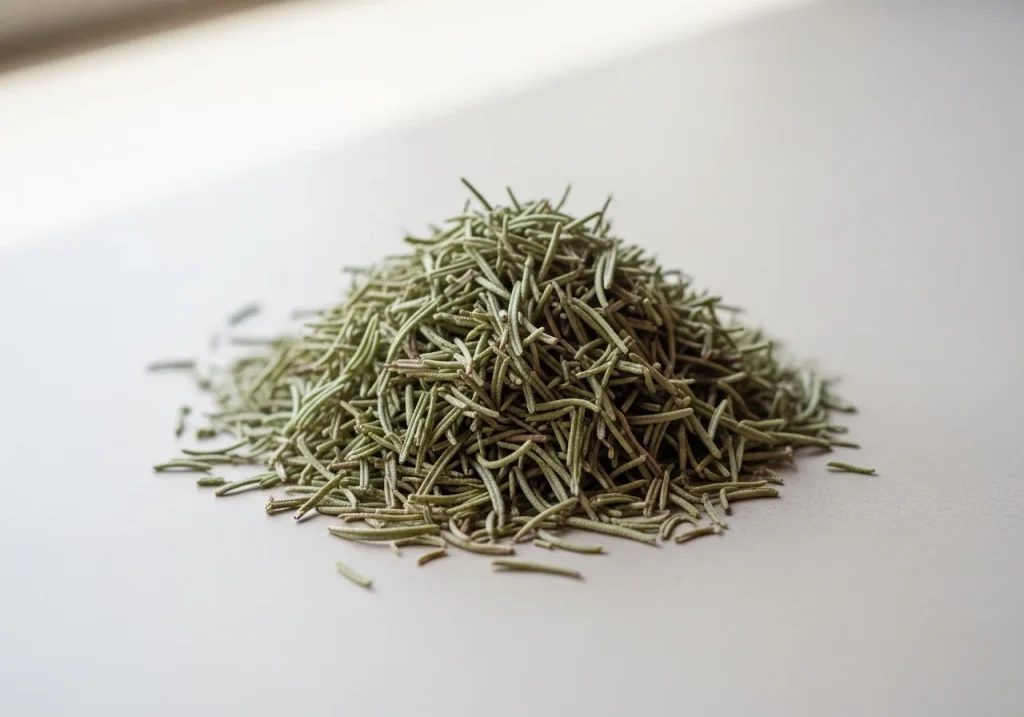
Rosemary is the woody Mediterranean herb whose needle-like leaves contain rosmarinic acid, carnosol and ursolic acid — compounds with documented antioxidant, anti-inflammatory and neuroprotective effects. That combination is why rosemary appears in research on brain health, anti-inflammatory eating and heart health.
Compounds & anti-nutrients in Rosemary
Per 100 g, Rosemary is a notable dietary source of these active compounds. Tap any to see its full sources map and how to work with it.
Why rosemary is good for you
Rosmarinic acid is the standout compound in rosemary, and it inhibits inflammatory enzymes in vitro and in animal models. Carnosol and carnosic acid are potent antioxidants that protect neurons from oxidative damage, which is why rosemary aroma has been linked to improved memory in small human trials. The herb also supplies useful vitamin C, vitamin A and fibre. The caveat is that rosemary is potent in large medicinal doses and can be pro-convulsant in epilepsy patients.
Rosemary nutrition at a glance
The label shows the numbers, but the practical message is that rosemary is a low-calorie, high-impact herb for roasted and grilled foods. Even the aroma has documented cognitive effects, so keeping a pot on the windowsill or using fresh rosemary in cooking may have subtle mental benefits.
How to buy and use rosemary
Choose fresh rosemary with bright green needles and no yellowing or dryness. Store in the fridge for up to a couple of weeks, or freeze for longer storage. Dried rosemary is more potent but can be bitter if overused. Use rosemary in roasted lamb, potato and chicken, in focaccia, in mushroom dishes and in infused olive oil. A sprig or two per dish is enough.
Common questions
Does rosemary improve memory? Small trials show improved cognitive performance from rosemary aroma, and the carnosol content protects neurons in cell models. The culinary effect is modest but real.
Can rosemary be toxic? In normal culinary amounts, no. Large concentrated doses — especially rosemary oil — can be toxic to the liver and nervous system and may trigger seizures in epilepsy patients.
Explore by health goal
Rosemary is one of many foods that support these goals: