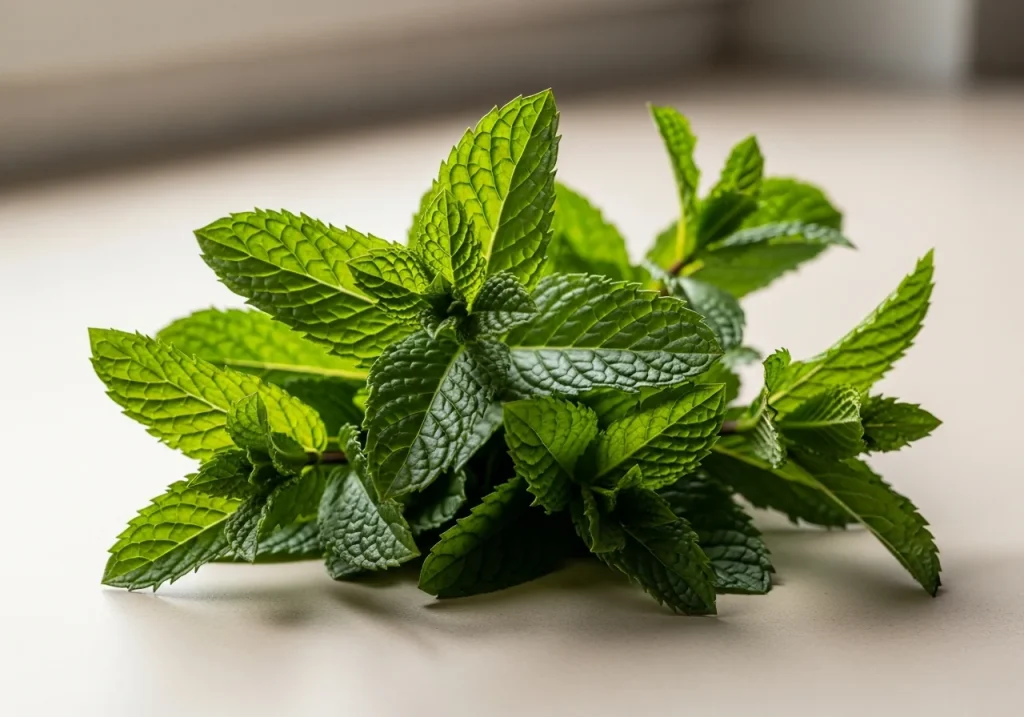
Mint is the cooling herb whose active compound menthol activates TRPM8 receptors — the same cold-sensing receptors that respond to real cold — creating the characteristic cooling sensation. That sensory effect is why peppermint oil is one of the best-studied natural remedies for irritable bowel syndrome, and why mint appears in research on digestive health and respiratory health.
Compounds & anti-nutrients in Mint
Per 100 g, Mint is a notable dietary source of these active compounds. Tap any to see its full sources map and how to work with it.
Why mint is good for you
Mint’s main therapeutic claim is for digestive comfort: peppermint oil relaxes smooth muscle in the gastrointestinal tract, reducing cramping, bloating and pain in IBS patients in multiple trials. The mechanism is calcium-channel blockade in smooth muscle, similar to some antispasmodic drugs but milder. Mint also supplies vitamin A, vitamin C and antioxidants, and the menthol vapour is a decongestant and cough suppressant.
Mint nutrition at a glance
The label shows the numbers, but the practical message is that mint is a zero-calorie digestive and respiratory aid. A cup of peppermint tea after a heavy meal is one of the simplest evidence-aligned habits in nutrition.
How to buy and use mint
Choose fresh mint with bright, unbruised leaves and no yellowing or flowering. Store in the fridge in a glass of water, or freeze in olive oil for longer storage. Use mint in yoghurt dips, in lemon water, in salads with watermelon and feta, or steeped as tea. Mint pairs with lamb, chocolate, peas and olive oil. Peppermint oil capsules are used in IBS trials, but consult a clinician before concentrated use.
Common questions
Does mint help digestion? Yes — peppermint oil relaxes gastrointestinal smooth muscle, reducing IBS symptoms in multiple trials. Peppermint tea provides a milder version of the same effect.
Can peppermint oil cause side effects? Yes — heartburn and reflux are common, and it can worsen symptoms in people with GERD. Enteric-coated capsules reduce this risk.