Almonds are one of the most nutrient-dense nuts you can eat, and they are unusually rich in vitamin E — a small handful covers nearly half your daily requirement. That antioxidant vitamin, together with magnesium and monounsaturated fat, is why almonds appear so often in research on heart health, skin health and weight management.
Compounds & anti-nutrients in Almonds
Per 100 g, Almonds is a notable dietary source of these active compounds. Tap any to see its full sources map and how to work with it.
- Vitamin E 25.63 mg 170.9% DV
- Copper 0.91 mg 101.1% DV
- Manganese 2.15 mg 93.4% DV
- Magnesium 257.6 mg 61.3% DV
- Phosphorus 502.9 mg 40.2% DV
- Dietary Fibre 10.78 g 38.5% DV
- Zinc 2.87 mg 26.1% DV
- Iron 3.74 mg 20.8% DV
- Calcium 253.6 mg 19.5% DV
- Potassium 732.8 mg 15.6% DV
- Choline 52.1 mg 9.5% DV
- Phytates 1,300 mg
- Oxalates 254 mg
- Purines 31.4 mg
- Monounsaturated Fat 31.31 g
- Salicylates 3 mg
Why almonds are good for you
Almonds are among the best food sources of vitamin E in the form of alpha-tocopherol, the form the body prefers. They also supply magnesium, which many diets fall short on, and a useful amount of fibre for a nut. The fat is predominantly monounsaturated — the same family as olive oil — which helps explain why nut-eaters in long-term cohorts show better lipid profiles without gaining weight.
Almond nutrition at a glance
The label shows the numbers, but the practical takeaway is that almonds are energy-dense and nutrient-dense at the same time. The calorie count looks high, but controlled trials consistently show that eating a small portion daily does not cause weight gain because the satiety and partial fat malabsorption offset the intake.
How to buy, store and use almonds
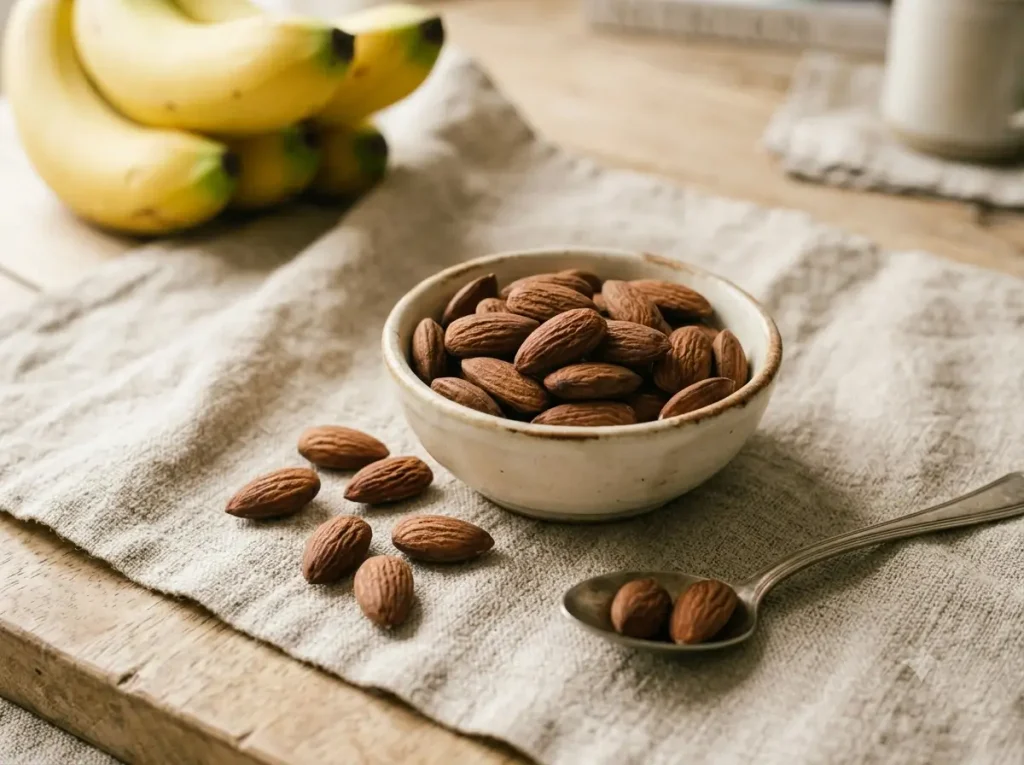
Buy from a shop with high turnover or store them in the fridge to protect their polyunsaturated oils from going rancid. A 28 g portion — about 23 almonds — is the standard serving used in trials. Use them as a snack, chopped into overnight oats, or ground into almond flour for baking. Almond butter is a useful alternative if you prefer a spreadable form.
Common questions
Are almonds good for weight loss? Yes, in controlled portions. Daily almond eaters tend to feel fuller and eat less at subsequent meals, and long-term trials do not show weight gain despite the calorie density.
Should I eat the skin? Yes. The brown skin holds most of the polyphenols and fibre, and studies that showed heart benefits used whole almonds, not blanched ones.
Explore by health goal
Almonds is one of many foods that support these goals: