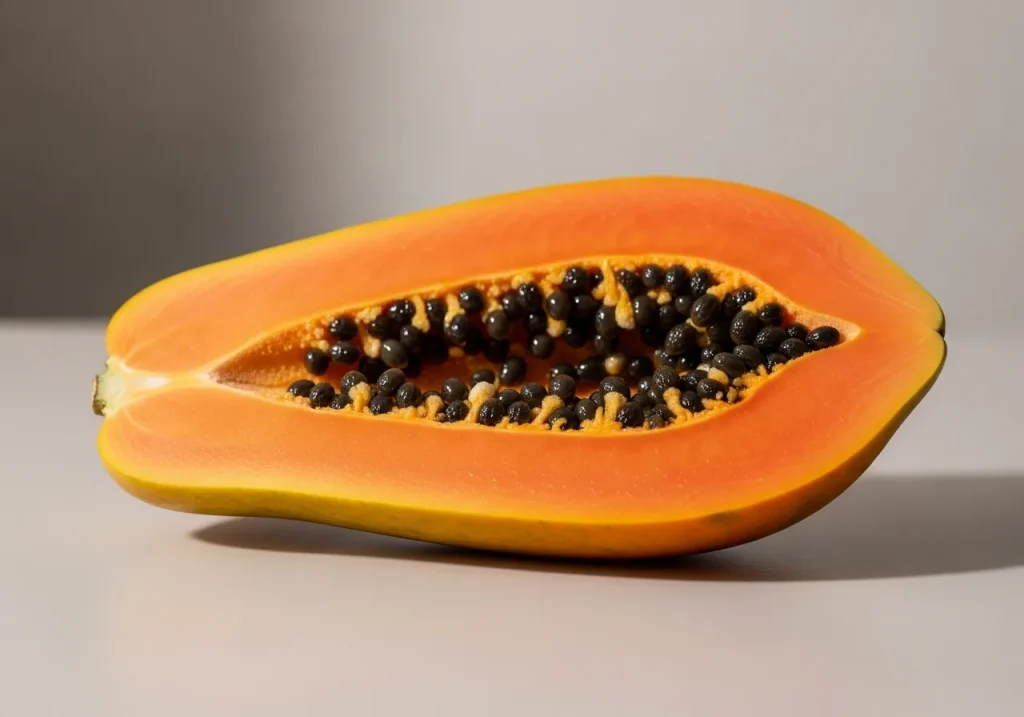
Papaya is the tropical fruit whose latex-like enzyme papain is commercially used as a meat tenderiser and digestive supplement, and whose orange flesh is one of the richest sources of beta-carotene and vitamin C among fruits. That combination is why papayas appear in research on digestive health and immune support.
Compounds & anti-nutrients in Papaya
Per 100 g, Papaya is a notable dietary source of these active compounds. Tap any to see its full sources map and how to work with it.
Why papayas are good for you
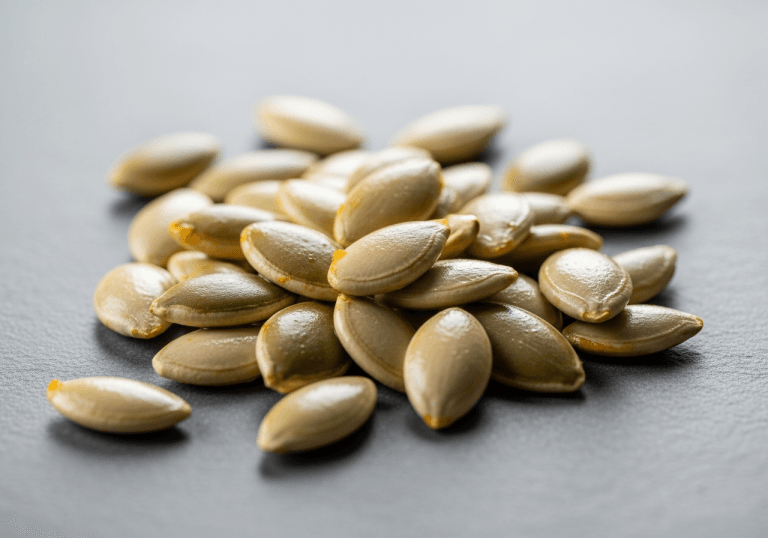
Papain is the standout compound: it breaks down proteins into peptides and amino acids, which is why papaya extract is used in digestive supplements and why papaya juice tenderises meat. The beta-carotene content is also exceptional, and the vitamin C content rivals oranges. Papaya seeds contain benzyl isothiocyanate, which has antiparasitic properties in vitro, but the seeds are bitter and not usually eaten in quantity.
Papaya nutrition at a glance
The label shows the numbers, but the practical message is that papaya is a cheap, nutrient-dense tropical fruit with a unique digestive-enzyme edge. One cup of cubed papaya supplies more than the daily vitamin C requirement for most adults.
How to buy and use papayas
Choose papayas that yield slightly to gentle pressure and smell sweet at the stem end. Avoid ones with wrinkled skin or sour smell. Store ripe papayas in the fridge for a few days. Eat papaya fresh with lime juice, blend into smoothies with banana and coconut, or use green papaya in salads with lime and peanuts. Papaya seeds can be dried and used as a pepper substitute.
Common questions
Does papaya help digestion? Yes — papain breaks down proteins, which is why papaya is used as a digestive aid. The effect is mild but real.
Are papaya seeds edible? Yes — they are bitter and have antiparasitic properties, but they are not usually eaten in quantity.
Explore by health goal
Papaya is one of many foods that support these goals: