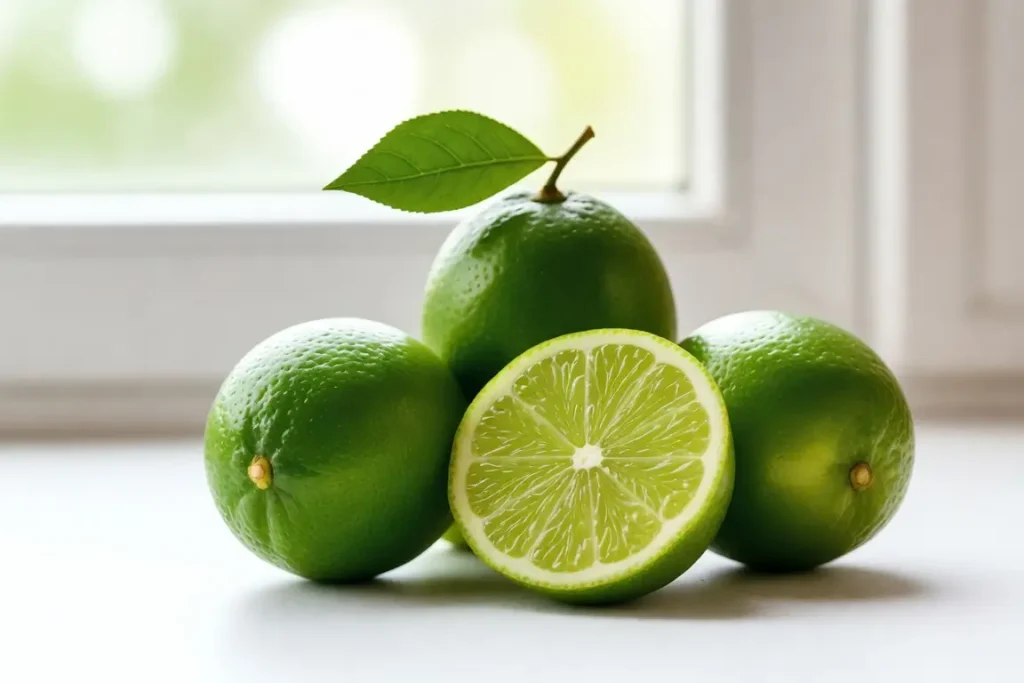
Lime is the smaller, more tart cousin of the lemon, and its juice delivers roughly 29 mg of vitamin C per 100 g alongside citric acid, flavonoids and a distinctive aroma from limonene. That combination is why limes appear in research on immune support and digestive health.
Why limes are good for you
Limes’ vitamin C content is meaningful, and the citric acid content is higher than lemons, which is why limes were historically used to prevent scurvy on British naval ships — the practice that gave British sailors their nickname “limeys”. The flavonoids — especially in the peel — have antioxidant effects, and limonene is being studied for its anti-cancer properties. The main nutritional caveat is acidity: like lemons, limes erode tooth enamel.
Lime nutrition at a glance
The label shows the numbers, but the practical message is that lime is a zero-calorie flavour enhancer with a genuine vitamin-C edge. A squeeze of lime on tacos, salads or water replaces salt and adds nutrients.
How to buy and use limes
Choose heavy, firm limes with smooth, bright green skin. The heaviest ones have the most juice. Store in the fridge for longest freshness. Use lime juice in Mexican and Southeast Asian cooking, in guacamole with avocado and tomato, in salad dressings with olive oil, and in cocktails without added sugar. Lime zest contains most of the essential oils — grate it into curries, fish dishes and baked goods. Lime pairs well with coconut, coriander and chili.
Common questions
Are limes better than lemons? Nutritionally they are similar, but limes are more tart and have a different flavour profile that suits certain cuisines better.
Does lime prevent scurvy? Yes — this is why British sailors were issued limes historically. Limes contain enough vitamin C to prevent scurvy at daily doses above 10 mg.
Explore by health goal
Lime is one of many foods that support these goals: