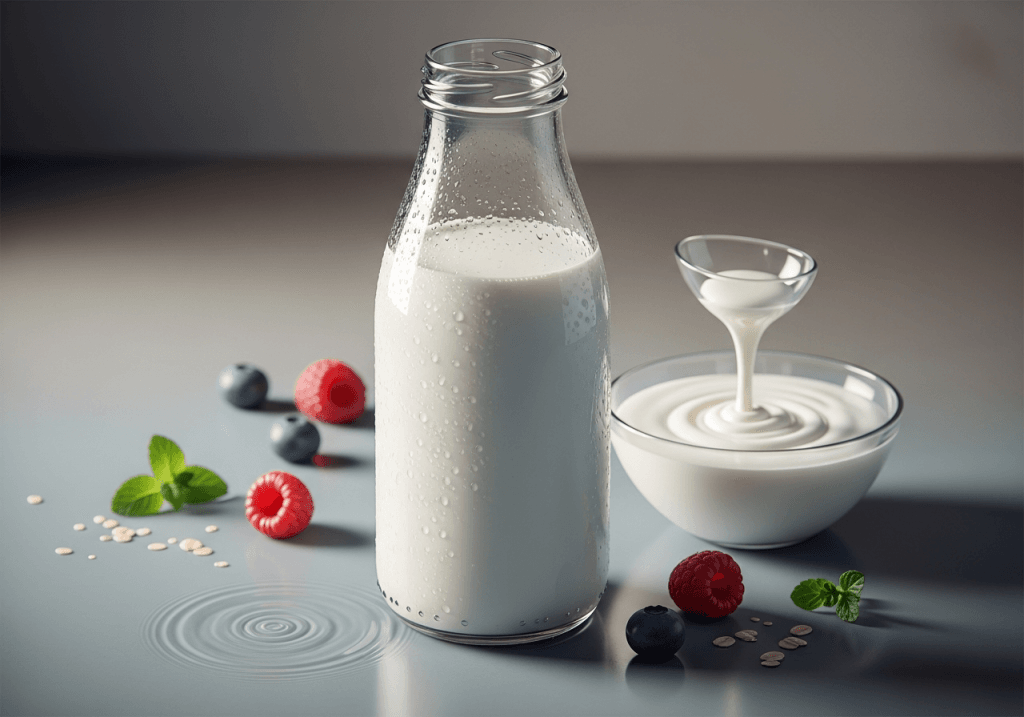
Kefir is a fermented milk drink with a far more diverse probiotic profile than most commercial yoghurts. A landmark Stanford trial found that fermented foods like kefir increased microbiome diversity and lowered inflammatory markers in as little as ten weeks. That combination is why kefir is consistently linked to gut health, immune support and bone health.
Compounds & anti-nutrients in Kefir
Per 100 g, Kefir is a notable dietary source of these active compounds. Tap any to see its full sources map and how to work with it.
Why kefir is good for you
Kefir contains a wider range of live bacterial strains than yoghurt, including several Lactobacillus and Leuconostoc species that survive passage through stomach acid better than many yoghurt cultures. The fermentation process also partially breaks down lactose, making kefir easier to tolerate than fresh milk for many people. It supplies calcium, vitamin B12 and riboflavin at levels close to the milk it is made from.
Kefir nutrition at a glance
The label shows the numbers, but the practical message is that kefir is a drinkable fermented dairy with a mild tang and a useful probiotic edge. Plain, unsweetened kefir is the best choice; flavoured versions often contain added sugar that undermines the gut-health case.
How to buy and use kefir
Choose plain, unsweetened kefir from the fridge section — shelf-stable kefir drinks are often pasteurised after fermentation and may not contain live cultures. Drink it straight, blend it into smoothies with blueberries and spinach, or use it as a base for overnight oats. Kefir keeps for a few days after opening and should be kept cold.
Common questions
Is kefir better than yoghurt? For probiotic diversity, yes — kefir usually carries more strains and a higher total colony count. For protein and calcium, they are similar. Both have a place in a fermented-foods pattern.
Can I drink kefir if I am lactose intolerant? Many people with mild lactose intolerance tolerate kefir well because the fermentation pre-digests much of the lactose. Severe intolerance varies by individual.
Explore by health goal
Kefir is one of many foods that support these goals: