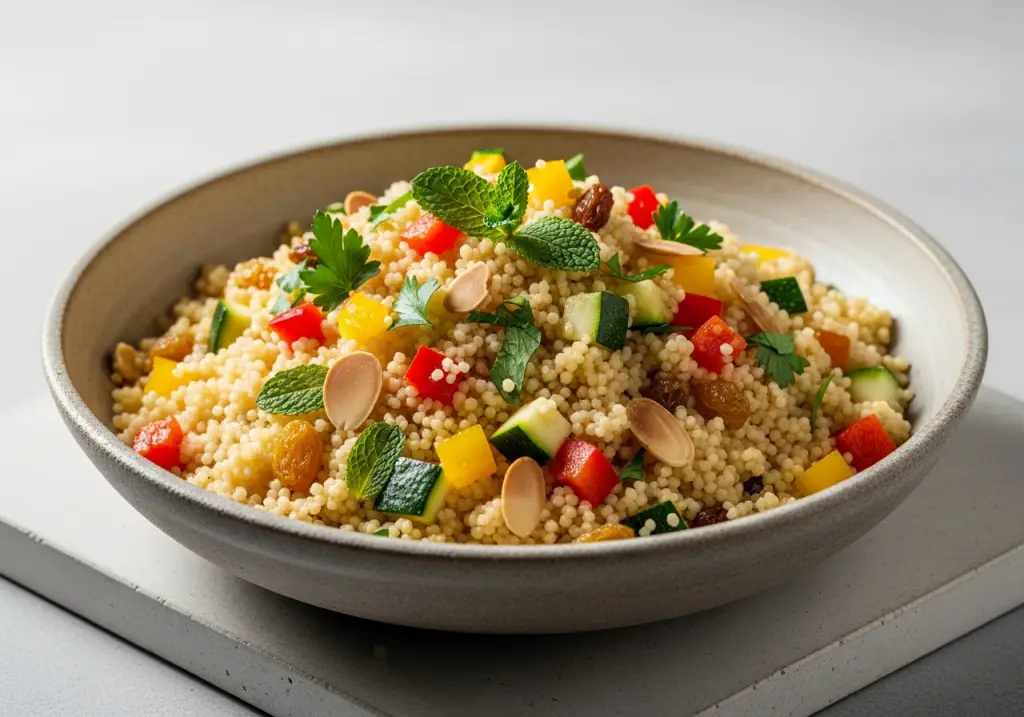
Couscous looks like a grain but is really a tiny pasta: rolled granules of durum wheat semolina that swell and soften in minutes with nothing more than hot liquid. A North African staple, couscous gives you a light, fluffy carbohydrate with a respectable amount of plant protein, which makes it popular fuel for energy and performance and a flexible base for heart-healthy meals.
Compounds & anti-nutrients in Couscous
Per 100 g, Couscous is a notable dietary source of these active compounds. Tap any to see its full sources map and how to work with it.
Why couscous is good for you
Because it is made from durum wheat, couscous supplies steady carbohydrate for energy plus more protein than rice, which helps a meal feel more sustaining. It also carries selenium, a trace mineral that supports the thyroid and the body’s antioxidant defences, along with several B vitamins involved in turning food into usable energy. Standard couscous is refined, so its fibre and mineral content are modest; wholewheat couscous keeps more of the grain’s bran and is the more nourishing choice.
Like all wheat foods, couscous contains gluten and is not suitable for people with coeliac disease or a wheat allergy.
Couscous nutrition at a glance
The full breakdown is in the nutrition label above. The headline is convenience with decent protein for a starchy side, but the caveat matters: ordinary couscous is a refined grain, lower in fibre than intact wholegrains, so its carbohydrate is digested fairly quickly. Pairing it with vegetables, pulses or a protein, or reaching for the wholewheat version, slows things down and rounds out the meal.
How to cook and serve couscous
Couscous could hardly be simpler: tip it into a bowl, pour over an equal volume of boiling stock or water, cover for a few minutes, then fluff with a fork to separate the grains. A little olive oil stirred through stops it clumping. It is a natural partner for roasted vegetables, herbs and citrus, and works brilliantly alongside chickpeas or a fillet of salmon. Browse more grains and starchy staples for variety.
Common questions
Is couscous healthier than rice? They are broadly similar as starchy bases, though couscous offers a little more protein while white rice is naturally gluten-free. Choosing wholewheat couscous or brown rice adds more fibre to either.
Is couscous a wholegrain? Usually no. Standard couscous is made from refined semolina, so it is not a wholegrain; look for wholewheat couscous if you want the fibre and minerals of the whole grain.
Explore by health goal
Couscous is one of many foods that support these goals: