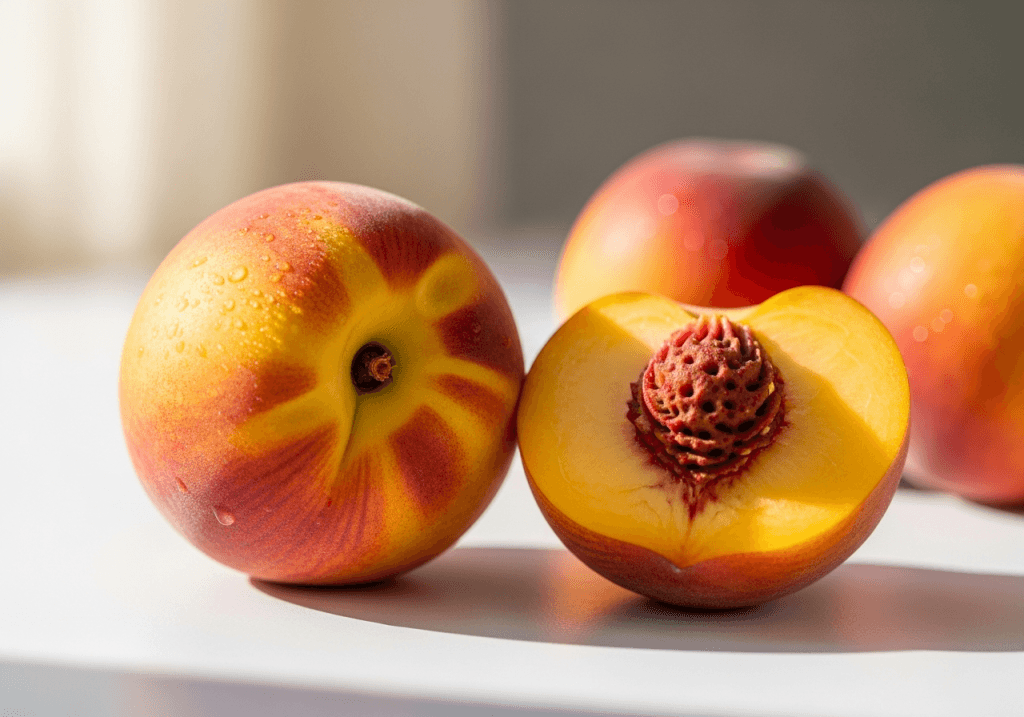
Peach is the taste of summer, and a ripe one fresh from the bowl is as good for you as it is fragrant. Beneath that velvety skin sits a juicy fruit built mostly of water, vitamins and gentle fibre, a combination that makes peaches a natural fit for research on skin health and digestion.
Compounds & anti-nutrients in Peach
Per 100 g, Peach is a notable dietary source of these active compounds. Tap any to see its full sources map and how to work with it.
Why peaches are good for you
Peaches are a good source of vitamin C, the antioxidant the body uses to build collagen, the protein that keeps skin firm and helps wounds heal. Their golden flesh carries carotenoids that the body can turn into vitamin A for vision and skin, and the skin itself holds polyphenols studied for their antioxidant effects. The fibre is a mix of soluble and insoluble types, which supports comfortable, regular digestion.
Being mostly water, peaches are quietly hydrating too, and they contribute a little potassium, the mineral that helps balance the effects of sodium in the diet. None of this comes at much cost in calories, which is part of their easy charm.
Peach nutrition at a glance
The full breakdown is in the label above. The short story is that a peach is a low-calorie, low-fat fruit whose natural sweetness arrives wrapped in water and fibre, so it satisfies a sugar craving more gently than the taste suggests. Much of the goodness and most of the fibre sit in or just beneath the skin, so eating peaches unpeeled is the way to get the most from them.
How to choose, store and eat peaches
A good peach gives slightly to a gentle press near the stem and smells sweetly of itself; colour alone is a poor guide. Firm peaches ripen on the counter over a few days, after which the fridge slows them down. Avoid any that are bruised or wrinkled. They are perfect eaten out of hand, sliced over Greek yoghurt, or grilled until caramelised alongside blueberries for a simple pudding.
Common questions
Can you eat peach skin? Yes, and it is worth doing. The skin holds extra fibre and polyphenols, so a good wash and a whole peach is better than a peeled one. Only the hard central stone should be discarded.
Are tinned peaches as healthy as fresh? Fresh peaches keep more vitamin C, but tinned can still count towards your fruit intake. Choosing peaches in natural juice rather than syrup avoids the added sugar.
Explore by health goal
Peach is one of many foods that support these goals: