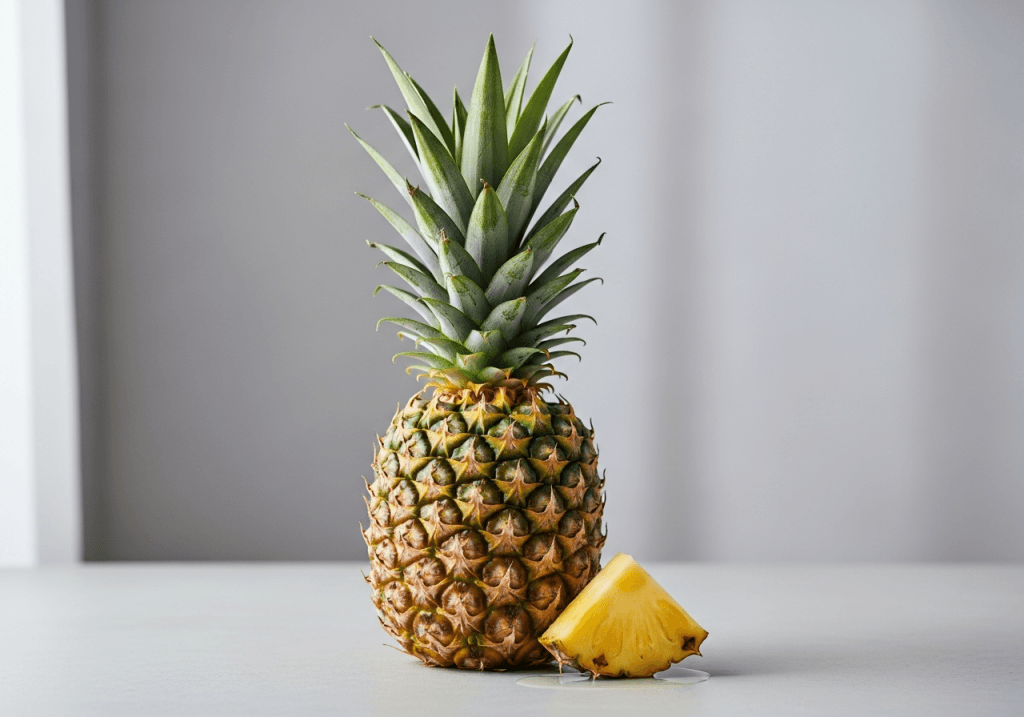
Pineapple is the tropical fruit whose stem enzyme bromelain is one of the better-studied plant proteases, and whose yellow flesh is rich in vitamin C, manganese and beta-carotene. That combination is why pineapples appear in research on digestive health and immune support.
Compounds & anti-nutrients in Pineapple
Per 100 g, Pineapple is a notable dietary source of these active compounds. Tap any to see its full sources map and how to work with it.
Why pineapples are good for you
Bromelain is the standout compound: it breaks down proteins, reduces inflammation and has documented antiplatelet effects at high doses. The vitamin C content is high, and the manganese content is exceptional — pineapple is one of the best fruit sources of manganese, which matters for bone health and metabolism. The bromelain content is highest in the stem, which is why supplements are often stem-derived rather than fruit-derived.
Pineapple nutrition at a glance
The label shows the numbers, but the practical message is that pineapple is a sweet, enzyme-rich tropical fruit with a genuine digestive edge. The main caveat is bromelain’s antiplatelet effect: people on blood-thinning medication should avoid high-dose bromelain supplements.
How to buy and use pineapples
Choose pineapples that smell sweet at the base and have firm, unblemished golden-yellow skin. Green skin does not mean underripe — pineapples do not ripen further once picked. Store in the fridge after cutting. Use fresh pineapple in smoothies with banana and coconut, on oats, grilled as a side for pork, or in a salsa with mint and chili. Canned pineapple is convenient but often contains added sugar.
Common questions
Does pineapple tenderise meat? Yes — bromelain breaks down muscle proteins, which is why pineapple juice is used in marinades. Over-marinating can make meat mushy.
Can pineapple be harmful? In normal food amounts, no. Large doses of bromelain supplements can thin the blood and should be avoided with anticoagulant medication.
Explore by health goal
Pineapple is one of many foods that support these goals: