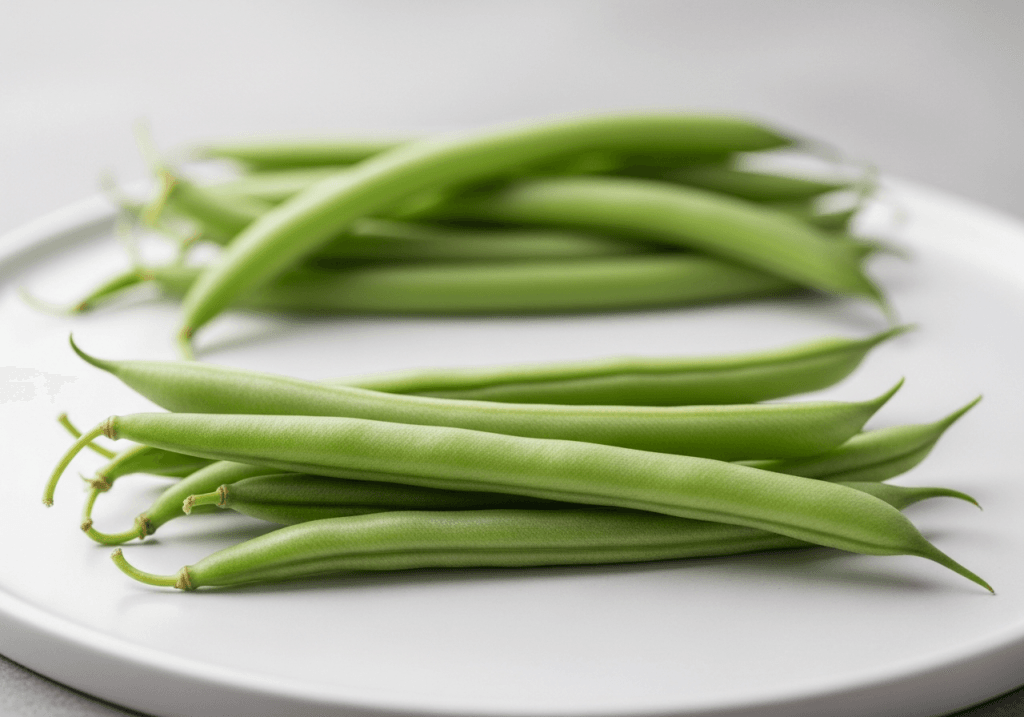
Green beans, also called French beans, are the unripe pods of the common bean plant, and their nutrient profile is a middle ground between starchy vegetables and leafy greens: roughly 3.4 g of fibre per 100 g, vitamin K, vitamin C, folate and manganese. That combination is why green beans appear in research on gut health and heart health.
Compounds & anti-nutrients in Green Beans
Per 100 g, Green Beans is a notable dietary source of these active compounds. Tap any to see its full sources map and how to work with it.
Why green beans are good for you
Green beans’ fibre content is high for a vegetable, and it is partly soluble pectin that lowers LDL cholesterol and feeds colonic bacteria. The vitamin K content is exceptional, and it matters for bone metabolism and blood clotting. The folate content is also useful, especially for pregnant women. Green beans contain some lectins, but cooking destroys them.
Green beans nutrition at a glance
The label shows the numbers, but the practical message is that green beans are a low-calorie, nutrient-dense vegetable that works as a side dish, salad element or snack. The main quality variable is freshness: green beans lose sweetness and crunch quickly after picking.
How to buy and cook green beans
Choose firm, crisp green beans with smooth, unblemished pods. Avoid limp or wrinkled beans. Store in the fridge for up to a week. Trim the stem end and cook by steaming, boiling, stir-frying or roasting. Overcooking makes them mushy and dulls the colour. Green beans pair well with garlic, olive oil, almonds and lemon. Green bean casserole is a traditional dish, but the canned version is usually high in sodium.
Common questions
Are green beans good for gut health? Yes — the fibre content is high for a vegetable, and the soluble fraction feeds beneficial colonic bacteria.
Should I blanch green beans? Blanching preserves colour and crunch for stir-frying or salads. For steaming or roasting, it is not necessary.
Explore by health goal
Green Beans is one of many foods that support these goals: