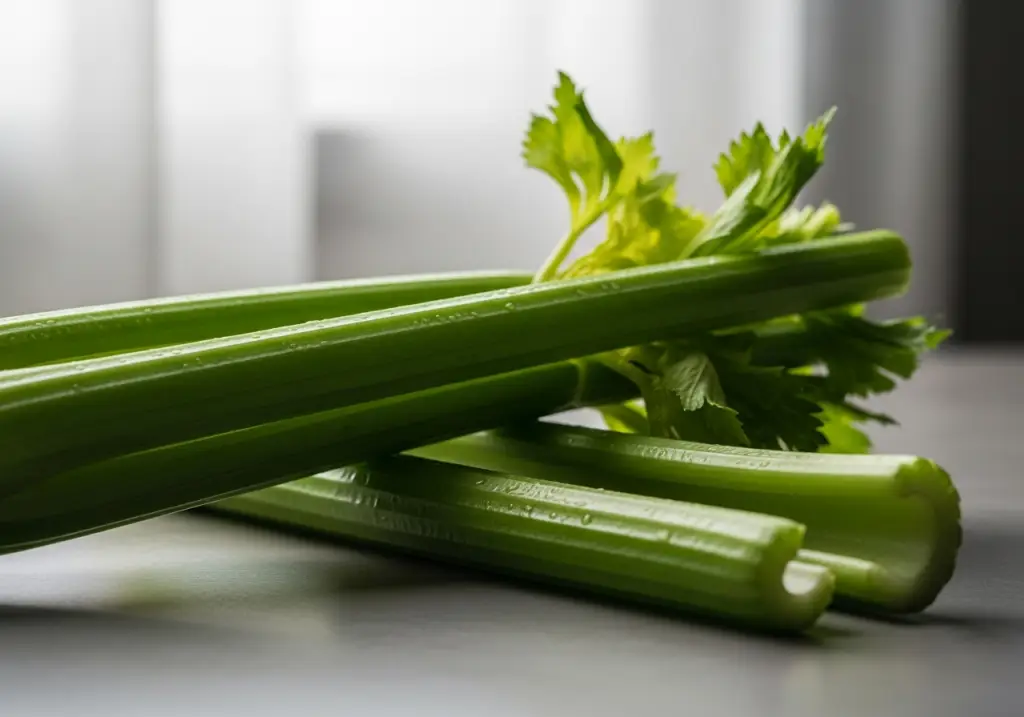
Celery is mostly water, which is exactly what makes it so useful: it delivers crunch, hydration and a surprising range of plant compounds for almost no calories. Those compounds are why celery turns up in research on inflammation and heart health.
Compounds & anti-nutrients in Celery
Per 100 g, Celery is a notable dietary source of these active compounds. Tap any to see its full sources map and how to work with it.
Why celery is good for you
Celery is a good source of vitamin K, folate and potassium, and it contains apigenin and luteolin, two flavonoids studied for their antioxidant and anti-inflammatory effects. It also supplies natural nitrates and a group of compounds called phthalides, which give celery its distinctive aroma and have been investigated for a gentle effect on blood vessels. Its fibre and very high water content make it genuinely filling.
Eating the leaves as well as the stalks is worthwhile, as they hold a concentrated share of the plant’s nutrients. A little healthy fat, such as a nut-butter dip, helps the body absorb celery’s fat-soluble vitamin K.
Celery nutrition at a glance
The full breakdown is in the label above, but the headline is hydration and fibre at a tiny calorie cost. One point worth knowing: celery is naturally higher in sodium than most vegetables, so people watching their salt intake should simply count it as part of the day’s total rather than assuming all vegetables are sodium-free. Celery is also a source of salicylates, which a small number of sensitive people choose to limit.
How to choose, store and eat celery
Pick firm, upright stalks with fresh green leaves and avoid any that bend limply or look yellowed. Stand the base in a little water in the fridge, or wrap the whole head in foil, to keep it crisp for longer. Limp celery often revives if soaked in cold water. It is excellent raw with dips, but also forms the aromatic base of countless soups and stews alongside carrot and onion.
Common questions
Does celery really have negative calories? Not literally. Celery is very low in calories and chewing it does burn a little energy, but the idea that it costs more calories to eat than it provides is a myth. It is genuinely useful for filling out meals lightly.
Is celery juice good for you? Celery juice is hydrating and contains the plant’s vitamins and flavonoids, but juicing removes most of the fibre. Eating it whole keeps that fibre and the fullness it brings, so juice is best seen as an addition rather than a cure-all.
Explore by health goal
Celery is one of many foods that support these goals: