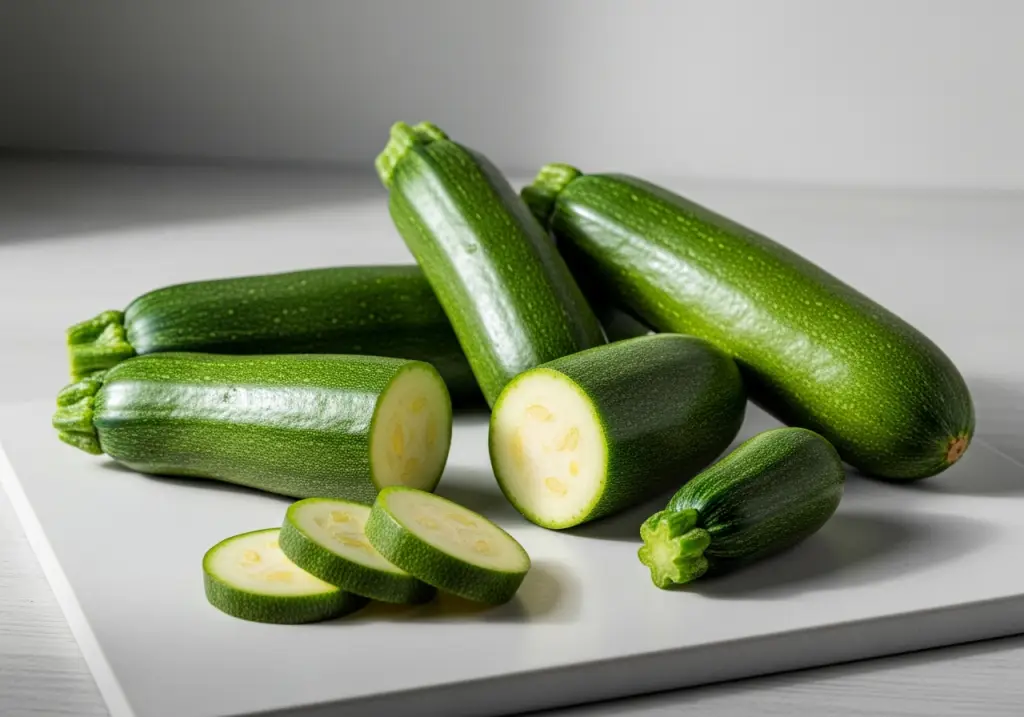
Courgette (known as zucchini in much of the world) is a tender summer squash that is roughly nine-tenths water, which is exactly what makes it so easy to fold into almost any meal. Light, mild and quick to cook, it is a low-calorie way to add volume and a quiet spread of nutrients to a plate — qualities that link it to weight management and heart health.
Compounds & anti-nutrients in Courgette (Zucchini)
Per 100 g, Courgette (Zucchini) is a notable dietary source of these active compounds. Tap any to see its full sources map and how to work with it.
Why courgette is good for you
Courgette is a modest but genuine source of vitamin C and vitamin B6, along with potassium, the mineral that helps balance sodium and supports healthy blood pressure. Its skin holds most of its colour and carotenoids — including lutein, a pigment studied for long-term eye health — so it is worth leaving on.
Because it is so high in water and light on calories, courgette is mostly about what it lets you do: it bulks out meals, carries other flavours and replaces heavier starches when you want something lighter. Spiralised into ‘courgetti’, it stands in for pasta while adding fibre and moisture rather than refined carbohydrate.
Courgette nutrition at a glance
The full breakdown is in the nutrition label above. The short version is that courgette is one of the lighter vegetables you can eat — very low in calories, naturally low in sugar, and gentle on digestion. There is no real caveat here beyond the practical one: its high water content means it can turn watery when cooked, so a little technique goes a long way.
How to choose, store and cook courgette
Choose small to medium courgettes with firm, glossy, unwrinkled skin — smaller ones have finer seeds and sweeter flesh, while overgrown marrows turn spongy. Store them in the fridge and use within a few days, as they soften quickly. To avoid sogginess, salt sliced courgette and pat it dry before frying, or roast and griddle it over high heat so the water evaporates. It pairs beautifully with tomatoes and a drizzle of olive oil, and sits alongside our other vegetables.
Common questions
Can you eat courgette raw? Yes. Raw courgette is crisp and mild — good thinly sliced or ribboned into salads, or spiralised. Choose firm, fresh ones, and peel only if the skin seems tough.
Is courgette good for weight loss? It is a helpful choice. Courgette is very low in calories and high in water, so it adds bulk and helps meals feel satisfying without adding much energy, which suits a calorie-aware diet.
Explore by health goal
Courgette (Zucchini) is one of many foods that support these goals: