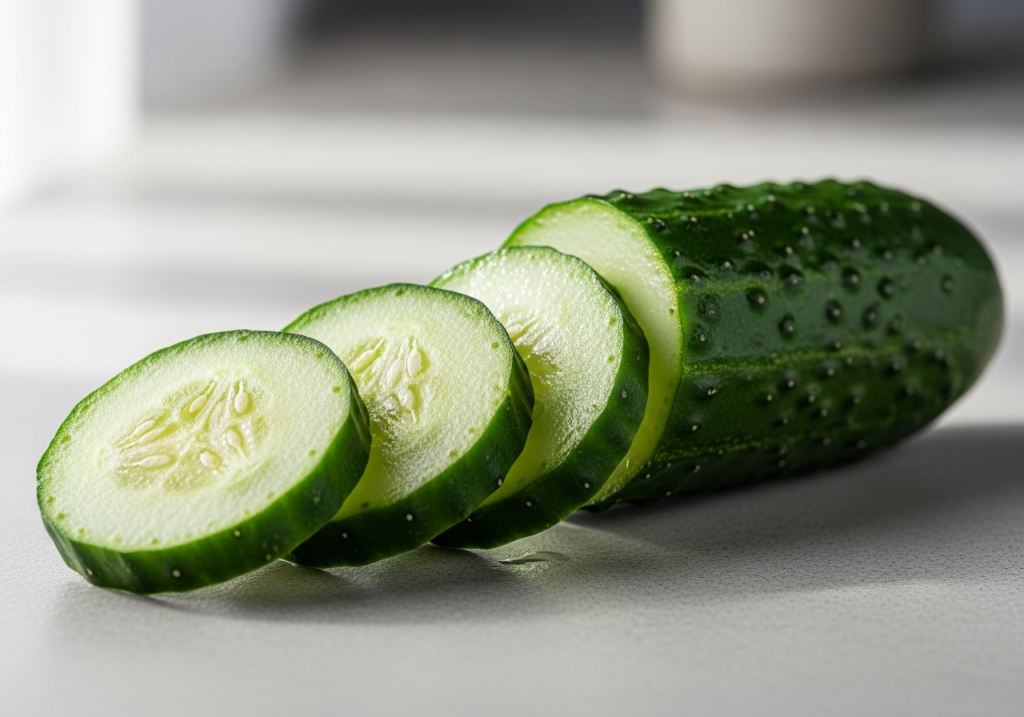
Cucumber is 95% water, making it one of the most hydrating foods available, and its silica and sulphate content make it a traditional skin-food. A 100 g portion delivers roughly 16 kcal, useful vitamin K, potassium and soluble fibre. That combination is why cucumbers appear in research on skin health and gut health.
Compounds & anti-nutrients in Cucumber
Per 100 g, Cucumber is a notable dietary source of these active compounds. Tap any to see its full sources map and how to work with it.
Why cucumbers are good for you
Cucumbers’ main nutritional advantage is hydration: the high water content and potassium make them useful for replenishing fluids after exercise or in hot weather. The silica content supports collagen synthesis and skin elasticity, which is why cucumber slices are a traditional spa treatment. The fibre is partly soluble and partly insoluble, supporting bowel regularity. The main caveat is pesticide residue: cucumbers often appear on the Dirty Dozen list.
Cucumber nutrition at a glance
The label shows the numbers, but the practical message is that cucumber is a low-calorie, hydrating base that bulks out salads and sandwiches without adding significant calories or carbs.
How to buy and use cucumbers
Choose firm, unwrinkled cucumbers with no soft spots. English cucumbers are longer, seedless and milder; regular cucumbers are shorter, crunchier and have more seeds. Store in the fridge for up to a week. Slice cucumbers into salads with tomato and olive oil, blend into gazpacho with pepper and tomato, or serve as a snack with hummus. Cucumber water — slices steeped in cold water — is a refreshing hydration drink.
Common questions
Is cucumber good for skin? The silica supports collagen synthesis, and the high water content hydrates from within. Topical cucumber slices are a traditional remedy for puffiness.
Should I peel cucumber? The skin holds most of the fibre and silica. Wash well and eat the skin unless a recipe requires peeling.
Explore by health goal
Cucumber is one of many foods that support these goals: