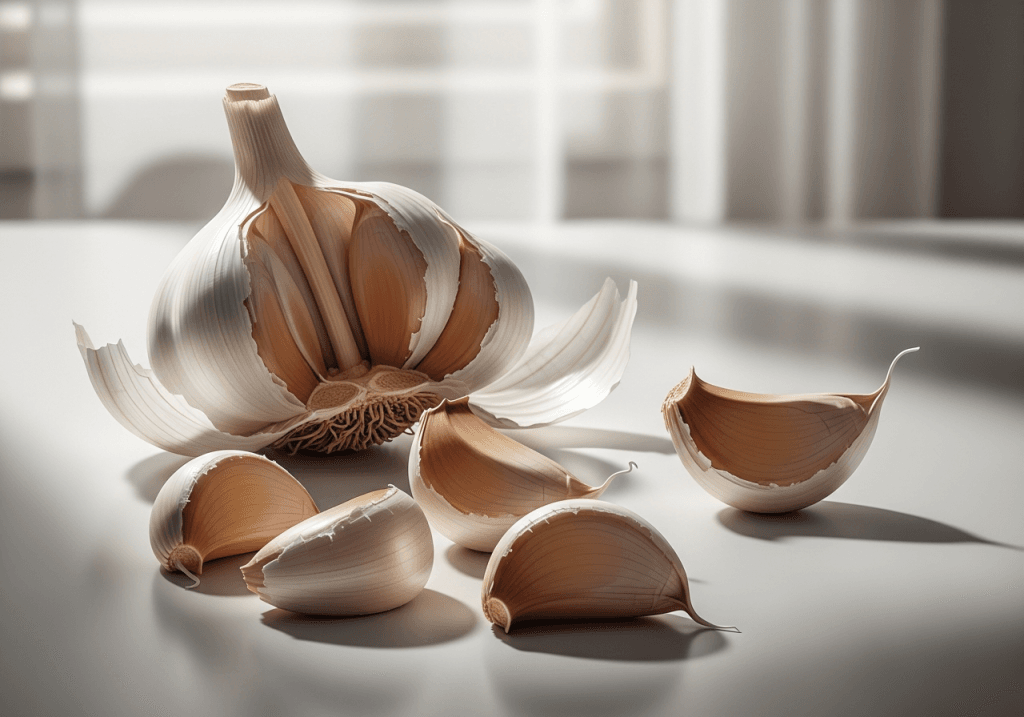
Garlic is the oldest documented medicinal plant still in everyday use. Its active compound allicin forms when you crush or chop the cloves, and that same reaction is responsible for garlic’s cardiovascular, antimicrobial and anti-inflammatory reputation. That combination is why garlic appears in research on heart health and immune support.
Compounds & anti-nutrients in Garlic
Per 100 g, Garlic is a notable dietary source of these active compounds. Tap any to see its full sources map and how to work with it.
Why garlic is good for you
Garlic supplies manganese and vitamin B6 at useful levels, but the therapeutic interest is allicin. Allicin is not present intact in the clove; it forms when the enzyme alliinase meets its precursor alliin after damage to the tissue — crushing, chopping or chewing. That is why crushed garlic left to stand for 10 minutes before cooking is more bioactive than garlic thrown straight into the pan. The cardiovascular evidence includes modest blood-pressure reductions and lipid improvements in meta-analyses, though effects are smaller than many popular claims.
Garlic nutrition at a glance
The label shows the numbers, but the practical message is that garlic is a flavour multiplier with a genuine therapeutic edge when used correctly. A clove or two a day is enough for the evidence-based benefits.
How to buy, store and use garlic
Choose firm, papery bulbs with no soft spots or green shoots. Store in a cool, dry place with good air flow; refrigeration encourages sprouting. Crush or chop garlic and let it rest for 10 minutes before cooking to allow alliinase to produce allicin. Garlic pairs with olive oil, ginger, broccoli and salmon. Black garlic — aged at controlled temperature — is sweeter and less pungent, with similar antioxidant content.
Common questions
Does cooking destroy garlic’s benefits? Heat inactivates alliinase, so some allicin is lost. Adding crushed garlic late in cooking, or adding it after heating the oil, preserves more activity.
Can garlic lower blood pressure? Modestly. Meta-analyses show small reductions, stronger with aged garlic extract than with raw cloves. It is a useful adjunct, not a replacement for medication.
Explore by health goal
Garlic is one of many foods that support these goals: