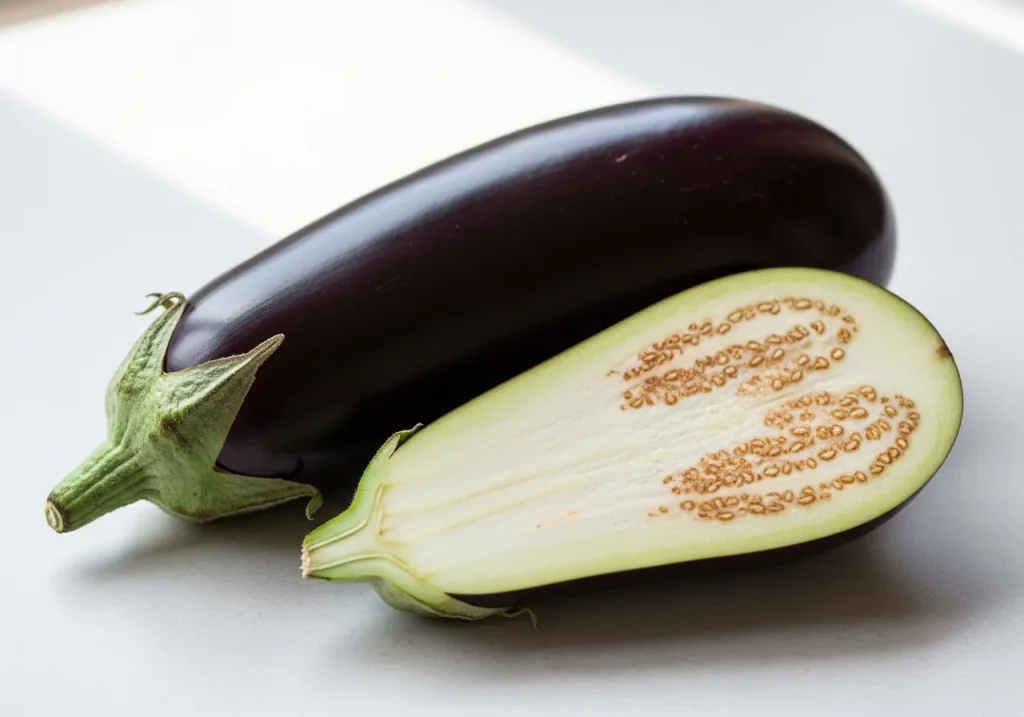
Eggplant, also called aubergine, is the glossy purple vegetable whose skin contains nasunin — an anthocyanin antioxidant that protects neuron membranes from oxidative damage in cell models. A 100 g portion delivers roughly 2.5 g of fibre, vitamin C, manganese and potassium. That combination is why eggplants appear in research on brain health and heart health.
Compounds & anti-nutrients in Eggplant
Per 100 g, Eggplant is a notable dietary source of these active compounds. Tap any to see its full sources map and how to work with it.
Why eggplant is good for you
Eggplant’s nasunin content is unique to the skin, and it is a potent lipid-soluble antioxidant that accumulates in brain cell membranes, protecting them from free radical damage. The fibre content is moderate, and the chlorogenic acid content has modest anti-inflammatory effects. The caveat is that eggplant solitarily is mostly water and fibre, with limited micronutrient density compared to other vegetables. The way eggplant is usually cooked — fried in oil — adds significant calories.
Eggplant nutrition at a glance
The label shows the numbers, but the practical message is that eggplant is a low-calorie, flavour-neutral vehicle for sauces and seasonings, with a unique brain-protective antioxidant in the skin. The nutritional value is mostly in the surrounding sauce, not the eggplant itself.
How to buy and use eggplant
Choose firm, heavy eggplants with smooth, glossy skin and no soft spots or browning. The stem should be green and fresh. Store in the fridge for up to a week. Salting sliced eggplant before cooking draws out bitter compounds and reduces oil absorption. Use eggplant in baba ganoush with garlic and olive oil, roasted with miso and honey, or grilled for a side dish. Eggplant pairs well with tomato, basil, garlic and lamb. Keep the skin on for nasunin.
Common questions
Is eggplant good for brain health? The nasunin in the skin protects neuron membranes in cell models, but the effect in humans is not established. It is a plausible brain food with limited human evidence.
Why does eggplant absorb so much oil? The flesh is sponge-like with air pockets. Salting before frying reduces oil absorption and bitterness.
Explore by health goal
Eggplant is one of many foods that support these goals: