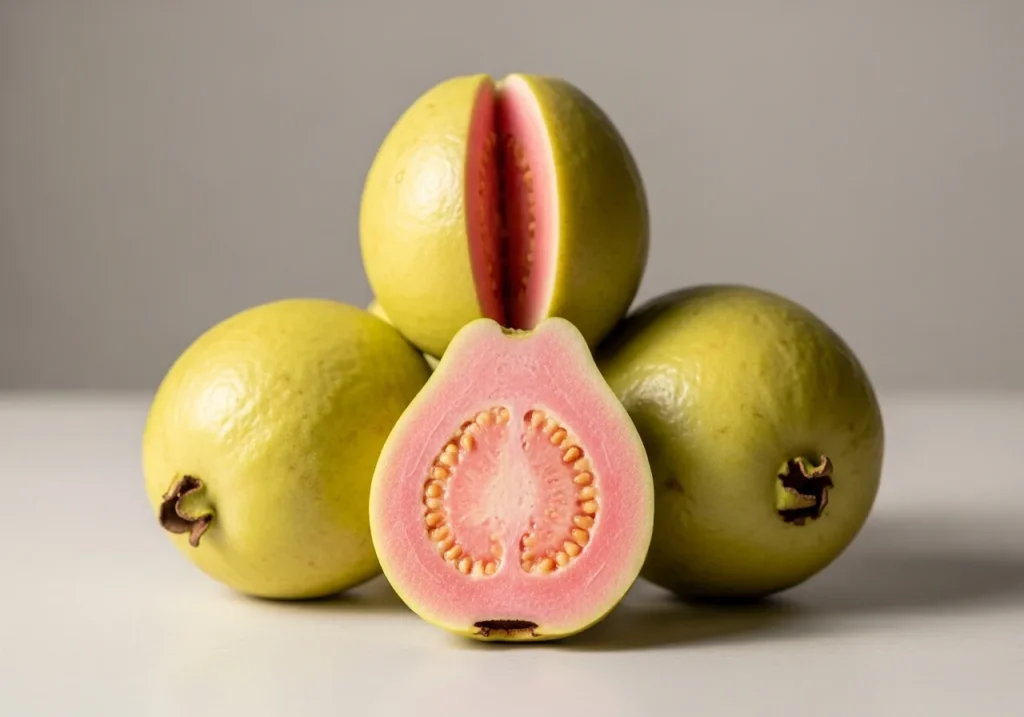
Guava is the tropical fruit whose pink flesh contains roughly 228 mg of vitamin C per 100 g — four times the orange — alongside useful fibre, lycopene and polyphenols. That nutrient density is why guavas appear in research on immune support and heart health.
Compounds & anti-nutrients in Guava
Per 100 g, Guava is a notable dietary source of these active compounds. Tap any to see its full sources map and how to work with it.
Why guavas are good for you
Guavas’ vitamin C content is exceptional, and the fibre content is high for a fruit — roughly 5.4 g per 100 g, mostly soluble pectin. The lycopene content in pink guavas is higher than tomatoes, and lycopene is linked to prostate health in epidemiological studies. The leaves are used in traditional medicine for diarrhoea and have documented antimicrobial effects in vitro.
Guava nutrition at a glance
The label shows the numbers, but the practical message is that guava is one of the most nutrient-dense common fruits, with a vitamin C content that rivals supplements and a fibre content that rivals breakfast cereals.
How to buy and use guavas
Choose firm, fragrant guavas with no blemishes or soft spots. Some varieties are eaten whole, skin and all; others have hard seeds that are spat out. Store at room temperature until ripe, then move to the fridge. Eat guavas fresh, slice them into salads with spinach and lime, blend into smoothies with banana and coconut, or stew into a jam with sugar and cinnamon. Guava paste is a dense, sweet block used in desserts.
Common questions
Is guava better than orange for vitamin C? Yes — guavas contain roughly four times more vitamin C per 100 g than oranges.
Can I eat guava skin? Yes — most varieties have edible skin that contains more fibre and polyphenols than the flesh. Wash well before eating.
Explore by health goal
Guava is one of many foods that support these goals: