Bananas are the world’s most popular fruit by volume, and their nutrition is dominated by three things: potassium, vitamin B6 and resistant starch when green. That profile — plus their convenience and low cost — is why bananas appear in research on energy and performance and gut health.
Compounds & anti-nutrients in Banana
Per 100 g, Banana is a notable dietary source of these active compounds. Tap any to see its full sources map and how to work with it.
Why bananas are good for you
Bananas’ potassium content is the headline number, and potassium matters for blood pressure regulation, nerve signalling and muscle contraction. The vitamin B6 content is also high, and B6 is involved in over 100 enzymatic reactions, especially neurotransmitter synthesis. Green bananas contain resistant starch — a prebiotic fibre that feeds colonic bacteria — while ripe bananas contain more simple sugars and antioxidants.
Banana nutrition at a glance
The label shows the numbers, but the practical message is that bananas are a cheap, portable energy source with a useful potassium edge. The ripeness variable matters: greener bananas are better for gut health and blood sugar; yellower bananas are sweeter, more digestible and higher in antioxidants.
How to buy and use bananas
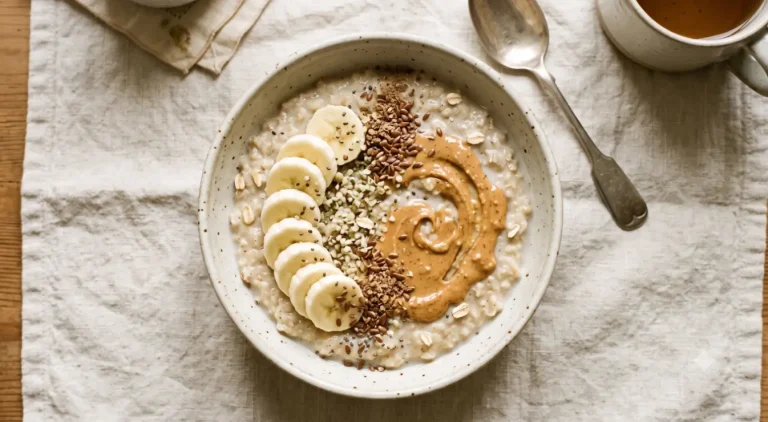
Choose bananas based on when you plan to eat them: greenish-yellow for later in the week, spotty for immediate use. Store at room temperature; refrigeration slows ripening and turns the skin black but keeps the flesh firm. Use bananas in smoothies with spinach and oats, on Greek yoghurt with almonds, or frozen for a natural ice-cream base. Banana bread is a good use for overripe bananas.
Common questions
Are bananas good for gut health? Green bananas contain resistant starch, which is prebiotic. Ripe bananas are higher in simple sugars and less useful for gut bacteria.
Are bananas fattening? No — a medium banana contains roughly 105 kcal and useful nutrients. Like any food, it can contribute to a calorie surplus if eaten in excess.
Explore by health goal
Banana is one of many foods that support these goals: