Lower Blood Pressure
Use potassium-rich foods, reduced sodium choices and meal patterns that support healthy blood pressure.
Key compounds
The evidence base for this goal focuses on several well-studied compounds.
- Dietary Fibre — Dietary fibre is the part of plant foods your body cannot digest — and that is exactly the point. It slows the release of sugar into
- Potassium — Potassium is the body’s principal intracellular electrolyte, quietly partnering with sodium to manage fluid balance, nerve signals and every heartbeat. Most of us fall short of
- Magnesium — Magnesium is among the most common shortfall nutrients in modern diets, since refining strips it from grains. It is concentrated in seeds, nuts, dark chocolate and…
Best foods for this goal
The foods below are good practical choices.
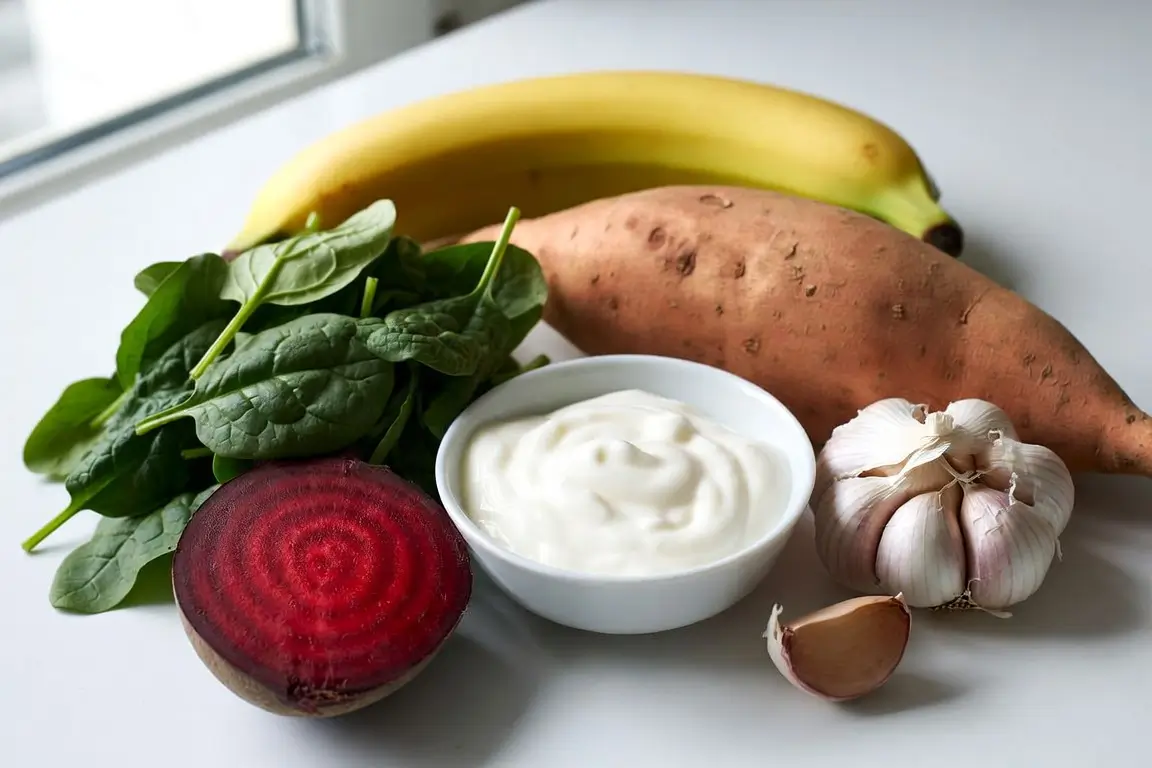
Spinach
Nutrition Facts
Per 100 g, edible portion · values per 100 g
Calories
23
| Total Fat | 0.39 g |
|---|---|
| Saturated Fat | 0.06 g |
| Sodium | 79 mg |
| Potassium | 558 mg |
| Total Carbohydrate | 3.63 g |
| Dietary Fiber | 2.2 g |
| Total Sugars | 0.42 g |
| Protein | 2.86 g |
Vitamin K, folate, iron, magnesium, nitrates
Glycemic index: 15
Source: USDA FoodData Central (FDC 168462)
Banana
Nutrition Facts
Per 100 g, edible portion · values per 100 g
Calories
89
| Total Fat | 0.33 g |
|---|---|
| Saturated Fat | 0.11 g |
| Sodium | 1 mg |
| Potassium | 358 mg |
| Total Carbohydrate | 22.84 g |
| Dietary Fiber | 2.6 g |
| Total Sugars | 12.23 g |
| Protein | 1.09 g |
Vitamin B6, vitamin C, potassium, manganese
Glycemic index: 51
Source: USDA FoodData Central (FDC 173944)
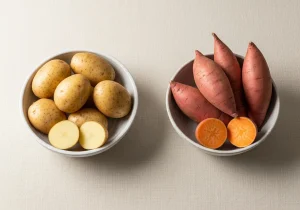
Sweet Potato
Nutrition Facts
Per 100 g, edible portion · values per 100 g
Calories
79
| Total Fat | 0.38 g |
|---|---|
| Saturated Fat | 0.018 g |
| Sodium | 0 mg |
| Potassium | 486 mg |
| Total Carbohydrate | 17.33 g |
| Dietary Fiber | 3 g |
| Total Sugars | 4.18 g |
| Protein | 1.58 g |
Beta-carotene (vitamin A), vitamin C, manganese
Glycemic index: 63
Source: USDA FoodData Central (FDC 2346404, Sweet potatoes orange flesh without skin raw; fibre, sugars and sat-fat from FDC 168482)
Beetroot
Nutrition Facts
Per 100 g, edible portion · values per 100 g
Calories
43
| Total Fat | 0.17 g |
|---|---|
| Saturated Fat | 0.03 g |
| Sodium | 78 mg |
| Potassium | 325 mg |
| Total Carbohydrate | 9.56 g |
| Dietary Fiber | 2.8 g |
| Total Sugars | 6.76 g |
| Protein | 1.61 g |
Folate, manganese, dietary nitrates, betalains
Glycemic index: 61
Source: USDA FoodData Central (FDC 169145)
Garlic
Nutrition Facts
Per 100 g, edible portion · values per 100 g
Calories
143
| Total Fat | 0.38 g |
|---|---|
| Saturated Fat | 0.1 g |
| Sodium | 17 mg |
| Potassium | 401 mg |
| Total Carbohydrate | 28.2 g |
| Dietary Fiber | 2.7 g |
| Total Sugars | 1 g |
| Protein | 6.62 g |
Manganese, vitamin B6, vitamin C, allicin
Glycemic index: 30
Source: USDA FoodData Central (FDC 1104647)
Greek Yogurt (plain, nonfat)
Nutrition Facts
Per 100 g, edible portion · values per 100 g
Calories
61
| Total Fat | 0.37 g |
|---|---|
| Saturated Fat | 0.11 g |
| Sodium | 36 mg |
| Potassium | 141 mg |
| Total Carbohydrate | 3.64 g |
| Dietary Fiber | 0 g |
| Total Sugars | 3.2 g |
| Protein | 10.3 g |
Calcium, vitamin B12, probiotics, iodine
Glycemic index: 11
Source: USDA FoodData Central (FDC 330137)
Practical takeaways
Focus on consistency, variety and the overall dietary pattern. Smaller daily choices tend to outperform occasional large changes.
Common questions
Is one compound enough? Rarely. Whole foods and dietary patterns usually outperform single-compound strategies.
How fast can diet change inflammation or blood markers? It depends on the marker, the starting diet and lifestyle factors. Expect gradual trends rather than overnight shifts.