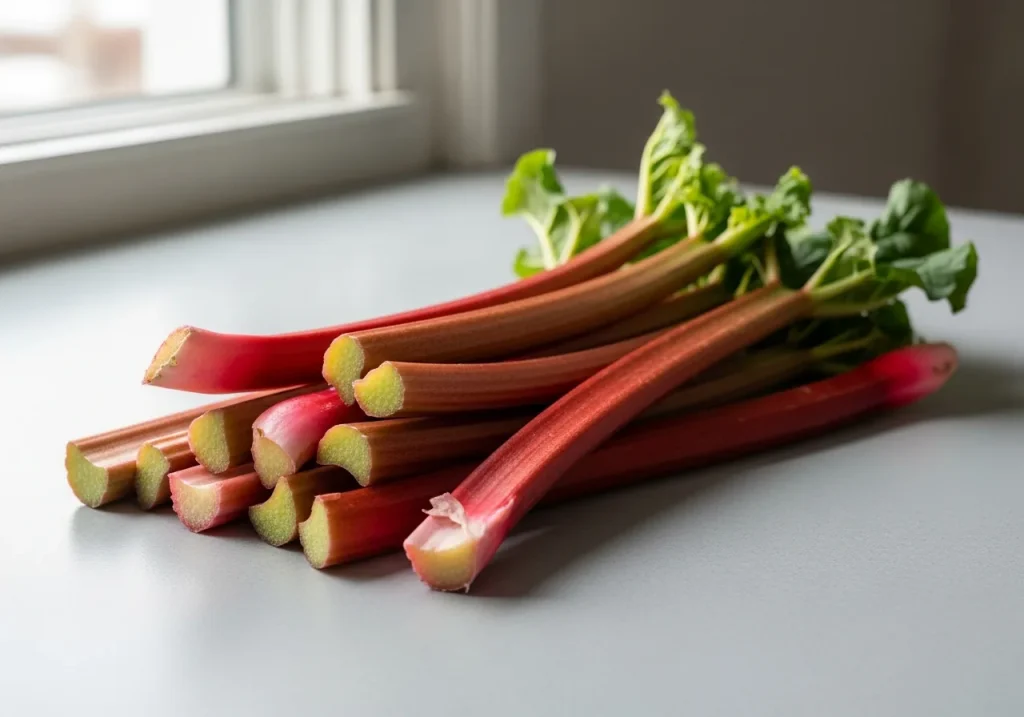
Rhubarb is the tart, celery-like stalk that is treated as a fruit in the kitchen, and its nutrition profile is surprisingly useful: roughly 1.8 g of fibre per 100 g, vitamin K, vitamin C, manganese and anthocyanins in the red varieties. That combination is why rhubarb appears in research on gut health and bone health.
Compounds & anti-nutrients in Rhubarb
Per 100 g, Rhubarb is a notable dietary source of these active compounds. Tap any to see its full sources map and how to work with it.
Why rhubarb is good for you
Rhubarb’s fibre content is partly soluble pectin, which lowers LDL cholesterol and feeds colonic bacteria, and partly insoluble cellulose, which promotes bowel regularity. The vitamin K content is exceptional for a vegetable, and it matters for bone metabolism and blood clotting. The anthocyanins in red rhubarb have antioxidant effects. The caveat is that rhubarb leaves contain oxalic acid and anthraquinone glycosides that are toxic — only the stalks should be eaten.
Rhubarb nutrition at a glance
The label shows the numbers, but the practical message is that rhubarb is a low-calorie, high-fibre tart vegetable that works as a dessert base or savoury side. The leaves are poisonous; only the stalks are edible.
How to buy and cook rhubarb
Choose firm, crisp rhubarb stalks with no wilting or browning. Thicker stalks are more fibrous; thinner ones are tenderer. Store in the fridge for up to a week. Rhubarb must be cooked with sugar because of its high acidity — it is almost never eaten raw. Use rhubarb in crumbles with oats and olive oil for the crumb, in pies with strawberries, stewed with ginger and honey for a compote, or pickled for a savoury relish. Rhubarb pairs well with ginger, oats and almonds. Discard the leaves.
Common questions
Are rhubarb leaves poisonous? Yes — they contain oxalic acid and anthraquinone glycosides that are toxic. Only the stalks should be eaten.
Can I eat rhubarb raw? It is possible but very tart and fibrous. Cooking with sugar makes it palatable and safer.
Explore by health goal
Rhubarb is one of many foods that support these goals: