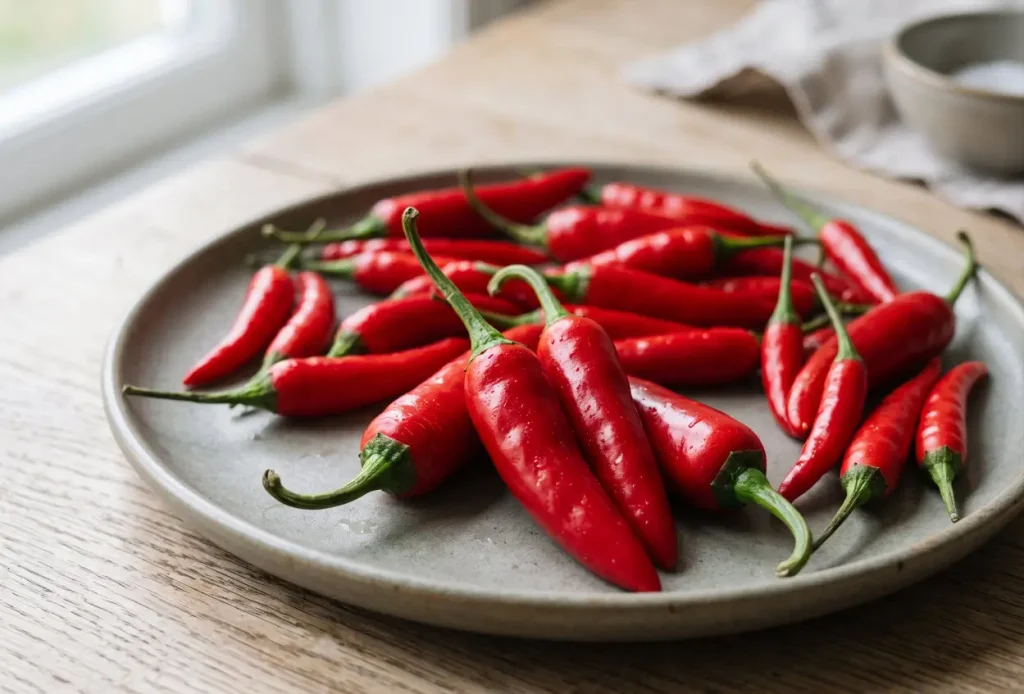
Chilli pepper is far more than the heat it brings to a dish — gram for gram, a fresh red chilli is one of the richest sources of vitamin C in the kitchen, easily out-scoring many citrus fruits. That nutrient density, combined with its famous active compound, is why chillies appear in research on immune support, inflammation and weight management.
Compounds & anti-nutrients in Chilli Pepper
Per 100 g, Chilli Pepper is a notable dietary source of these active compounds. Tap any to see its full sources map and how to work with it.
Why chilli pepper is good for you
The standout nutrient is vitamin C, the antioxidant the body uses to build collagen and defend immune cells — and fresh chillies are genuinely loaded with it. The heat itself comes from capsaicin, a compound studied for its mild effect on metabolism and appetite and for the gentle warming flush it produces. The deep red colour signals carotenoids that the body converts to vitamin A, supporting vision and skin, and chillies also carry useful vitamin B6.
A practical tip: vitamin C is sensitive to heat, so much of it survives best when chillies are eaten raw or added late in cooking. Most of the capsaicin sits in the white pith and seeds, which is where you can dial the heat up or down to taste.
Chilli pepper nutrition at a glance
The full breakdown is in the label above, but the headline is the extraordinary vitamin C for so few calories. Because chillies are eaten in small amounts, you rarely get a full serving’s worth of those nutrients at once — they are a flavour-and-vitamin booster rather than a staple. The only real caution is comfort, not nutrition: capsaicin can irritate the eyes, skin and a sensitive gut, so handle hot varieties with care.
How to choose, store and use chilli pepper
Pick firm, glossy chillies with taut skin and a fresh green stem; wrinkling and soft spots mean age. Keep them loose in the fridge drawer for a week or two, or freeze them whole for longer. To tame the heat, remove the pith and seeds; to keep it, leave them in. Wash your hands well afterwards, or wear gloves for the fiercest types. A little fresh chilli lifts almost anything — try it with avocado in a quick guacamole, or scattered over black beans.
Common questions
Are chilli peppers good for you? Yes — fresh chillies are an excellent source of vitamin C and vitamin A and supply capsaicin, which has been studied for modest metabolic effects. Eaten in normal amounts they are a healthy, low-calorie way to add flavour.
Does chilli speed up your metabolism? Capsaicin can give a small, short-lived bump to calorie burning and may slightly curb appetite, but the effect is minor. Enjoy chillies for their flavour and vitamins rather than as a weight-loss shortcut.
Explore by health goal
Chilli Pepper is one of many foods that support these goals: