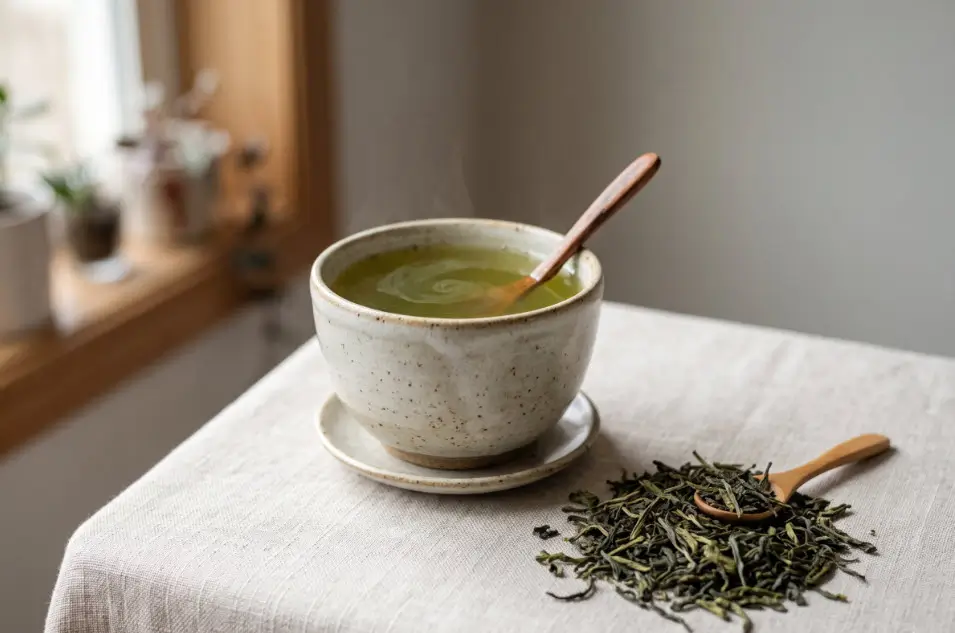
Green tea is one of the most studied drinks in the world, and almost none of its value comes from calories — a brewed cup is essentially flavoured water carrying a remarkable cargo of plant compounds. That cargo is why green tea turns up again and again in research on heart health, brain health and inflammation.
Compounds & anti-nutrients in Green Tea
Per 100 g, Green Tea is a notable dietary source of these active compounds. Tap any to see its full sources map and how to work with it.
Why green tea is good for you
The headline compounds are catechins, a family of flavan-3-ols that act as antioxidants in the body. The most abundant and most researched is EGCG, studied for its effects on blood vessels, cholesterol handling and cellular protection. Because the leaves are steamed rather than oxidised, green tea keeps far more of these catechins than black tea.
Green tea also pairs caffeine with L-theanine, an amino acid almost unique to the tea plant. L-theanine is thought to smooth out caffeine’s edge, which is why a cup of green tea tends to feel like steady, calm alertness rather than a jolt. The leaves are a quiet source of manganese too. A squeeze of lemon or a vitamin-C food alongside helps the catechins survive digestion.
Green tea nutrition at a glance
The full breakdown is in the nutrition label above, but for a brewed cup the numbers are mostly zeros — virtually no calories, sugar or fat. The point of green tea is not what it feeds you but what it delivers: a concentrated dose of polyphenols for almost nothing. The one caveat is caffeine. It is gentler than coffee, yet anyone sensitive to caffeine, or who is pregnant, should keep an eye on how many cups they drink across the day.
How to brew and store green tea
Heat matters more than with any other tea: water just off the boil, around 70–80°C, protects the delicate catechins and stops the brew turning bitter. Steep for one to three minutes, taste, and pour. Keep loose leaves or bags in an airtight tin away from light and strong smells, as they fade quickly. Green tea makes an easy swap for an afternoon coffee, and a cup alongside a citrus fruit such as orange or some strawberries turns a small ritual into a useful one.
Common questions
Is green tea good for weight loss? Green tea is calorie-free and its catechins and caffeine have been studied for a small effect on metabolism, but the influence is modest. It is best seen as a healthy, low-calorie drink rather than a slimming aid.
How much green tea is safe to drink? For most adults three to four cups a day sits comfortably within sensible caffeine limits. People who are pregnant, breastfeeding or caffeine-sensitive may want fewer, and very strong brews on an empty stomach can unsettle digestion.
Explore by health goal
Green Tea is one of many foods that support these goals: