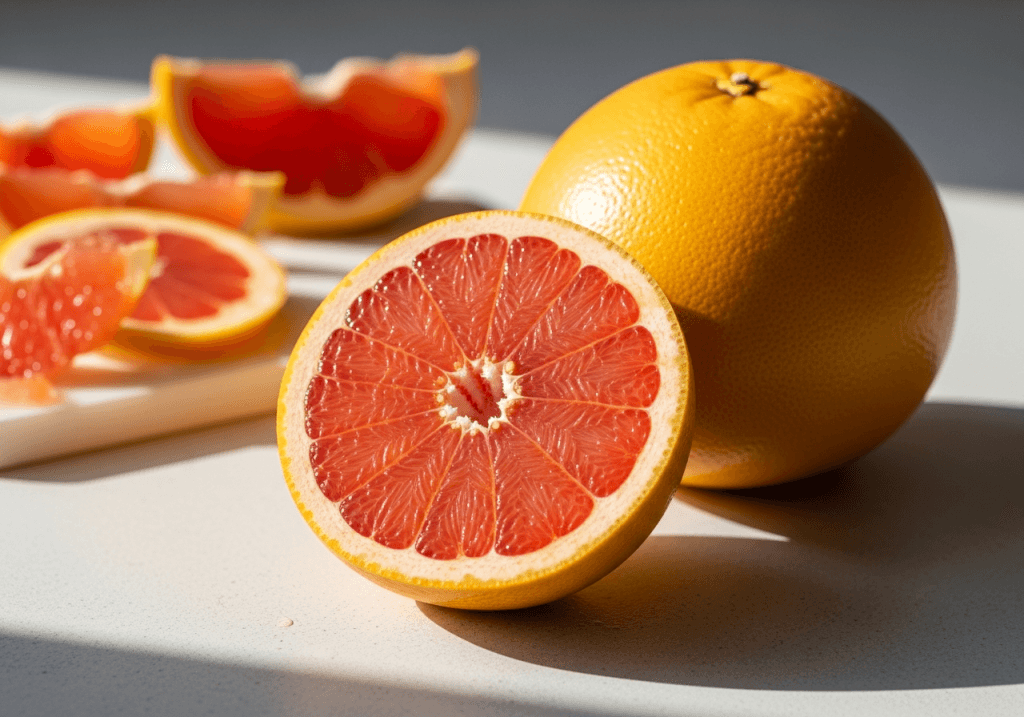
Grapefruit is the tart citrus fruit whose juice and flesh contain naringenin — a flavonoid with documented effects on liver enzymes that also appears to improve insulin sensitivity. That combination is why grapefruit appears in research on weight management and heart health.
Compounds & anti-nutrients in Grapefruit
Per 100 g, Grapefruit is a notable dietary source of these active compounds. Tap any to see its full sources map and how to work with it.
Why grapefruit is good for you
Grapefruit’s most distinctive feature is its interaction with liver enzyme CYP3A4: grapefruit juice inhibits this enzyme, which increases the blood levels of more than 85 prescription drugs — some by several-fold. That interaction makes grapefruit dangerous for people on certain medications, including statins, blood pressure drugs and immunosuppressants. The nutritional upside is real: roughly 38 mg of vitamin C per 100 g, useful fibre and naringenin, which has antioxidant and insulin-sensitising effects.
Grapefruit nutrition at a glance
The label shows the numbers, but the practical message is that grapefruit is a low-calorie, bitter citrus fruit with a genuine weight-management edge — the fibre and bitterness promote satiety — but it carries a serious drug-interaction risk that must be checked before regular consumption.
How to buy and use grapefruit
Choose heavy, firm grapefruits with smooth, tight skin. The heaviest ones have the most juice. Store at room temperature for juicing, or in the fridge for longer storage. Eat fresh with a spoon, squeeze the juice into water with mint, or pair segments with spinach and olive oil for a bitter salad. Avoid grapefruit juice if you take any of the drugs listed in the pharmacology literature.
Common questions
Does grapefruit help weight loss? Yes — the fibre and bitterness suppress appetite, and some trials show modest weight loss with grapefruit before meals. The enzyme interaction makes it unsuitable for everyone.
What drugs interact with grapefruit? Statins, calcium channel blockers, some anti-anxiety drugs, some immunosuppressants and many others. Check with a pharmacist before consuming grapefruit regularly if you take prescription medication.
Explore by health goal
Grapefruit is one of many foods that support these goals: