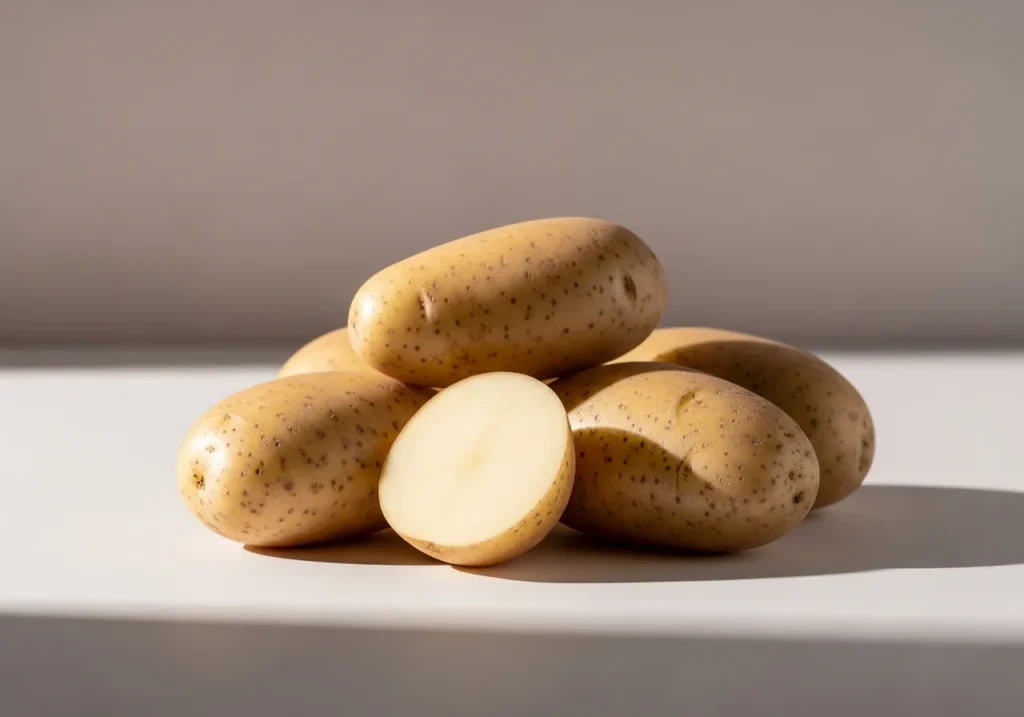
Potatoes are the world’s most widely eaten vegetable, and their nutrition profile is unfairly dismissed: a 100 g baked potato delivers roughly 2.2 g of fibre, vitamin C, vitamin B6, potassium and magnesium, with most of the fibre being resistant starch when cooled. That combination is why potatoes appear in research on energy and performance and gut health.
Compounds & anti-nutrients in Potato
Per 100 g, Potato is a notable dietary source of these active compounds. Tap any to see its full sources map and how to work with it.
Why potatoes are good for you
Potatoes’ potassium content is high — higher than bananas per 100 g — which matters for blood pressure regulation. The resistant starch content increases when potatoes are cooked and cooled, which is why potato salad and cold roast potatoes have a lower glycaemic response than hot boiled potatoes. The vitamin C content is useful, though it degrades with heat and storage. The caveat is preparation: fried potatoes — chips, crisps — are not equivalent to boiled or baked potatoes.
Potato nutrition at a glance
The label shows the numbers, but the practical message is that potatoes are a cheap, nutrient-dense energy source when eaten whole and unprocessed. The cooling step converts some starch to resistant starch, improving the glycaemic profile.
How to buy and use potatoes
Choose firm, unblemished potatoes with no sprouts, green patches or soft spots. Store in a cool, dark, dry place — not the fridge, which increases sugar content. Boil, bake, steam or roast potatoes; avoid deep frying. Eat the skin for the fibre and potassium. Potatoes pair well with olive oil, garlic, sour cream and chives. Cold potato salad with olive oil and red onion is a high-resistant-starch side dish.
Common questions
Are potatoes fattening? No — a medium baked potato contains roughly 160 kcal and useful nutrients. Chips and crisps are fattening because of the added fat; the potato itself is not.
Should I refrigerate potatoes? No — refrigeration increases sugar content and decreases acrylamide formation during cooking, but the sugar increase is usually the bigger concern. Store in a cool, dark place.
Explore by health goal
Potato is one of many foods that support these goals: