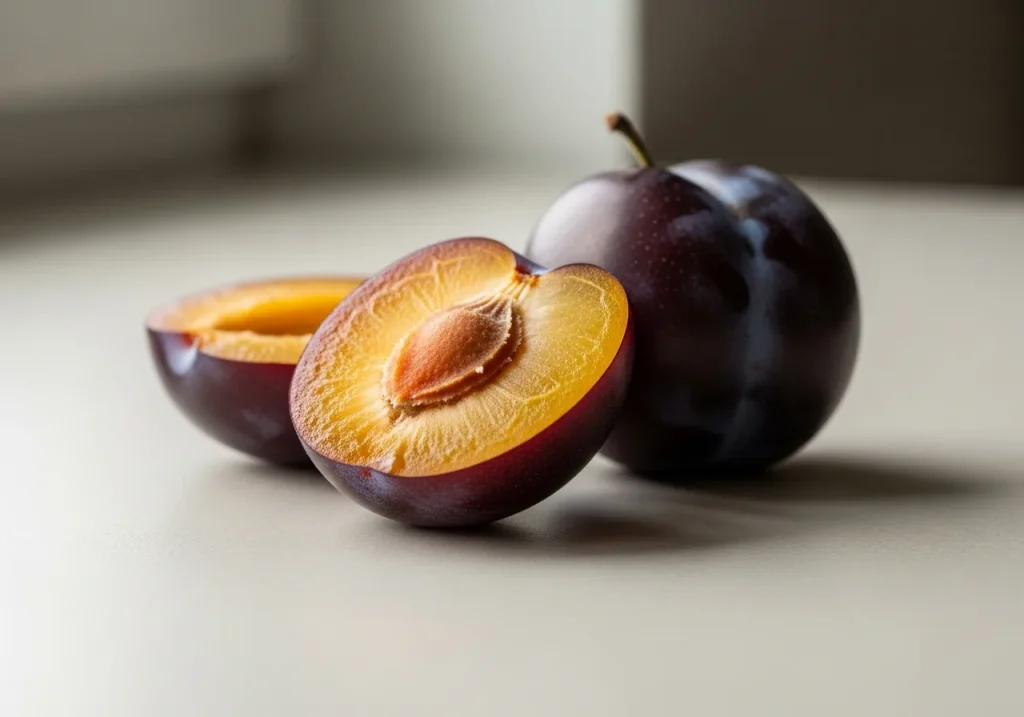
Plums are the sweet-tart stone fruits whose sorbitol and fibre content makes them one of the most effective mild laxatives in the fruit bowl, and whose polyphenols — especially in the skin — have antioxidant and anti-inflammatory effects. That combination is why plums appear in research on gut health and weight management.
Compounds & anti-nutrients in Plum
Per 100 g, Plum is a notable dietary source of these active compounds. Tap any to see its full sources map and how to work with it.
Why plums are good for you
Plums’ sorbitol content is the standout laxative factor: sorbitol is a sugar alcohol that draws water into the colon, softening stool and promoting peristalsis. The fibre content is high for a fruit — roughly 1.4 g per 100 g fresh, much higher in prunes — and partly soluble. The chlorogenic acid and neochlorogenic acid content also slows glucose absorption, which is why plums have a moderate glycaemic index despite their sweetness.
Plum nutrition at a glance
The label shows the numbers, but the practical message is that plums are a low-calorie, gut-friendly fruit that works as a snack or dessert. Prunes — dried plums — are even more potent for bowel regularity and are widely used clinically.
How to buy and use plums
Choose plums that yield slightly to gentle pressure and smell sweet. Different varieties have different flavours: black plums are sweet, red plums are tart, yellow plums are honeyed. Store at room temperature until ripe, then move to the fridge. Eat fresh plums whole, slice them into salads with spinach and olive oil, grill them as a side for pork and duck, or stew them into a compote. Prunes work in porridge, tagines and baked goods. Plum kernels contain amygdalin, which releases cyanide — do not eat them in quantity.
Common questions
Do plums help with constipation? Yes — the sorbitol and fibre content makes plums one of the most effective mild laxatives in the fruit bowl. Prunes are even more potent.
Are prunes the same as plums? Prunes are dried plums, and they are more concentrated in fibre, sorbitol and iron.
Explore by health goal
Plum is one of many foods that support these goals: