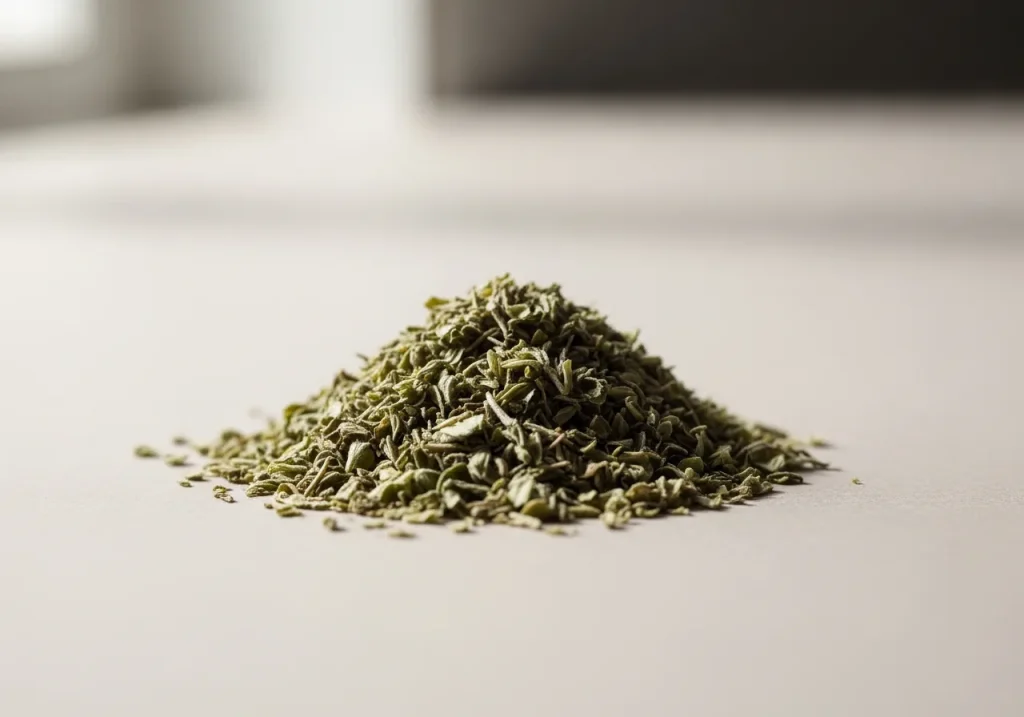
Oregano is the Mediterranean herb that packs more antioxidant power than most fruits, with carvacrol — the compound that gives oregano its distinctive aroma — acting as a potent antimicrobial and anti-inflammatory agent. That combination is why oregano appears in research on immune support and anti-inflammatory eating.
Compounds & anti-nutrients in Oregano
Per 100 g, Oregano is a notable dietary source of these active compounds. Tap any to see its full sources map and how to work with it.
Why oregano is good for you
Oregano’s antioxidant capacity is exceptional for an herb, with rosmarinic acid, carvacrol and thymol working together to neutralise free radicals and inhibit inflammatory pathways. Carvacrol has documented antimicrobial effects against a range of bacteria and fungi, including Candida and some antibiotic-resistant strains in vitro. The caveat is that dried oregano is far more potent than fresh; the volatile oils concentrate as the herb dries.
Oregano nutrition at a glance
The label shows the numbers, but the practical message is that oregano is a low-calorie, high-impact herb. A teaspoon of dried oregano supplies enough antioxidants to rival a serving of blueberries, and it adds intense flavour without calories.
How to buy and use oregano
Choose dried oregano for intensity — Mediterranean or Mexican oregano both work, but they have slightly different flavour profiles. Store away from light and heat. Use oregano in tomato sauces with tomato and garlic, on chicken before roasting, in marinades for lamb and beef, and in salad dressings with olive oil and lemon. Oregano oil is also available as a supplement.
Common questions
Is oregano oil worth taking? Oregano oil is concentrated and has documented antimicrobial effects, but it is not a replacement for antibiotics. It is best used as a culinary herb or short-term supplement under guidance.
Is oregano better fresh or dried? Dried oregano is more potent and has a longer shelf life; fresh oregano is milder and better for finishing dishes.
Explore by health goal
Oregano is one of many foods that support these goals: