Gram for gram, kiwifruit is one of the most nutrient-dense common fruits, and it has a party trick few others share: a natural enzyme called actinidin that helps break down protein, while clinical trials of eating two kiwis a day have reported improved bowel regularity. That makes it a natural fit for writing on gut health and immune support.
Compounds & anti-nutrients in Kiwifruit
Per 100 g, Kiwifruit is a notable dietary source of these active compounds. Tap any to see its full sources map and how to work with it.
Why kiwifruit is good for you
Kiwifruit is an exceptional source of vitamin C, the antioxidant the body uses to build collagen and to support immune cells; a single fruit covers a good share of the day’s needs. It also brings vitamin K and a useful amount of fibre, much of it the soluble kind that holds water and adds bulk, which is part of why kiwifruit is studied for digestive comfort. The actinidin enzyme is distinctive: it gently breaks down dietary protein, which may explain the fruit’s reputation for easing that heavy, post-meal feeling.
Kiwifruit nutrition at a glance
The full breakdown is in the label above. The headline is a lot of vitamin C and fibre for very few calories, with sugars that arrive wrapped in fibre and water, so the fruit digests gently. The fuzzy skin is edible and adds extra fibre, though many people prefer to peel it; both green and gold varieties are nutritious, with gold kiwifruit tending to be sweeter and even higher in vitamin C.
How to buy, store and eat kiwifruit
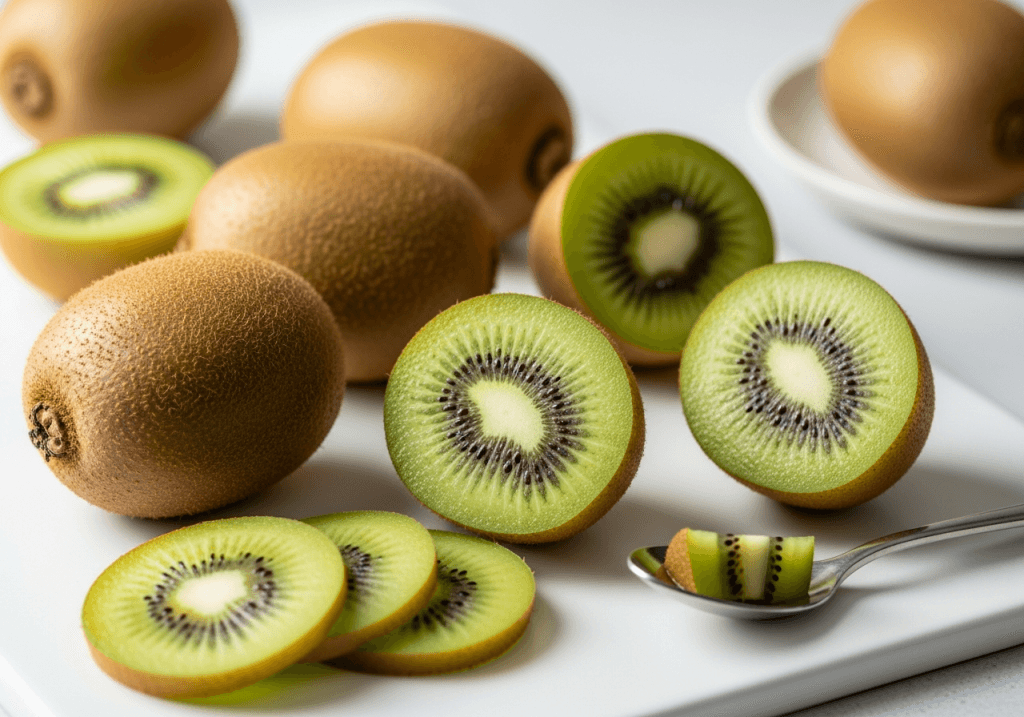
A ripe kiwi yields to gentle pressure, much like a ripe pear; firm fruit ripens on the counter over a few days and speeds up beside a banana or apple. Once ripe, move it to the fridge to hold it for a week or so. To eat, either halve it and scoop with a teaspoon or peel and slice. It is lovely with Greek yoghurt and oats at breakfast. One tip: actinidin stops gelatine setting, so add kiwi to jellies only if you do not need them to firm up. Browse more in our fruits.
Common questions
Can you eat kiwifruit skin? Yes, the fuzzy skin is edible and adds fibre and nutrients. Rub off the loose hairs and wash it well, or choose a smoother-skinned gold variety if the texture puts you off.
Is kiwifruit good for constipation? Its combination of fibre and water has been linked to better bowel regularity in trials, which is why kiwifruit is often suggested as a gentle, food-first way to support digestion.
Explore by health goal
Kiwifruit is one of many foods that support these goals: