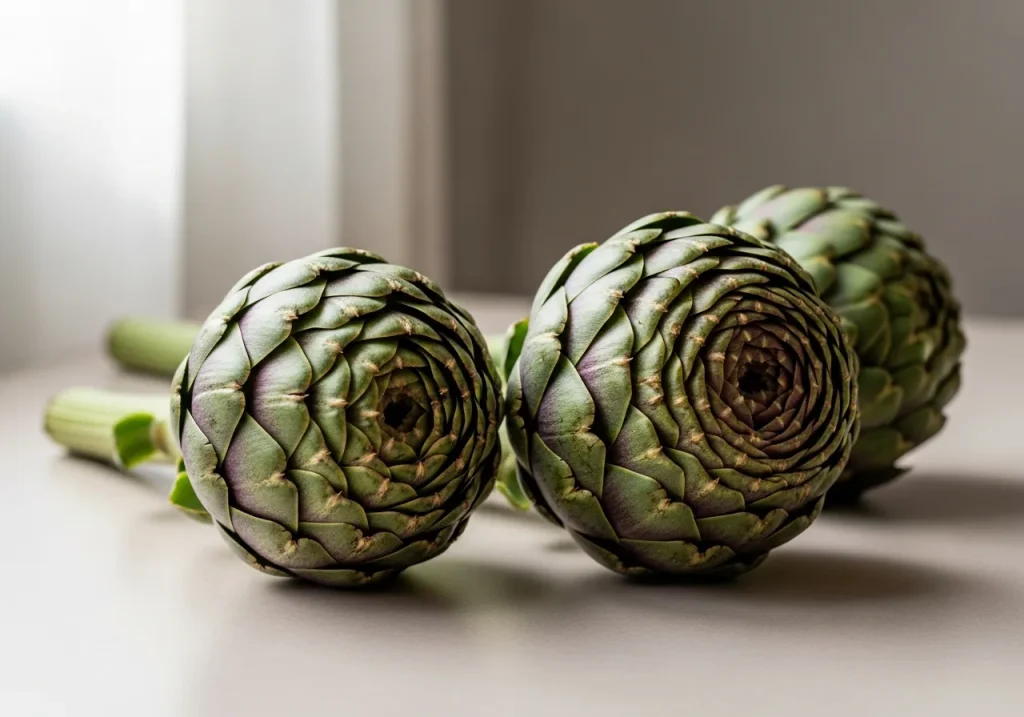
Artichoke is the edible flower bud of a thistle, and it is one of the highest-fibre vegetables available — a single medium globe supplies roughly 7 g of fibre, more than many breakfast cereals. It also delivers useful folate, vitamin K, magnesium and the unique compound cynarin, which stimulates bile production and supports liver function. That combination is why artichokes appear in research on gut health and liver health.
Compounds & anti-nutrients in Artichoke
Per 100 g, Artichoke is a notable dietary source of these active compounds. Tap any to see its full sources map and how to work with it.
Why artichokes are good for you
Artichokes’ fibre content is exceptional, and it is partly inulin — the same prebiotic soluble fibre found in garlic, onions and asparagus — which feeds beneficial colonic bacteria. The cynarin content is unique to artichokes and cynaras; it increases bile flow, which supports fat digestion and may lower cholesterol. Artichokes also contain silymarin-like compounds that protect liver cells from oxidative damage, though the evidence in humans is preliminary.
Artichoke nutrition at a glance
The label shows the numbers, but the practical message is that artichokes are a high-fibre, low-calorie vegetable with a unique liver-supporting edge. The main barrier is preparation: many people find the eating process fiddly, but it is worth the effort.
How to buy and cook artichokes
Choose compact, heavy artichokes with tight, unblemished leaves. Store in the fridge for up to a week. Trim the stem, slice off the top third, and remove the outer leaves until you reach the pale, tender inner leaves. Steam for 30–45 minutes until a leaf pulls away easily. Serve with melted butter, vinaigrette or olive oil and lemon. The heart is the prize — scrape the fleshy base of each leaf with your teeth, then scoop out the choke with a spoon. Artichoke hearts work in salads, pasta and risotto.
Common questions
Do artichokes help with digestion? Yes — the inulin fibre feeds beneficial gut bacteria, and cynarin stimulates bile production, both of which support healthy digestion.
Can artichokes lower cholesterol? Some trials show modest reductions with artichoke leaf extract, but the whole-food effect is smaller. They are a nutritious vegetable regardless.
Explore by health goal
Artichoke is one of many foods that support these goals: