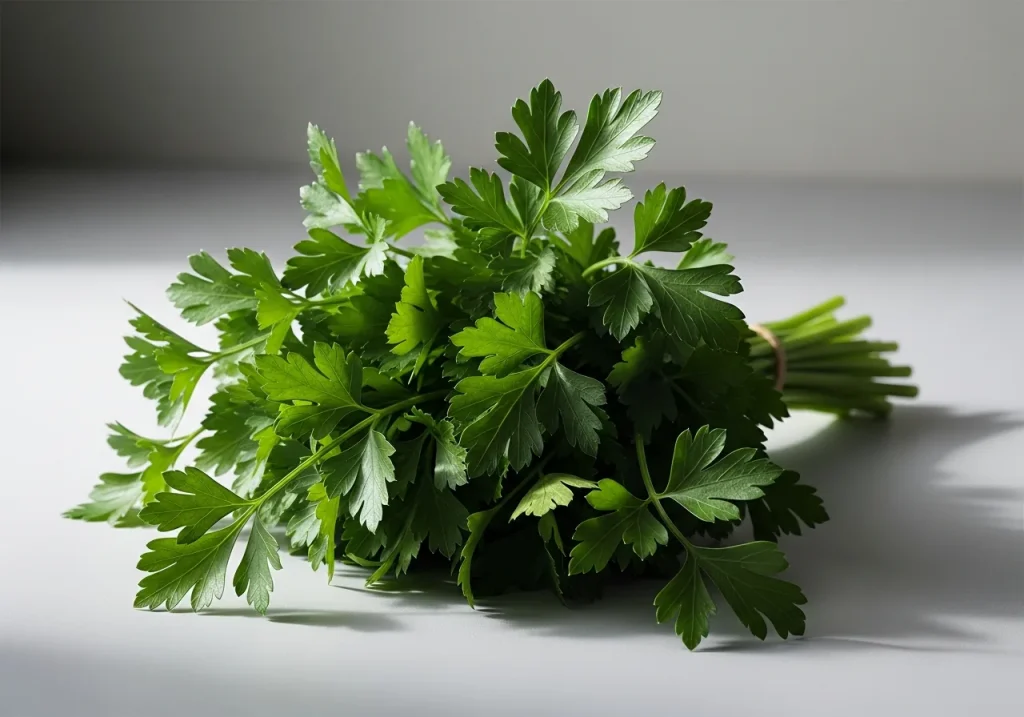
Parsley is usually treated as a garnish, but weight for weight it is one of the most nutrient-dense greens available. A 30 g portion supplies meaningful vitamin K, vitamin C and the flavonoid myricetin, which has been linked to anti-inflammatory and anti-cancer effects in cell models. That density is why parsley appears in research on bone health and immune support.
Compounds & anti-nutrients in Parsley
Per 100 g, Parsley is a notable dietary source of these active compounds. Tap any to see its full sources map and how to work with it.
Why parsley is good for you
Parsley’s vitamin K content is exceptional — a single cup of chopped parsley delivers more than 1000 µg, well above the daily value. Vitamin K is essential for bone mineralisation and blood clotting, and it works synergistically with vitamin D. The vitamin C content is also high for a herb, and parsley supplies myricetin and apigenin, flavonoids with antioxidant and anti-inflammatory properties in vitro.
Parsley nutrition at a glance
The label shows the numbers, but the practical message is that parsley is a free nutritional multiplier: sprinkle it on finished dishes, blend it into pesto, or add it to smoothies for a vitamin K and C boost without altering flavour much.
How to buy and use parsley
Choose fresh parsley with bright green leaves and no yellowing or sliminess. Flat-leaf parsley has stronger flavour; curly parsley is milder. Store in the fridge in a glass of water, or wrapped in a damp paper towel. Use it generously in tabbouleh, pesto, chimichurri, smoothies, or sprinkled over salmon and tomato dishes. Dried parsley is convenient but loses much of the vitamin C.
Common questions
Can you eat parsley every day? Yes — in normal culinary amounts, parsley is safe. Very large intakes may affect blood clotting in people on warfarin, so consult a clinician if you are on anticoagulants.
Is parsley good for kidney stones? Parsley has a mild diuretic effect, but there is no strong clinical evidence that it prevents or treats kidney stones.
Explore by health goal
Parsley is one of many foods that support these goals: