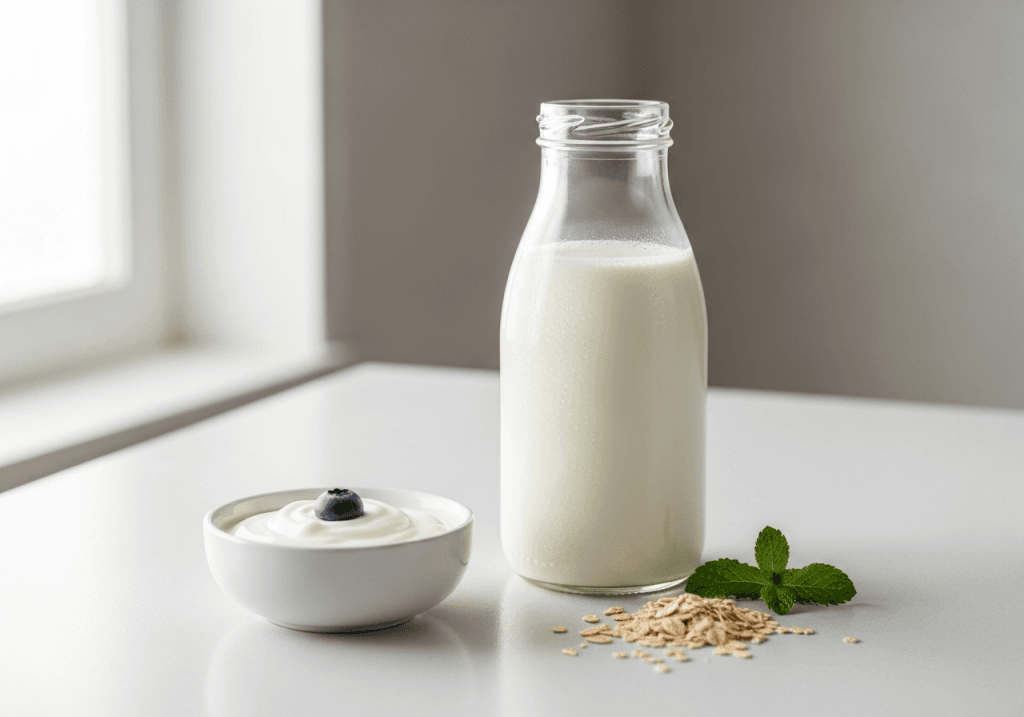
Whole milk is one of the most complete single foods in the everyday fridge, delivering protein, fat, sugars and a broad sweep of vitamins and minerals in one glass. Its standout contribution is calcium in a form the body absorbs well, which is why milk sits at the centre of advice on bone health and, thanks to its protein, on recovery and performance.
Compounds & anti-nutrients in Whole Milk
Per 100 g, Whole Milk is a notable dietary source of these active compounds. Tap any to see its full sources map and how to work with it.
Why whole milk is good for you
Milk is a leading dietary source of calcium, the mineral that builds and maintains bones and teeth, and it delivers it alongside the protein, phosphorus and vitamin B12 the body needs to use that calcium effectively. It supplies complete, high-quality protein and riboflavin too. The “whole” simply means the natural milk fat is left in, which carries fat-soluble vitamin A and gives the milk its rounded taste; it also slows how quickly the natural milk sugar is absorbed.
Whole milk nutrition at a glance
The full breakdown is in the label above. Whole milk is naturally higher in fat, including some saturated fat, than semi-skimmed or skimmed, which is the main reason adults are often steered towards lower-fat versions. That said, whole milk is recommended for young children, who need the energy, and its fuller flavour and texture make it a satisfying choice in moderation. The fat-free options keep the calcium and protein while trimming the saturated fat.
How to choose, store and use whole milk
Check the date and choose the freshest carton, ideally one that has stayed properly chilled. Keep milk at the back of the fridge rather than the door, where it is colder and steadier, and reseal it well, as milk readily picks up other flavours. Beyond a glass on its own, it makes creamy porridge and is the base for smoothies with fruit such as banana.
Common questions
Is whole milk better than skimmed? Neither is simply better; they suit different needs. Whole milk has more calories and fat but a fuller taste, while skimmed keeps the calcium and protein with less saturated fat. The right choice depends on your overall diet and energy needs.
Can you drink milk if you are lactose intolerant? Standard milk may cause discomfort, as it contains lactose, the natural milk sugar. Lactose-free milk, which has the same nutrients with the lactose broken down, is a straightforward alternative.
Explore by health goal
Whole Milk is one of many foods that support these goals: