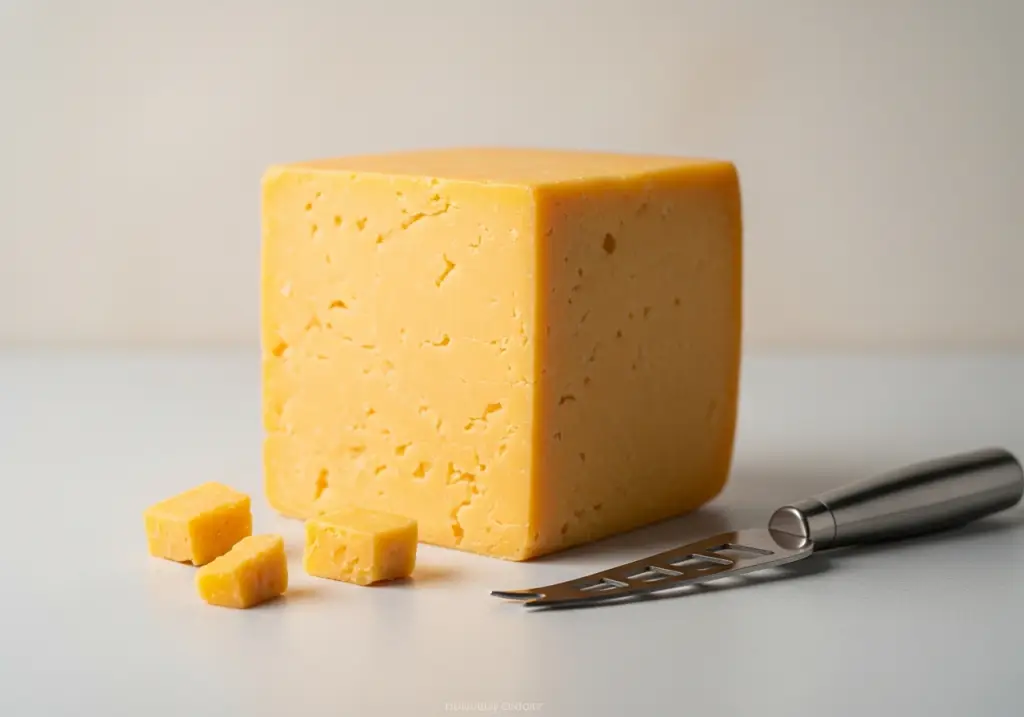
Cheddar cheese is one of Britain’s best-loved foods, and behind its savoury depth sits a concentrated package of protein and minerals. Because it is made by pressing and ageing milk, a small piece carries far more nutrition than its size suggests, which is why cheese turns up in conversations about bone health and dietary protein.
Compounds & anti-nutrients in Cheddar Cheese
Per 100 g, Cheddar Cheese is a notable dietary source of these active compounds. Tap any to see its full sources map and how to work with it.
Why cheddar cheese is good for you
Cheddar is an excellent source of calcium, the mineral most associated with building and maintaining strong bones and teeth, and that calcium arrives alongside the phosphorus and vitamin A that help the body put it to use. It is also rich in complete protein and vitamin B12, a vitamin found almost exclusively in animal foods. Ageing concentrates these nutrients and develops the sharp, complex flavour, so even a modest amount delivers a satisfying hit.
Because so much of cheddar is fat, a little goes a long way: grating it finely or pairing it with a strong-flavoured variety lets you use less while still tasting plenty.
Cheddar cheese nutrition at a glance
The full per-100 g breakdown is in the label above, and two figures deserve context. Cheddar is high in saturated fat and high in salt, so it is best treated as a flavoursome addition rather than an everyday staple eaten by the handful. Enjoyed in sensible portions it slots comfortably into a balanced diet, and its protein and calcium make those portions genuinely nourishing.
How to buy, store and use cheddar cheese
Choose a block over pre-grated cheese where you can, since blocks keep better and skip the anti-caking agents. Wrap it in greaseproof paper rather than cling film so it can breathe, and keep it in the fridge; surface mould on a hard cheese can simply be cut away. A little crumbled over broccoli or melted into a bowl of savoury oats turns a plain dish into a meal.
Common questions
Is cheddar cheese good for you? In moderation, yes. It is a rich source of calcium, protein and vitamin B12, but it is also high in saturated fat and salt, so portion size is what keeps it on the right side of healthy.
Can you eat cheddar if you are lactose intolerant? Often, yes. Aged hard cheeses like cheddar contain very little lactose, as most is lost during production and ageing, so many people who avoid milk tolerate them well.
Explore by health goal
Cheddar Cheese is one of many foods that support these goals: