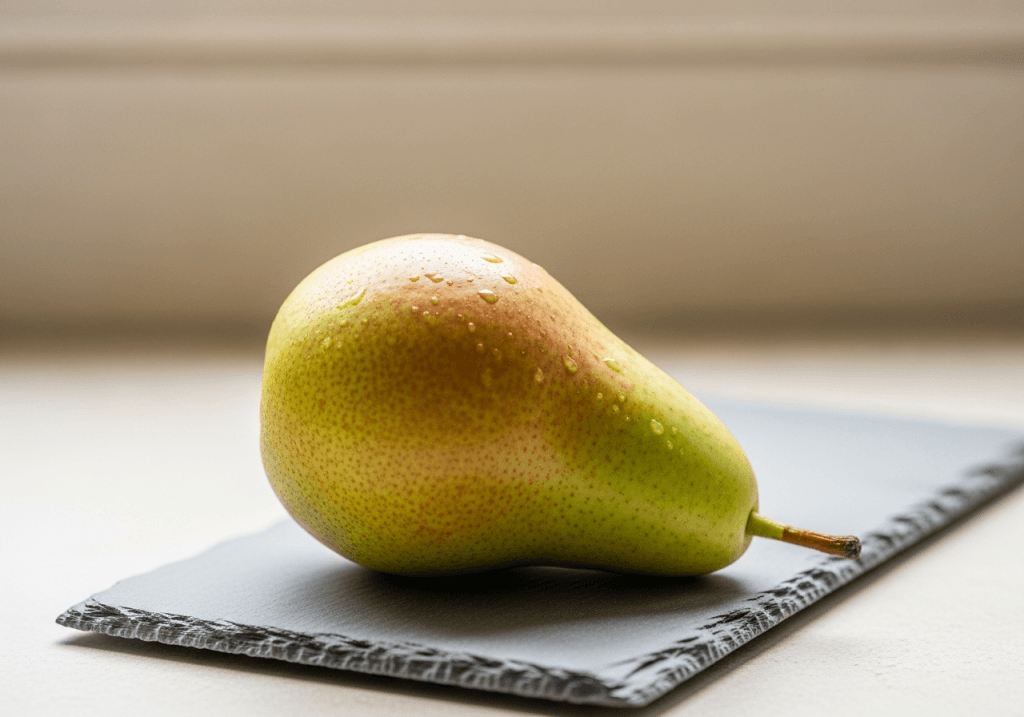
Pears are the soft, sweet cousins of apples, and they are among the highest-fibre fruits available per calorie — roughly 3.1 g per 100 g, mostly soluble pectin. That fibre profile, combined with vitamin C, potassium and flavonoids, is why pears appear in research on heart health and gut health.
Compounds & anti-nutrients in Pear
Per 100 g, Pear is a notable dietary source of these active compounds. Tap any to see its full sources map and how to work with it.
Why pears are good for you
Pears’ soluble fibre content lowers LDL cholesterol and feeds beneficial colonic bacteria, and the sorbitol content has a mild laxative effect that supports bowel regularity. The flavonoids — especially in the skin — have antioxidant and anti-inflammatory effects, and pears are one of the few fruits that are traditionally recommended for infants and people with sensitive digestion because of their low allergenicity.
Pear nutrition at a glance
The label shows the numbers, but the practical message is that pears are a gentle, high-fibre fruit that works as a snack, a salad element or a baked dessert. The skin holds most of the polyphenols and fibre.
How to buy and use pears
Choose pears based on variety and planned use: Bosc and Anjou are firm and good for cooking; Bartlett and Conference are softer and best eaten ripe. Store firm pears at room temperature to ripen, then move to the fridge. Eat pears fresh with almonds, slice them into salads with spinach and olive oil, poach them in red wine for dessert, or bake them with cinnamon and oats. Keep the skin on.
Common questions
Are pears good for constipation? Yes — the soluble fibre and sorbitol content promotes bowel regularity. Pears are often recommended as a first food for constipated infants.
Should I peel pears? No — the skin holds most of the fibre and flavonoids. Wash well and eat the skin unless a recipe specifically requires peeling.
Explore by health goal
Pear is one of many foods that support these goals: