Heart Health
Cardiovascular health is best supported by whole dietary patterns, not single superfoods.
Key compounds
The evidence base for this goal focuses on several well-studied compounds.
- Lycopene — Lycopene is the carotenoid behind the deep red of a ripe tomato, and one of the most efficient antioxidants in the plant kingdom. Unusually, it becomes
- Omega-3 — Omega-3s are a family of essential polyunsaturated fats the body cannot make in meaningful amounts, so they must come from the plate. The two with the
- Potassium — Potassium is the body’s principal intracellular electrolyte, quietly partnering with sodium to manage fluid balance, nerve signals and every heartbeat. Most of us fall short of
Best foods for this goal
The foods below are good practical choices.
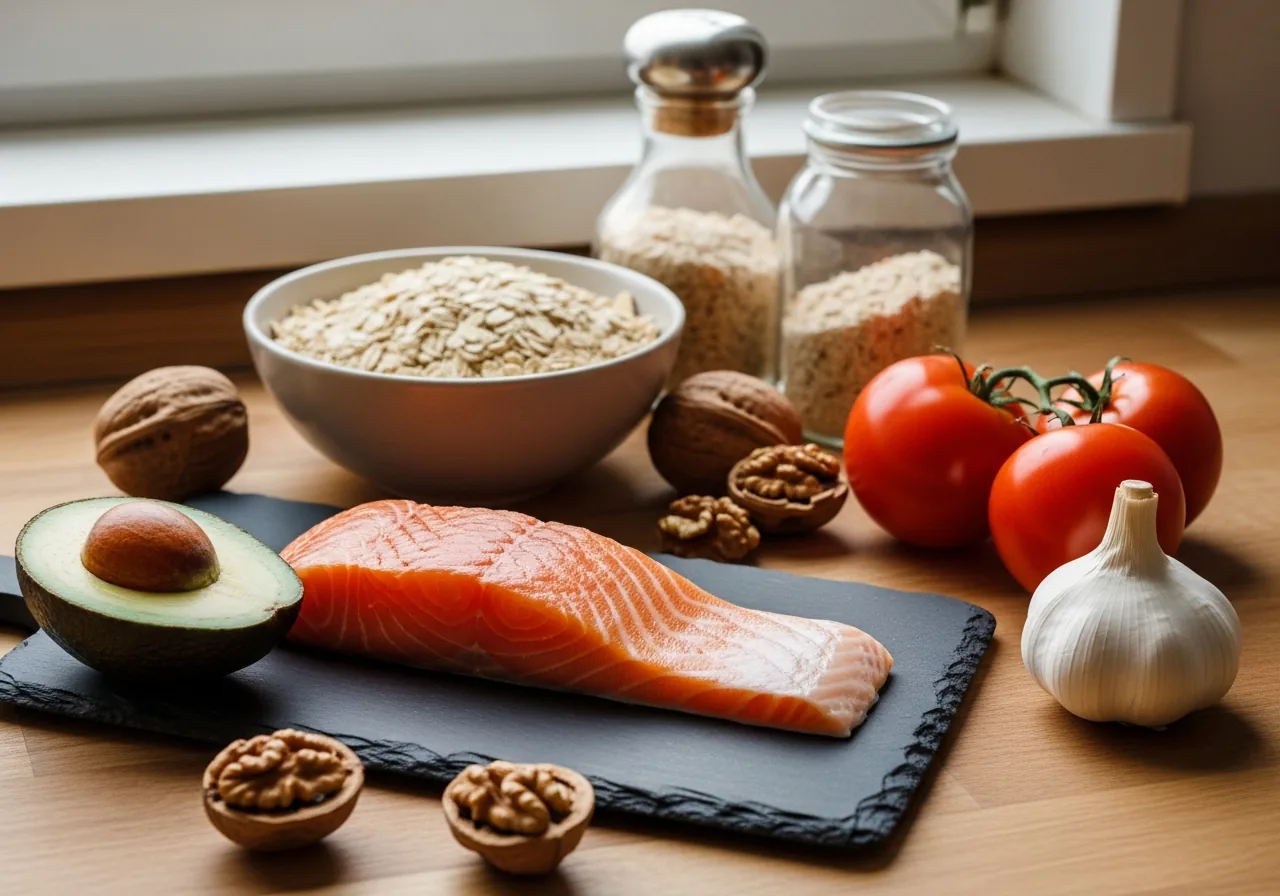
Salmon (Atlantic)
Nutrition Facts
Per 100 g, edible portion · values per 100 g
Calories
197
| Total Fat | 13.1 g |
|---|---|
| Saturated Fat | 2.28 g |
| Sodium | 49.5 mg |
| Potassium | 378 mg |
| Total Carbohydrate | 0 g |
| Dietary Fiber | 0 g |
| Total Sugars | 0 g |
| Protein | 20.3 g |
Omega-3 EPA & DHA, vitamin D, vitamin B12, selenium
Source: USDA FoodData Central (FDC 2684441); sugars: FDC 175167
Oats
Nutrition Facts
Per 100 g, edible portion · values per 100 g
Calories
379
| Total Fat | 6.52 g |
|---|---|
| Saturated Fat | 1.11 g |
| Sodium | 6 mg |
| Potassium | 362 mg |
| Total Carbohydrate | 67.7 g |
| Dietary Fiber | 10.1 g |
| Total Sugars | 0.99 g |
| Protein | 13.15 g |
Manganese, phosphorus, magnesium, beta-glucan fibre
Glycemic index: 55
Source: USDA FoodData Central (FDC 173904)
Walnuts
Nutrition Facts
Per 100 g, edible portion · values per 100 g
Calories
730
| Total Fat | 69.7 g |
|---|---|
| Saturated Fat | 6.05 g |
| Sodium | 0 mg |
| Potassium | 424 mg |
| Total Carbohydrate | 10.9 g |
| Dietary Fiber | 5.21 g |
| Total Sugars | 2.61 g |
| Protein | 14.6 g |
Copper, manganese, plant omega-3 (ALA)
Glycemic index: 15
Source: USDA FoodData Central (FDC 2346394); sugars: FDC 170187
Avocado
Nutrition Facts
Per 100 g, edible portion · values per 100 g
Calories
160
| Total Fat | 14.66 g |
|---|---|
| Saturated Fat | 2.126 g |
| Sodium | 7 mg |
| Potassium | 485 mg |
| Total Carbohydrate | 8.53 g |
| Dietary Fiber | 6.7 g |
| Total Sugars | 0.66 g |
| Protein | 2 g |
Folate, vitamin K, vitamin E, potassium
Glycemic index: 15
Source: USDA FoodData Central (FDC 171705, Avocados raw all commercial varieties)
Tomato
Nutrition Facts
Per 100 g, edible portion · values per 100 g
Calories
18
| Total Fat | 0.2 g |
|---|---|
| Saturated Fat | 0.03 g |
| Sodium | 5 mg |
| Potassium | 237 mg |
| Total Carbohydrate | 3.89 g |
| Dietary Fiber | 1.2 g |
| Total Sugars | 2.63 g |
| Protein | 0.88 g |
Vitamin C, potassium, lycopene, vitamin A
Glycemic index: 30
Source: USDA FoodData Central (FDC 170457)
Garlic
Nutrition Facts
Per 100 g, edible portion · values per 100 g
Calories
143
| Total Fat | 0.38 g |
|---|---|
| Saturated Fat | 0.1 g |
| Sodium | 17 mg |
| Potassium | 401 mg |
| Total Carbohydrate | 28.2 g |
| Dietary Fiber | 2.7 g |
| Total Sugars | 1 g |
| Protein | 6.62 g |
Manganese, vitamin B6, vitamin C, allicin
Glycemic index: 30
Source: USDA FoodData Central (FDC 1104647)
Practical takeaways
Focus on consistency, variety and the overall dietary pattern. Smaller daily choices tend to outperform occasional large changes.
Common questions
Is one compound enough? Rarely. Whole foods and dietary patterns usually outperform single-compound strategies.
How fast can diet change inflammation or blood markers? It depends on the marker, the starting diet and lifestyle factors. Expect gradual trends rather than overnight shifts.