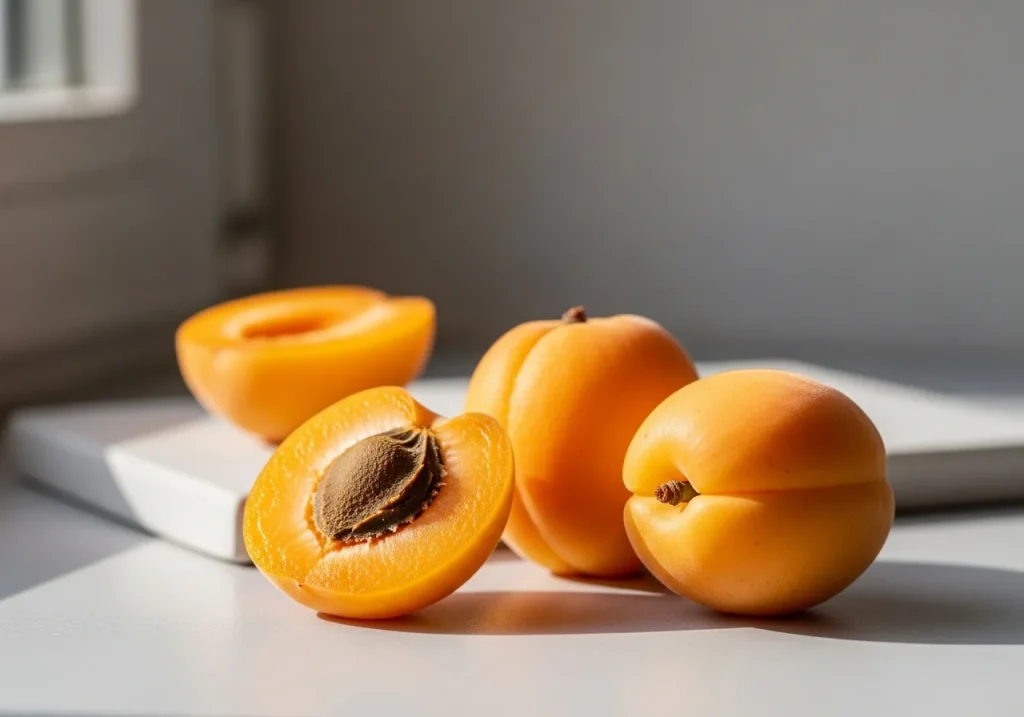
Apricots are the small, fuzzy orange fruits whose beta-carotene content is exceptional for their size, and whose soluble fibre and polyphenols make them a useful snack or dried treat. A 100 g fresh portion delivers roughly 10 mg of vitamin C, useful vitamin A precursors and fibre. That combination is why apricots appear in research on eye health and skin health.
Compounds & anti-nutrients in Apricot
Per 100 g, Apricot is a notable dietary source of these active compounds. Tap any to see its full sources map and how to work with it.
Why apricots are good for you
Apricots’ beta-carotene content is high, and it supports vision, immune function and skin repair. The soluble fibre content feeds colonic bacteria and lowers LDL cholesterol. The main caveat is dried apricots: they are concentrated in sugar and calories, though they remain a useful source of fibre and iron. Sulphur dioxide is sometimes used as a preservative in dried apricots, which can trigger asthma in sensitive people.
Apricot nutrition at a glance
The label shows the numbers, but the practical message is that fresh apricots are a low-calorie, nutrient-dense summer snack, while dried apricots are a concentrated fibre and iron source that works well in porridge and trail mix.
How to buy and use apricots
Choose fresh apricots that yield slightly to gentle pressure and smell sweet. Avoid wrinkled or mushy fruit. Store at room temperature until ripe, then move to the fridge. Eat fresh apricots whole, slice them into salads with spinach and olive oil, or grill them as a side for pork and lamb. Dried apricots work in porridge with oats, in tagines with couscous and chicken, or in trail mix with almonds. Choose unsulphured dried apricots if possible.
Common questions
Are dried apricots as healthy as fresh? They retain the fibre and iron, but the sugar and calorie content is concentrated. Fresh is usually preferable for everyday eating.
Can apricots help with constipation? Yes — the soluble fibre and sorbitol content promotes bowel regularity. Dried apricots are especially useful.
Explore by health goal
Apricot is one of many foods that support these goals: