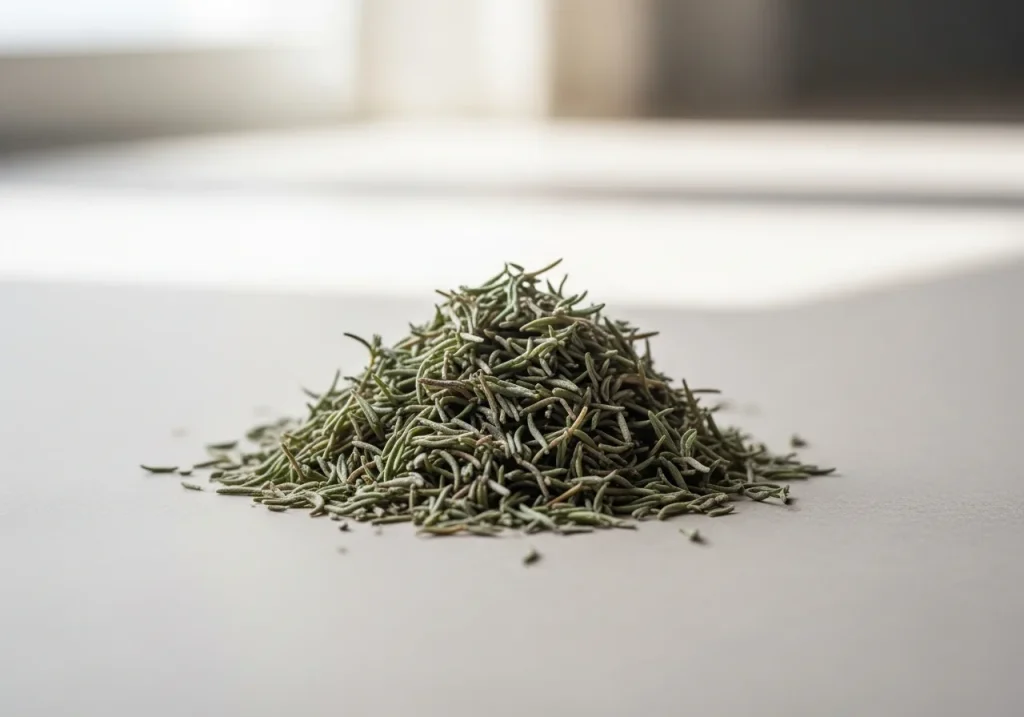
Thyme is the low-growing Mediterranean herb whose essential oil thymol is the active ingredient in some mouthwashes and cough remedies. That antimicrobial potency, combined with vitamin C, vitamin A and flavonoids, is why thyme appears in research on immune support and respiratory health.
Compounds & anti-nutrients in Thyme
Per 100 g, Thyme is a notable dietary source of these active compounds. Tap any to see its full sources map and how to work with it.
Why thyme is good for you
Thymol is the standout compound in thyme, and it has documented antibacterial, antifungal and antitussive effects in vitro and in some clinical preparations. The herb itself supplies useful vitamin C and vitamin A precursors, and the flavonoids luteolin and apigenin have antioxidant effects. Thyme is a traditional remedy for coughs and bronchitis, and the evidence for thyme extract as a cough suppressant is better than for most herbal cough remedies.
Thyme nutrition at a glance
The label shows the numbers, but the practical message is that thyme is a potent, low-calorie herb for respiratory and immune support. A teaspoon of dried thyme in a tea or soup is enough for the traditional benefits.
How to buy and use thyme
Choose dried thyme for storage; fresh thyme has a shorter shelf life but a slightly different flavour. Store dried thyme away from light and heat. Use thyme in roasted vegetables with potato and carrot, in soups with chicken and lemon, in marinades for lamb and beef, and in bean dishes to reduce gas. Thyme tea — steeped in hot water for 5 minutes — is a traditional cough remedy.
Common questions
Does thyme help with coughs? Thyme extract has documented antitussive effects, and thyme tea is a long-standing home remedy. It is not a replacement for medication in serious infections.
Can I use thyme for respiratory infections? It is a useful adjunct — the thymol and flavonoids support airway comfort — but it will not cure bacterial pneumonia or viral infections.
Explore by health goal
Thyme is one of many foods that support these goals: